Exide ’s 2026 ESG report outlines a battery manufacturing strategy based on circular raw materials, renewable electricity and a predominantly European production and recycling footprint.
Exide Technologies has reduced its Scope 1 and Scope 2 greenhouse gas emissions by 21% compared with fiscal year 2022, while increasing the share of recycled or recovered materials used in production from 74% to 77%.
The figures are among the main industrial indicators contained in the company’s 2026 ESG Report. For manufacturers and users of electric drive systems, the results are relevant because the environmental performance of batteries increasingly depends not only on their efficiency during operation, but also on energy consumption during production, material sourcing and end-of-life recovery.
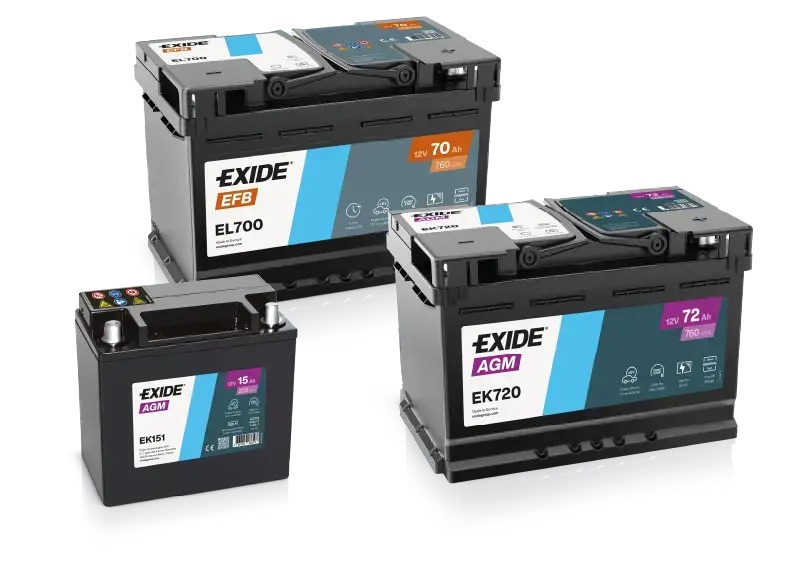
Exide develops lead-acid and lithium-ion batteries for automotive and industrial applications. Its portfolio includes 12 V batteries for combustion-engine and electric vehicles, traction batteries for material-handling equipment and robotics, stationary systems for uninterruptible power supplies and telecommunications, and front-of-the-meter and behind-the-meter energy storage solutions.
Circularity becomes a manufacturing parameter
The increase in recycled and recovered content is particularly significant for the battery industry, where raw-material availability, price volatility and environmental impact are becoming major design and procurement considerations.
For electric material-handling fleets, automated guided vehicles and mobile robotics, batteries are no longer regarded simply as replaceable energy sources. Their cycle life, charging performance, traceability and recyclability have become part of the overall efficiency assessment of the electric drivetrain.
Exide’s approach combines battery production with dedicated recycling activities. The group operates ten manufacturing plants and three recycling facilities across Europe, a structure that the company says supports a more local and resilient supply chain while reducing the carbon footprint associated with materials and logistics.
Such vertical integration is especially relevant for lead-acid batteries, whose established collection and recycling infrastructure allows a substantial proportion of recovered material to be returned to production. At the same time, the expansion of lithium-ion technologies is increasing the need for new recovery processes and more transparent material flows.
Renewable power for European battery production
Exide is also continuing to invest in renewable electricity generation at its industrial sites. The latest initiative cited in the report is the construction of a sixth photovoltaic installation in Spain.
On-site solar generation can reduce the Scope 2 emissions associated with battery manufacturing while limiting exposure to electricity price volatility. This is an important consideration for energy-intensive production processes and for industrial customers seeking to reduce the embedded carbon content of motors, vehicles and automated systems.
The company has also committed to defining near-term greenhouse gas reduction targets aligned with the Science Based Targets initiative. This step should provide a more structured trajectory for future emissions reductions and establish measurable milestones for Exide’s manufacturing operations.
ESG indicators enter supplier evaluation
Alongside its operational results, Exide has again obtained an EcoVadis Gold rating. According to the company, the score places it among the top 2% of all organisations assessed worldwide and within the top 1% of companies operating in battery manufacturing.
Its CDP scores for climate change and water security have also improved from C, classified as “Awareness”, to B, corresponding to “Management”.
Although these ratings are not direct measures of battery performance, they are becoming increasingly relevant in supplier selection, particularly for automotive groups and industrial equipment manufacturers required to monitor environmental and social impacts throughout their value chains.
The report is aligned with the current European Sustainability Reporting Standards and covers climate mitigation, circular-economy principles, responsible sourcing, employee skills and corporate governance.