
Hybrid vehicles accounted for almost half of new registrations in Italy in the first half of 2026, while battery-electric and plug-in hybrid models recorded double-digit market shares and strong year-on-year growth, according to data from Experian and UNRAE.
Italy’s automotive market returned to growth in the first half of 2026, with electrified powertrains playing an increasingly important role in the recovery. According to the latest Credit & Mobility Observatory developed by Experian and UNRAE, new vehicle registrations reached 946,296 units, up 9.8% compared with the same period of 2025.
The figures point to a continued shift in the Italian powertrain mix. Hybrid electric vehicles (HEVs) represented 49.7% of new registrations during the period and increased by 23.1% year on year. Battery-electric vehicles (BEVs), although still accounting for a comparatively limited 8.4% of the market, recorded a 77.5% increase in registrations. Plug-in hybrid vehicles (PHEVs) grew even faster, by 85.1%, reaching a 9% market share.
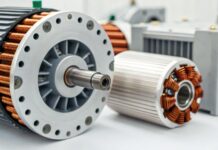
The trend contrasts sharply with conventional internal combustion powertrains. Petrol vehicle registrations declined by 17%, while diesel models fell by 25.5% during the same period. The figures therefore indicate a further expansion of the addressable market for electric traction systems, including electric motors, inverters, power electronics and associated drivetrain technologies.
BEV growth was supported in part by incentives introduced by Italy’s Ministry of the Environment and Energy Security (MASE), while hybrid demand continued to strengthen structurally. Overall, hybrids increased their share from around 44% a year earlier to almost half of all registrations in the first six months of 2026.
Despite this acceleration, Italy continues to lag behind the wider European market in fully electric mobility. UNRAE General Manager Andrea Cardinali noted that the country’s BEV share remains around one third of the average recorded across 30 European markets. According to Cardinali, infrastructure, taxation, incentives and energy costs remain among the structural conditions that need to improve if the transition is to accelerate further.
Electrification is also beginning to become more visible on the secondary market. In the first five months of 2026, transfers of ownership for used hybrid vehicles increased by 26.5%, taking their share to 12.2%. Used electric vehicles grew by 37.1%, although they still represented only 1.4% of transactions. Petrol and diesel vehicles together continued to dominate the used market with a combined 77.2% share.
The expansion of electrified vehicles is occurring alongside changes in vehicle purchasing patterns. Around 80% of new and used cars in Italy are acquired with some form of financing, according to the Observatory, while buyers are increasingly opting for longer loan durations. Experian said this development partly reflects the higher initial investment associated with more technologically advanced hybrid and electric vehicles.
For suppliers of electric traction technologies, the data highlight two parallel trends in the Italian market: hybrid architectures are rapidly becoming mainstream, while fully electric powertrains are expanding from a much smaller installed base at a significantly faster rate. The continued decline of petrol and diesel registrations suggests that electric motors are set to play an increasingly central role across a broader range of passenger-vehicle powertrain configurations.