Schaeffler is using its 13th Automotive Symposium in Bühl to showcase a full-spectrum electrified powertrain portfolio that spans from battery-electric to hybrid and range-extender architectures, with a clear focus on higher integration and system-level optimization rather than single components.
Schaeffler is positioning its Powertrain technology cluster as a response to an increasingly heterogeneous market in which BEV, PHEV, HEV and REEV solutions will coexist for years. Schaeffler emphasizes development across “all relevant topologies,” promising offerings from stand‑alone components to functionally integrated systems that can be adapted to specific OEM platforms and regional requirements.
Focus on highly integrated BEV systems
On the BEV side, Schaeffler is pushing highly integrated electric drive systems built around e‑axles, electric drive units, transmission components, bearing solutions and power electronics. The company underlines a development approach aimed at reducing product complexity and shortening time‑to‑market, combining mechanical engineering, electronics and software into scalable drive platforms that can be tailored in terms of power, packaging and cost.
System and functional integration are identified as key differentiators, with new inverter platforms offering “X‑in‑1” functionality and flexible manufacturing concepts designed to cut system costs. In electric motors, Schaeffler points to higher material efficiency, updated manufacturing processes and design optimizations, while leveraging long-standing transmission know‑how and current‑insulated bearings to support compact, high‑efficiency e‑drive applications.
Hybrid and range‑extender architectures
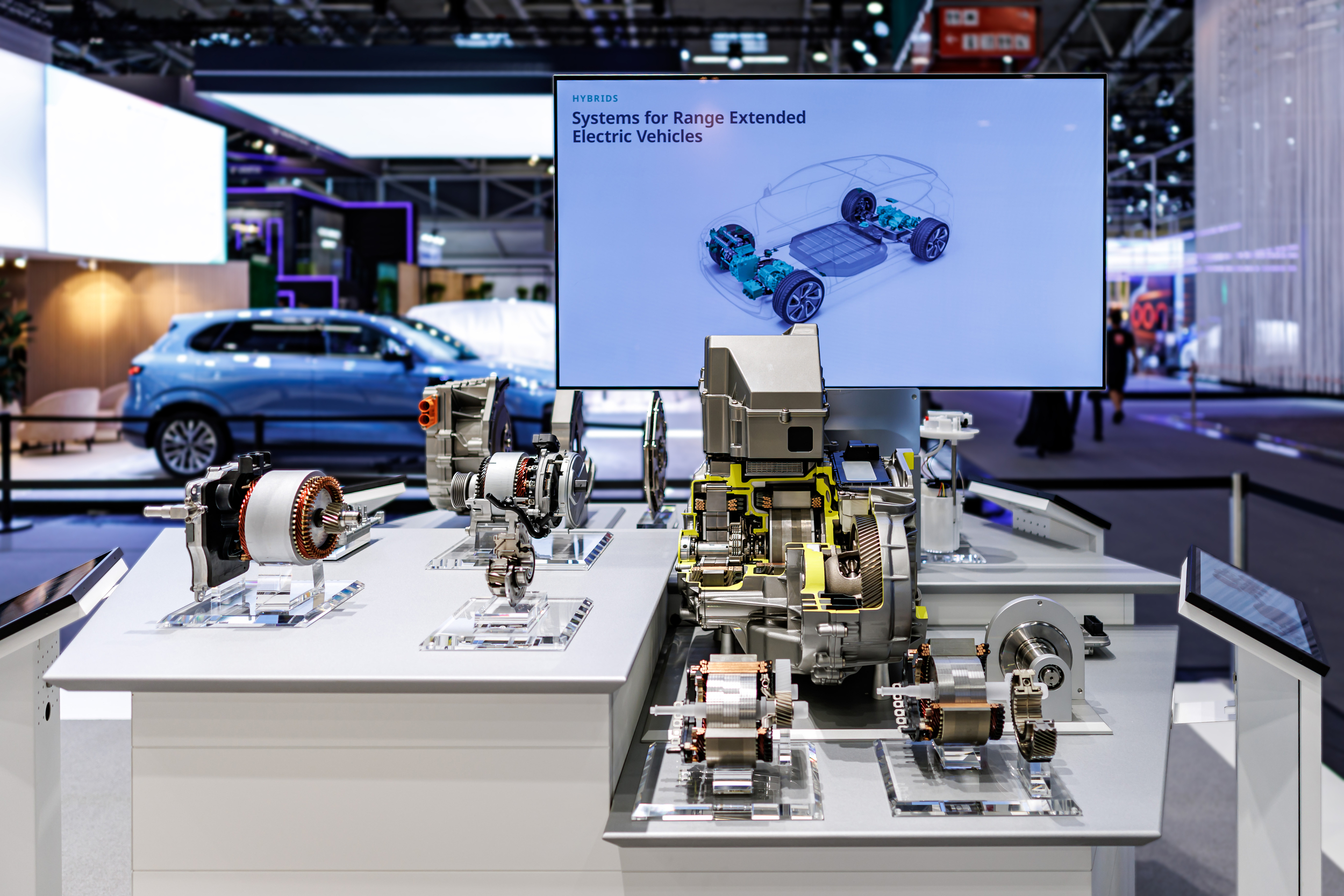
The second pillar of the Powertrain cluster targets hybrid drive systems and range‑extender concepts, which Schaeffler sees as important during the transition phase of e‑mobility. The supplier is presenting solutions for multiple hybrid topologies from P1 to P3 and beyond, with emphasis on high efficiency, reduced installation space and “technical maturity” so that systems can drop into existing vehicle platforms with limited re‑engineering.
A dedicated hybrid transmission platform for hybrid and plug‑in hybrid vehicles integrates mechanical elements, electric drive, software and functions into an all‑in‑one package. According to the company, this high level of vertical integration is also the basis for future range-extender systems that aim to make the combustion engine “imperceptible” to occupants while running it in more efficient operating windows.
System view and industrialization
Across both BEV and HEV/REEV offerings, Schaeffler frames its role less as a component supplier and more as a system partner for OEMs seeking to industrialize new powertrain mixes quickly. By combining actuators, sensors and control units with mechanical subsystems, the company aims to boost overall powertrain efficiency while meeting OEM targets on cost, performance and manufacturability.