Texas Instruments has introduced a new battery monitor designed to bring more intelligence, higher integration and real-time electrochemical diagnostics into battery management systems for electric vehicles and energy storage systems.
The device BQ79826Z-Q1 is positioned by TI as the industry’s highest-cell-count battery monitor with integrated electrochemical impedance spectroscopy, or EIS. For electric mobility engineers, the relevance goes beyond battery monitoring alone: more accurate battery data directly affects powertrain performance, charging strategy, thermal management and ultimately the usable range and safety margins of an electric vehicle.
The BQ79826Z-Q1 supports up to 26 cells in series per device. According to TI, this is eight more cells than competing solutions and up to 44% more channels than previous generations. In practical terms, the higher channel count can reduce the number of monitoring devices needed in a battery pack, helping designers simplify the bill of materials, reduce PCB space and lower system complexity without compromising the monitoring architecture.
This is particularly relevant for EV platforms, where battery pack integration is closely tied to vehicle packaging, weight, cost and manufacturability. Fewer monitoring components can also contribute to more compact battery management system designs, an important factor as OEMs and Tier 1 suppliers continue to work on scalable battery platforms across different vehicle segments and chemistries.
EIS as a diagnostic tool inside the cell
The most distinctive feature of the new monitor is the integrated EIS engine. Electrochemical impedance spectroscopy is used to analyse the internal behaviour of a cell by measuring its response to electrical excitation across different conditions. TI compares the function to an ECG for batteries: instead of simply measuring voltage and temperature from the outside, EIS provides more detailed information on the internal state of the cell.
For EV applications, this matters because early detection of abnormal cell behaviour is central to functional safety. The BQ79826Z-Q1 is designed to identify potential fault conditions from inside the cell before they become critical, including conditions associated with thermal runaway. The ability to detect degradation or abnormal impedance signatures at an early stage can give the battery management software more time to react, whether by adjusting power limits, modifying charging behaviour or triggering warnings.
The same diagnostic capability is also significant for stationary energy storage, where large battery systems are increasingly used to support grids, industrial sites and data centres. As energy storage systems grow in size and duty-cycle complexity, cell-level visibility becomes a key requirement for safety, availability and predictive maintenance.
More precise state-of-charge estimation
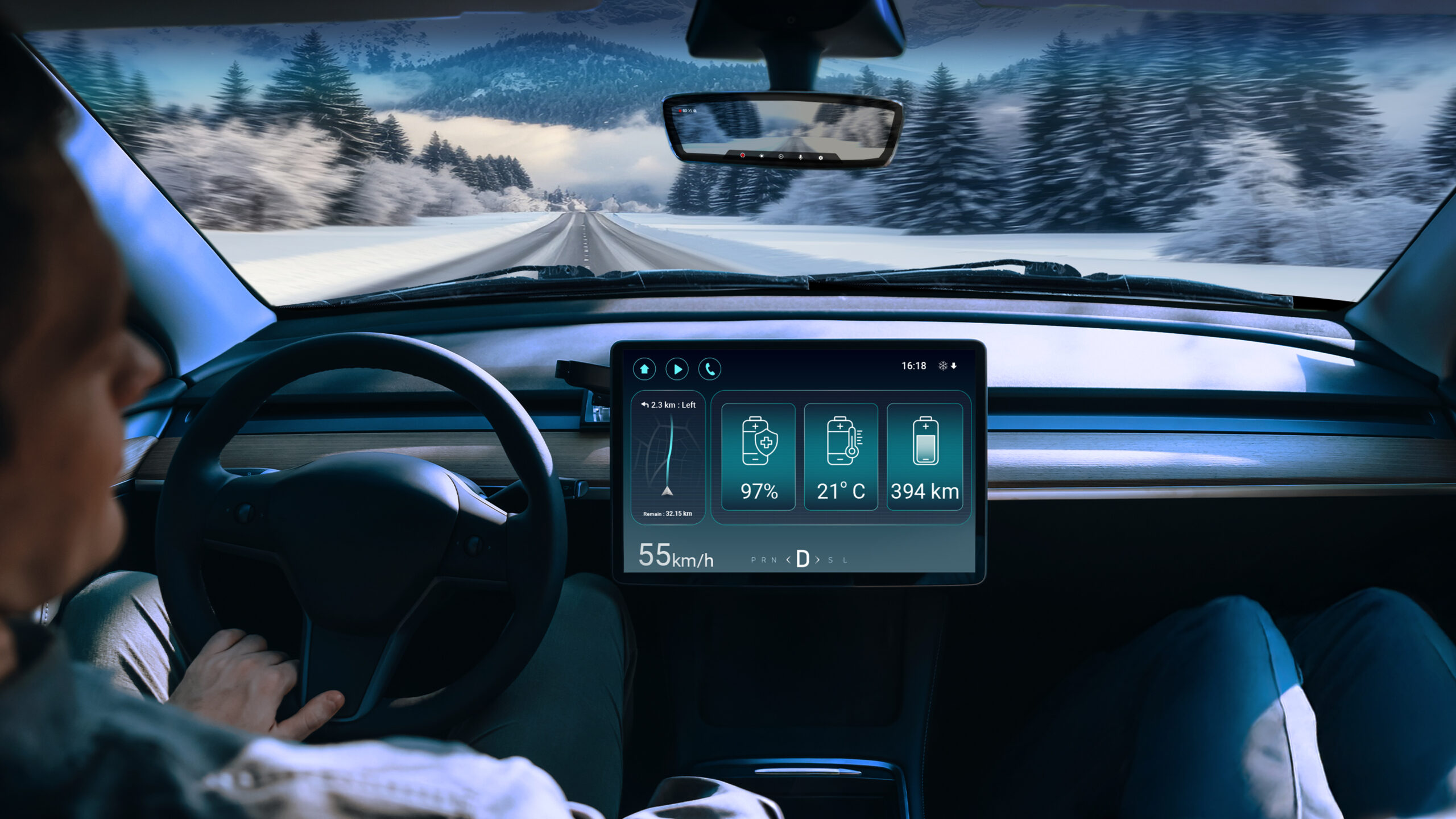
Battery data quality is a safety issue and also it has a direct impact on vehicle usability. One of the persistent engineering challenges in EVs is accurate state-of-charge estimation across temperature, ageing and different load profiles. Poor estimation can lead either to conservative operation, which reduces usable range, or to excessive stress on the battery, which shortens lifetime.
TI says the BQ79826Z-Q1 achieves voltage accuracy of less than 2 mV across a full temperature range from -40 °C to +125 °C. Combined with high-resolution, low-noise analog-to-digital converters, the device is intended to support more accurate state-of-charge and state-of-health calculations.
The integration of EIS can also help estimate cell temperature and charge condition more precisely, supporting strategies for faster charging without accelerating battery degradation. TI also states that the EIS measurement time is five times faster than in previous solutions.
For engineers working on electric drive systems, these parameters are important because the battery is not a passive energy reservoir. It defines the operating envelope of the inverter, motor and thermal system. Better battery diagnostics can therefore support more refined torque availability calculations, regenerative braking strategies and derating decisions under demanding conditions.
Although the BQ79826Z-Q1 is a battery monitoring device, its impact extends into the wider electric powertrain. Electric motor performance depends on the battery system’s ability to supply current safely and predictably. More accurate cell data can improve the coordination between BMS, inverter and vehicle control unit, particularly during high-load operation, fast charging, cold starts and regenerative braking.