Turntide has expanded its axial flux motor portfolio with the new AF300 and AF400 models, designed for hybrid and electric applications where installation space is limited. With high torque density and single- or double-stacked configurations, the motors allow OEMs to integrate electrified systems without redesigning entire platforms, while helping fleet operators reduce fuel consumption, emissions and operating costs by extending the life of existing equipment.
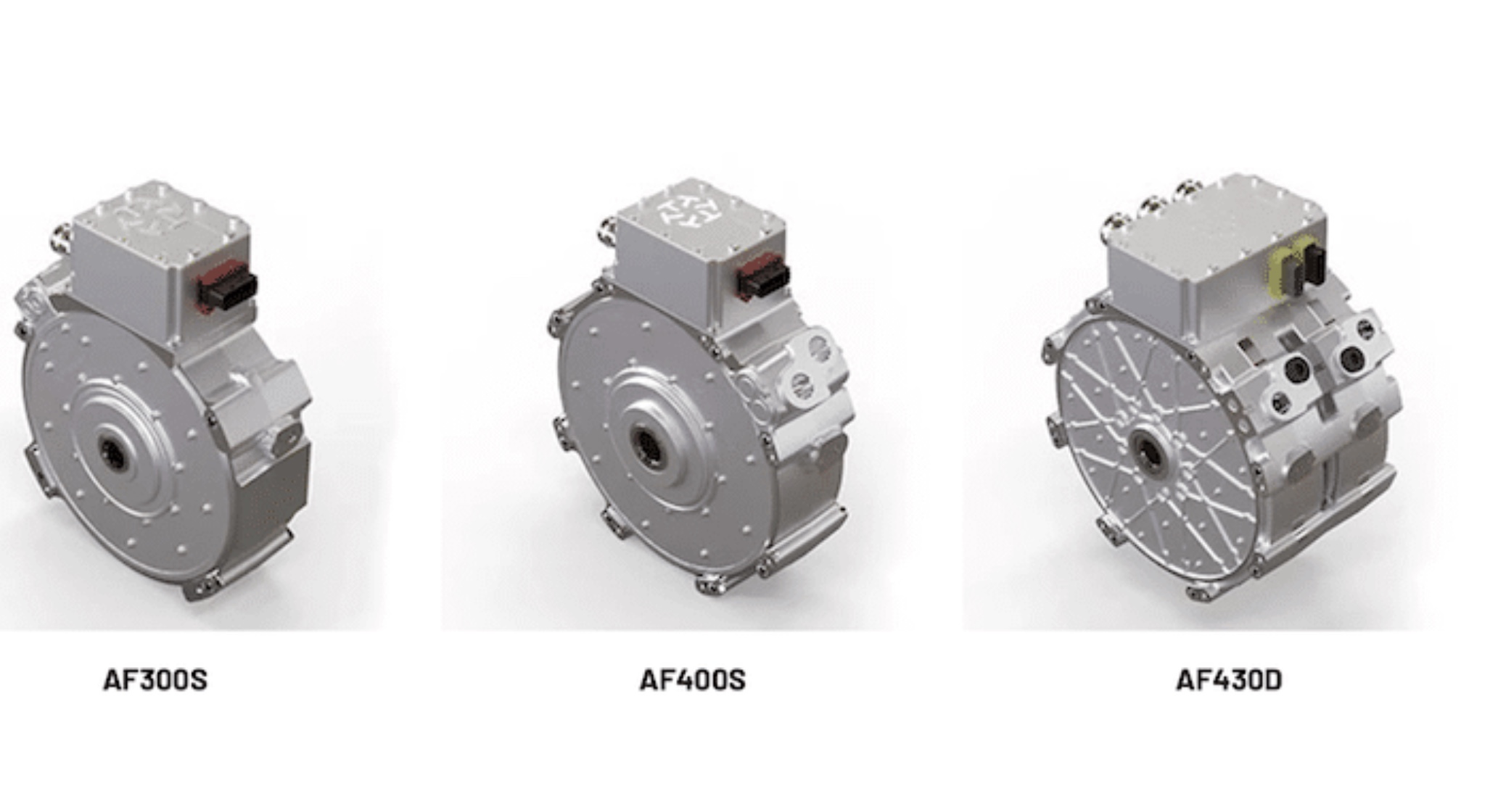
As hybrid and electric powertrains gain ground across commercial, industrial and off-highway applications, OEMs are facing a familiar engineering challenge: how to integrate more powerful electric systems into increasingly constrained spaces. Turntide Technologies has expanded its axial flux motor portfolio with the introduction of the AF300 and AF400 models, available in single- and double-stacked configurations, to address this requirement.
The new AF300 delivers more than 192 Nm of continuous torque, while the AF400 provides up to 290 Nm. The broader range gives manufacturers more freedom to match motor performance to specific application needs, from hybrid drivetrains to retrofit systems for existing vehicles and equipment.
Axial flux motors differ from conventional radial flux machines in the way magnetic flux travels through the motor. Their disc-like architecture allows a shorter axial length and a compact, low-profile design. This makes them particularly suitable for applications where packaging space is limited and where a full platform redesign would be costly or impractical.
For OEMs, the expanded portfolio offers a practical route to hybridization or electrification without major changes to the existing mechanical architecture. The availability of single- and double-stacked versions also allows engineers to scale torque and power according to duty cycle, available space and system requirements.
The same compact design is relevant for fleet operators looking to extend the service life of diesel-powered equipment. By converting existing platforms to hybrid systems, operators can improve efficiency without replacing the entire asset. According to Turntide, these conversions can reduce fuel consumption by 10% to 20%, depending on the application, while also lowering emissions and operating costs.
Turntide is also moving toward more scalable production. The previously announced AF430S and AF430D models are the first axial flux motors in the company’s range to be available with cast casings designed for high-volume manufacturing. Casting improves durability, consistency and cost efficiency, supporting broader deployment of hybrid and electric systems in demanding applications. The company plans to extend cast casings across the full axial flux portfolio in the future.
“Hybridization is gaining momentum because it delivers what we call a dual green effect,” said Turntide CEO Steven Hornyak. “It reduces fuel consumption and emissions while improving operating economics at the same time. Turntide’s axial flux motors make it possible to deliver hybrid systems where space and performance have typically been limiting factors.”
With the AF300 and AF400, Turntide increases the number of available torque and configuration options for compact electrified systems. The result is a more flexible motor platform for OEMs and fleet operators seeking to improve efficiency, reduce fuel use and extend equipment life without the complexity of a complete redesign.