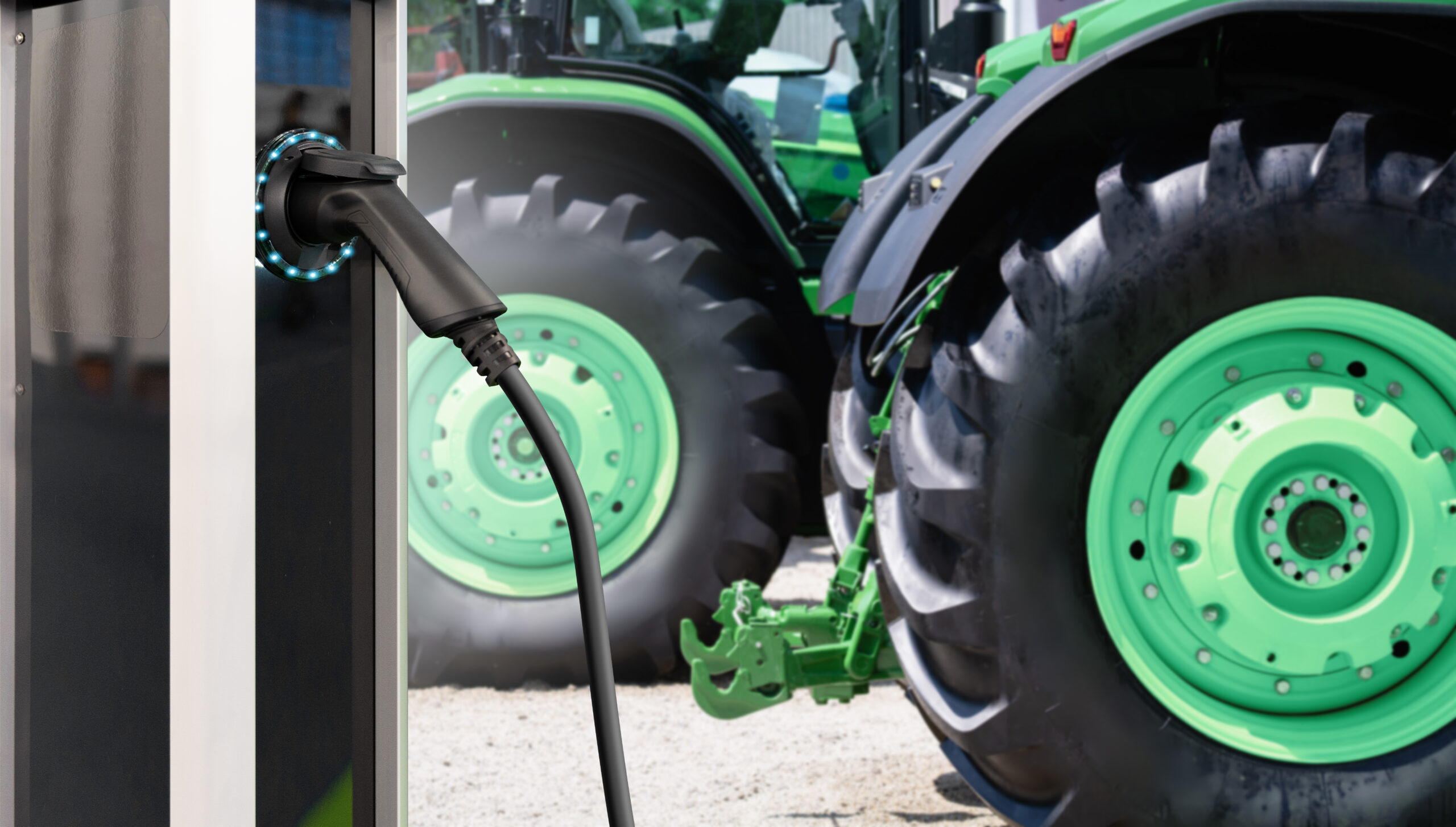
In the electrification of agricultural machinery, the electric motor represents much more than just a component: it is where efficiency, control, reliability and the ability to operate in extreme environmental conditions all come together. Bonfiglioli, with its long experience in electric motors for industrial automation and mobile machinery, has in recent years consolidated a range designed to meet the needs of modern agriculture, both for robots and AGVs and for towed machines and precision implements.
AC technologies: the heart of Bonfiglioli’s strategy
As Massimo Palomba, Bonfiglioli´s E-Mobility Global Sales Manager, explains, for the company the technological choice is clear: «We use exclusively AC motors, divided into three main families».
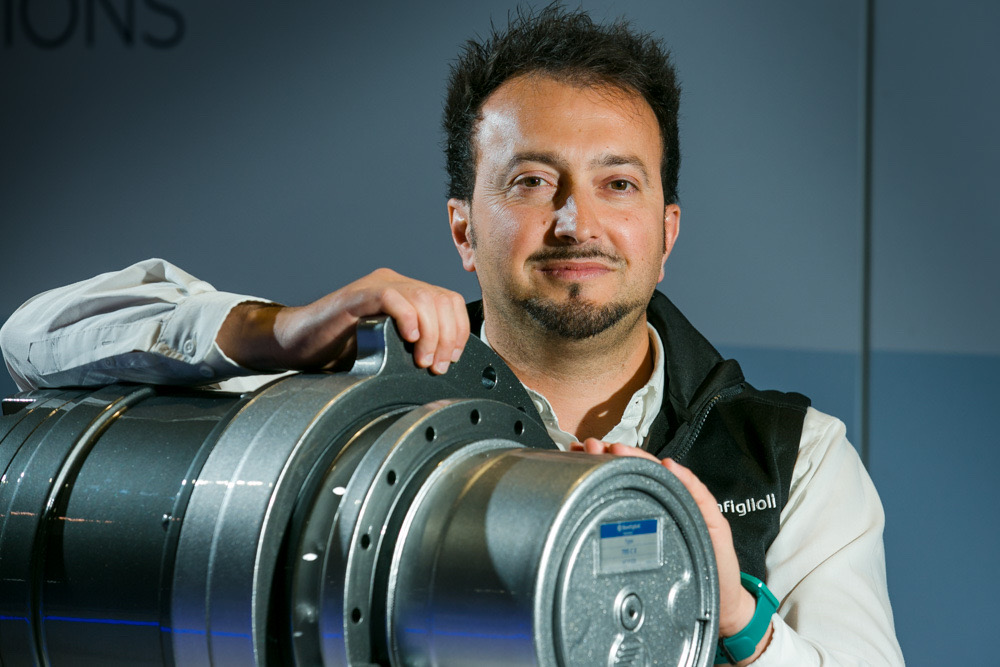
The first includes permanent magnet synchronous motors, used in the company´s best-known series: BMD for high-precision steering functions and BPM for driving pumps or operating organs. These are compact, high torque density brushless motors with supply voltages between 48 and 400 Vdc, characterised by protection levels above IP65-IP67 and virtually zero maintenance requirements. Their dynamic precision, combined with the ability to work in extremely confined spaces, makes them the ideal option for wheel and track mounted agricultural robots, as well as for new generation electrified implements.
Alongside them, Bonfiglioli also uses asynchronous motors, which are more suitable where a wide operating speed range is required. The choice between one technology and another is always made in a context of co-engineering with the manufacturer, evaluating objectives of efficiency, dynamics, cost and mechanical integration.
The answer to geopolitical tensions: magnetless reluctance motors
The evolution of the rare earth market and China’s recent export restrictions have accelerated the entry of a third technology: synchronous reluctance motors without magnets. These motors offer higher efficiency than asynchronous, while not reaching PM levels, and represent a strategic alternative for those who want to avoid supply risks associated with rare earth magnets. Palomba says: «Bonfiglioli arrives prepared for this breakthrough thanks to the skills developed in the automation division, which allows us to propose solutions that are immediately available even in complex supply scenarios».
Robustness and protection: ready for the field
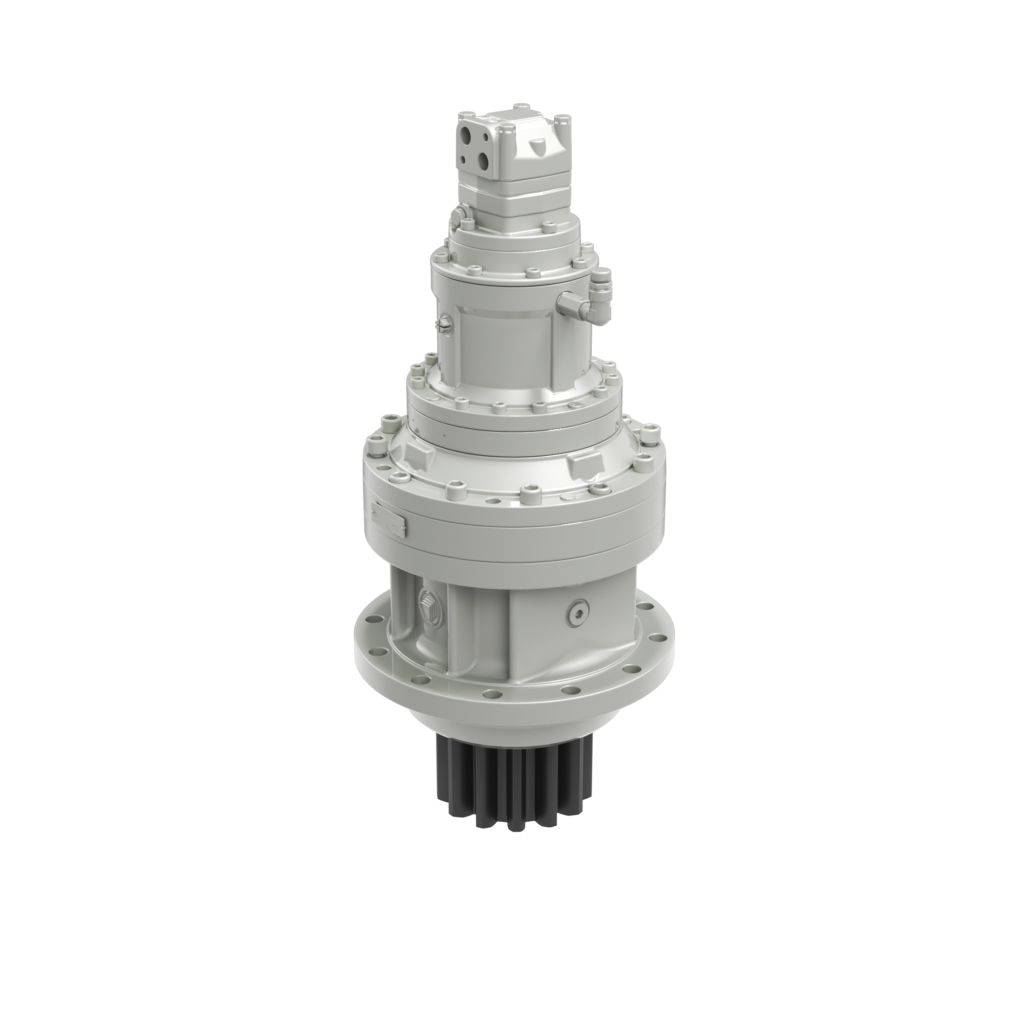
Applying an electric motor in agriculture means facing harsh conditions: water, dust, mud, pesticides, temperature changes. This is why Bonfiglioli motors intended for agricultural machinery achieve protection levels up to IP67, are laboratory tested to guarantee impermeability and resistance to contamination, and adopt construction solutions capable of withstanding continuous exposure to aggressive chemical agents. This is where the difference emerges between a motor designed for protected industrial environments and one designed to work in the vineyard, orchard or open field.
Compactness, silence and efficiency: the new challenges of electrics
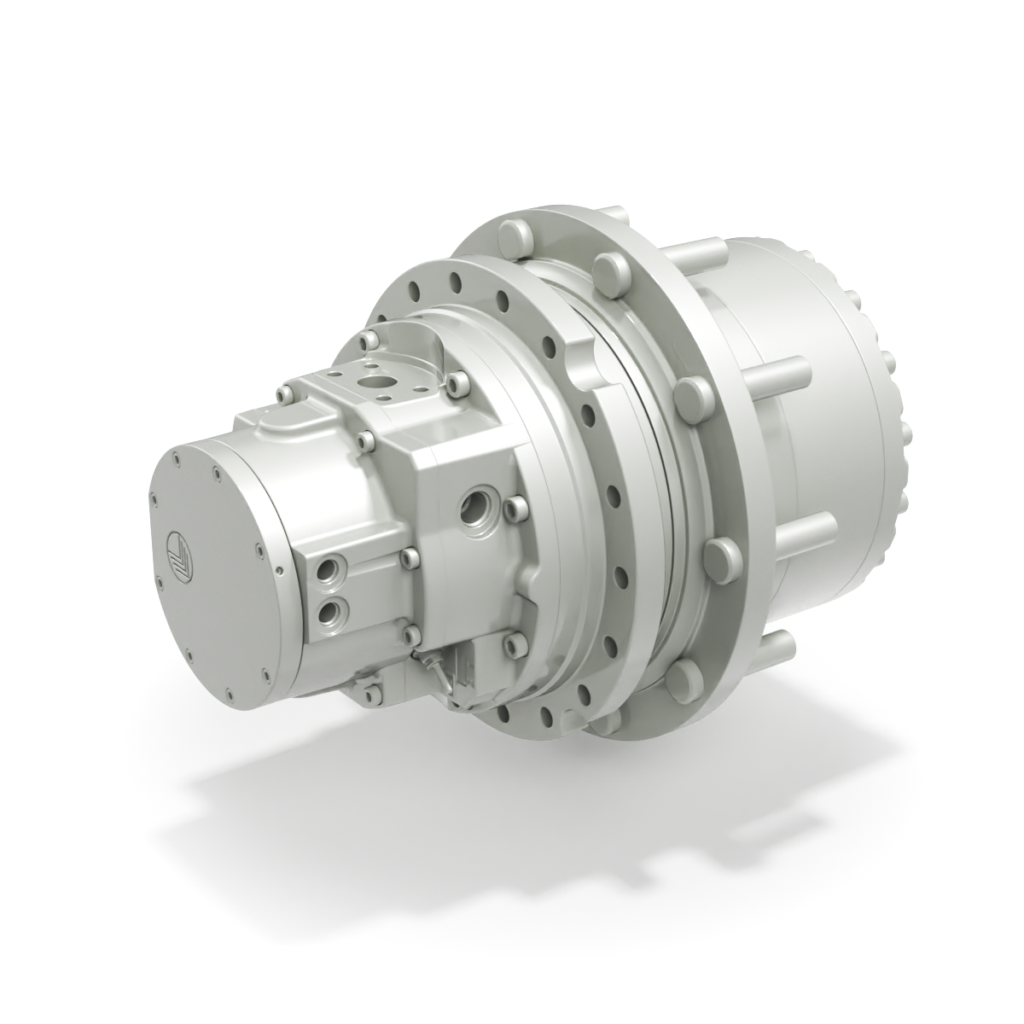
The transition from hydraulic to electric drives involves a number of technical rethinks. Electric motors, with the same power, have a lower torque density than hydraulics: that is why it is necessary to increase the reduction ratios and optimise the motor-gearbox assembly without changing the overall dimensions of the machine. «Moreover – emphasises Palomba – eliminating the typical noise of the diesel engine brings out the noise of the transmission, forcing us to work on refining the quietness of the gears». On the other hand, however, the advantages are obvious: higher energy efficiency, no routine maintenance on the engine, precise control of speed and torque, immediate response and the possibility of electrifying functions that were previously the sole preserve of hydraulics. For robots and AGVs, which require operational continuity and precision of movement, these advantages become crucial.
The most advanced frontier: electrification of operating tools
The most significant innovation, however, is the electrification of implements, the operating implements. Sprayers, vineyard machinery, pruning tools and precision applications can now be powered by compact and dedicated PM motors, developed in recent years to accompany the growth of small autonomous and electric tractors.
«This is where electric motorisation expresses its full potential: not only greater efficiency and less maintenance, but also lighter, more responsive tools that can be fully integrated with agricultural robots, which work thanks to fine control of the torque and speed of the motor» explains Palomba.
One engine, one system, one partner
«Bonfiglioli’s added value lies not only in the motor, but in its ability to provide a complete system: motor, gearbox, inverter and control» concludes Palomba. The internal modularity allows the design to be customised for each OEM while maintaining production efficiency, while the availability of three motor technologies guarantees an optimal solution for each electrifiable agricultural function. Whether autonomous robots, AGVs programmed for on-farm logistics or specialised implements designed to work between the rows, the Bonfiglioli range offers efficient and reliable combinations and systems.
AGVs (Automated Guided Vehicles) are vehicles that move automatically, but following predefined paths: lines on the ground, memorised coordinates or fixed trajectories. They are precise, repetitive, reliable in monotonous tasks, but do not ‘reason’ about the context.
Agricultural robots, on the contrary, are autonomous and ‘intelligent’ machines, based on advanced sensors, artificial vision and navigation algorithms that allow them to interpret the environment, choose the best path, correct trajectories, avoid obstacles and adapt to changing conditions.
In short: the AGV executes, the robot decides. And for both, the new generation electric motorisation becomes the fundamental enabler of their evolution.