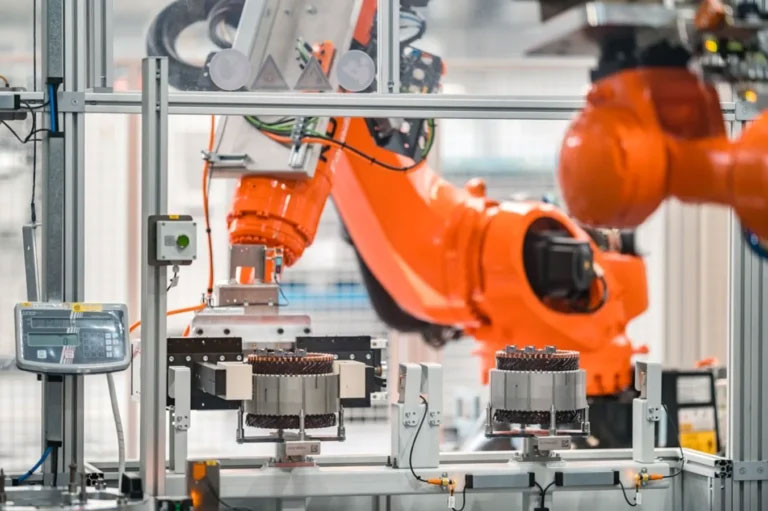
The long-term agreement of Bosch with Mercedes-Benz covers electric motors for the premium automaker’s next-generation EV powertrains, confirming the strategic role of motor technology in the next phase of automotive electrification. Bosch plans to produce more than seven million EV components in 2026..
Bosch has secured a major contract from Mercedes-Benz for the supply of electric motors destined for the premium carmaker’s next generation of electric powertrains. The agreement, which extends into the 2030s, involves large-volume production and covers multiple performance classes, confirming that electric motor technology remains a core element in the development of future EV platforms.
The order also strengthens the long-standing relationship between Bosch and Mercedes-Benz, while highlighting the increasing industrial relevance of large-scale electric drivetrain production. For Tier 1 suppliers, the ability to manufacture complex electric drive components at high volumes, across different markets and vehicle architectures, is becoming a key competitive factor.
Electric motor production scales with EV demand
Bosch currently supplies electromobility technologies and solutions to more than 50 vehicle manufacturers worldwide. In 2025, the company secured more than 70 customer projects globally, despite strong price pressure and uneven EV market development across regions.
For 2026, Bosch plans to manufacture more than seven million components for electric drive systems. The company also states that, across its global production network, around seven electric motors are currently manufactured every minute. These figures show how electric motor production is moving from a technology-development phase into a large-scale industrial phase, where volume, repeatability and cost control are as important as performance.
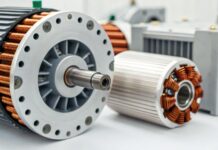
According to Bosch, the motors supplied under the Mercedes-Benz agreement will reach efficiency levels of up to 98% and offer higher power density. The design integrates new winding technology and an innovative rotor oil-cooling system, both intended to improve thermal management and operating performance.
The scalability of the motor platform is another important element. Bosch says the length of the electric motor can be adapted according to the required power output, allowing the same technology base to be used across different axle variants and vehicle models. This approach supports modularity in EV platform development and can simplify integration across multiple performance classes.
The combination of high efficiency, optimized winding, advanced cooling and scalable architecture is designed to enable more compact drivetrain layouts. For vehicle manufacturers, this can help reduce weight, save installation space and lower overall system costs, while maintaining the performance levels required in premium electric vehicles.