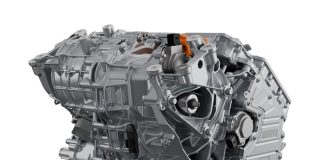
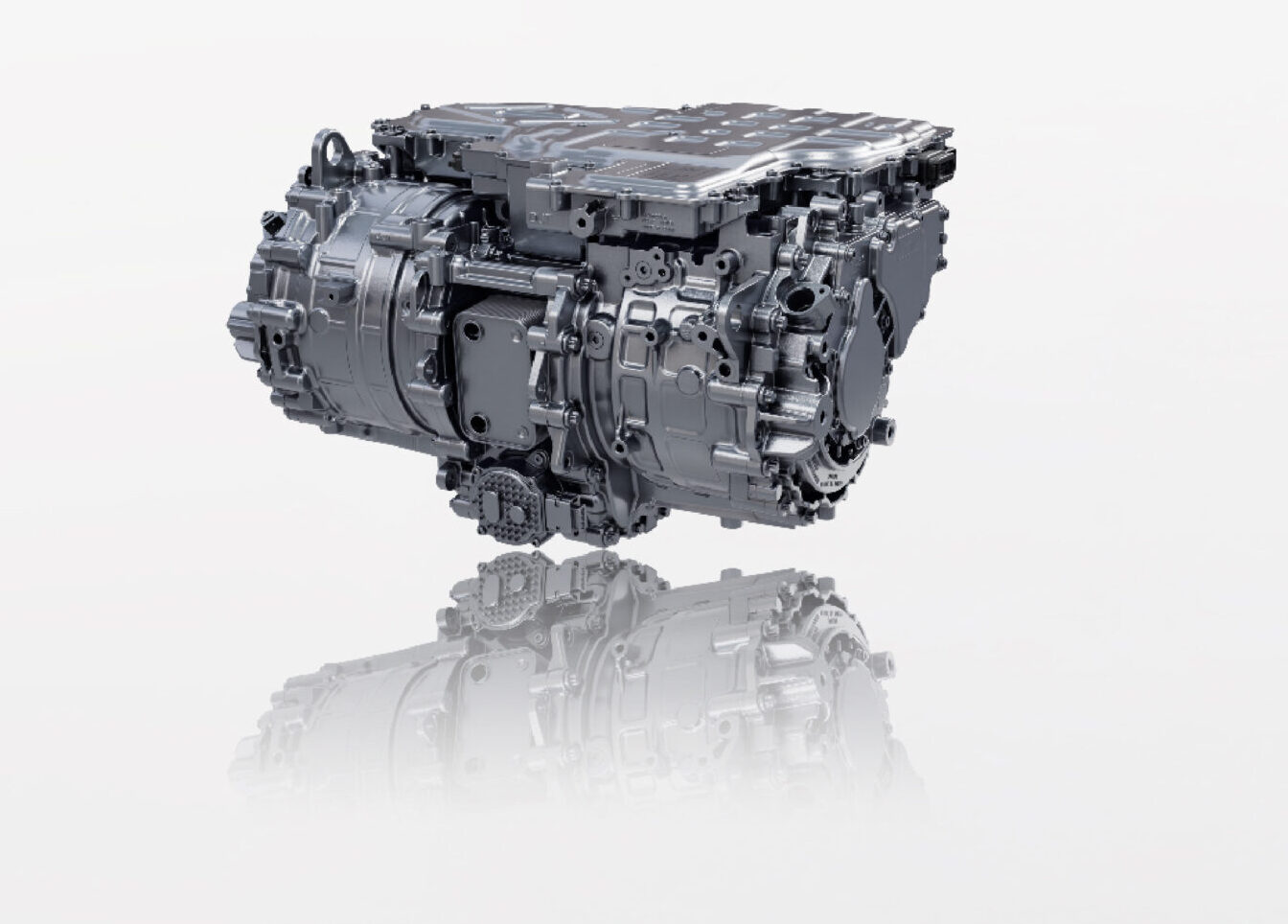
Developed by InfiMotion for 800 V electric platforms, the new propulsion unit Thunder combines twelve hardware modules and four software functions in a 75 kg package.
Geely Galaxy has unveiled Thunder, an intelligent 16-in-1 electric drive system developed by InfiMotion, a subsidiary of Geely Holding Group. The company claims a system efficiency of 93.8% over the China Light-Duty Vehicle Test Cycle, or CLTC, describing it as a record for an electric propulsion system ready for series production. The figure refers to the efficiency of the complete drive unit rather than the electric machine alone.
Thunder integrates twelve hardware modules within a single architecture: the traction motor, inverter, reduction gearbox, DC-DC converter, onboard charger, power distribution unit, high- and low-voltage battery management systems, vehicle control unit, thermal management system, active pre-charging module and power-domain gateway.
Four software layers are added for energy management, charging control, vehicle motion control and system-health monitoring. According to Geely, this level of functional integration eliminates more than 180 individual components, reducing wiring, interfaces and potential failure points.
800 V architecture and silicon carbide electronics
The system is based on an 800 V electrical architecture and uses silicon carbide power semiconductors. Geely states that the higher operating voltage cuts current-transmission losses by up to 80% compared with lower-voltage platforms, while the SiC inverter reduces switching and conduction losses.
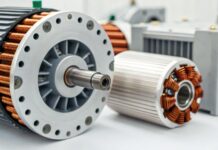
The electric motor uses 0.2 mm low-stress electrical steel laminations, compared with the 0.35 mm sheets commonly adopted in automotive traction machines. Geely says the thinner laminations reduce iron losses by approximately 30%.
The stator also employs a flat-wire winding arrangement known as Umini-Pin. The design shortens the overall copper path and is claimed to lower winding losses by around 2%.
The complete unit weighs 75 kg, around 15% less than Geely’s reference products, and achieves a claimed power density of 11.8 kW/kg. Its vertical height remains below 325 mm.
A magnesium-alloy housing combines the motor, gearbox and mounting structures. The compact arrangement is said to free up approximately 28 litres of vehicle packaging space, while shortening high- and low-voltage wiring by 30% and 15%, respectively.
Centralised power-domain control
One of Thunder’s main engineering features is the centralisation of powertrain control functions. Instead of relying on several distributed electronic control units, the system processes the entire power domain through a single chip.
Geely claims that this reduces command latency from approximately 40 ms to 2 ms. Predictive algorithms and adaptive control strategies are used to manage torque delivery, coordinate the axles and correct deviations from the requested output.
The software also optimises the motor’s loss profile. At high vehicle speeds, the control strategy dynamically balances copper and iron losses, delivering a claimed 0.8-percentage-point improvement in machine efficiency.
At low ambient temperatures, the system can also pre-store thermal energy. At -18 °C, Geely says this strategy reduces the energy required for cabin heating by more than 40%.
Direct oil cooling through 54 channels
To maintain output under prolonged high-load operation, InfiMotion developed a centrifugal oil-cooling system with 54 dedicated channels. The circuit directs coolant towards the stator end windings, one of the most thermally stressed areas of the machine.
According to the manufacturer, the solution lowers the motor’s peak operating temperature by 15 °C and increases the expected lifetime of the insulation system by 10%. The design is intended to limit thermal derating during sustained high-speed or high-torque operation.
The first production application is expected to be the Geely Galaxy TT electric saloon. In the all-wheel-drive configuration, the vehicle combines a 180 kW front asynchronous motor with a 245 kW rear permanent-magnet synchronous machine, delivering a total peak output of 425 kW.
Geely reports that Thunder has undergone more than 9,000 validation tests and five million kilometres of road testing. The unit was reportedly assessed across a temperature range from -60 °C to 140 °C, subjected to 1,512 hours of salt-spray testing and certified to IP68 protection standards.
Thunder reflects a broader shift in electric powertrain engineering. Further efficiency gains are increasingly being achieved not through the motor alone, but through the coordinated design of the machine, power electronics, transmission, thermal system and control software.