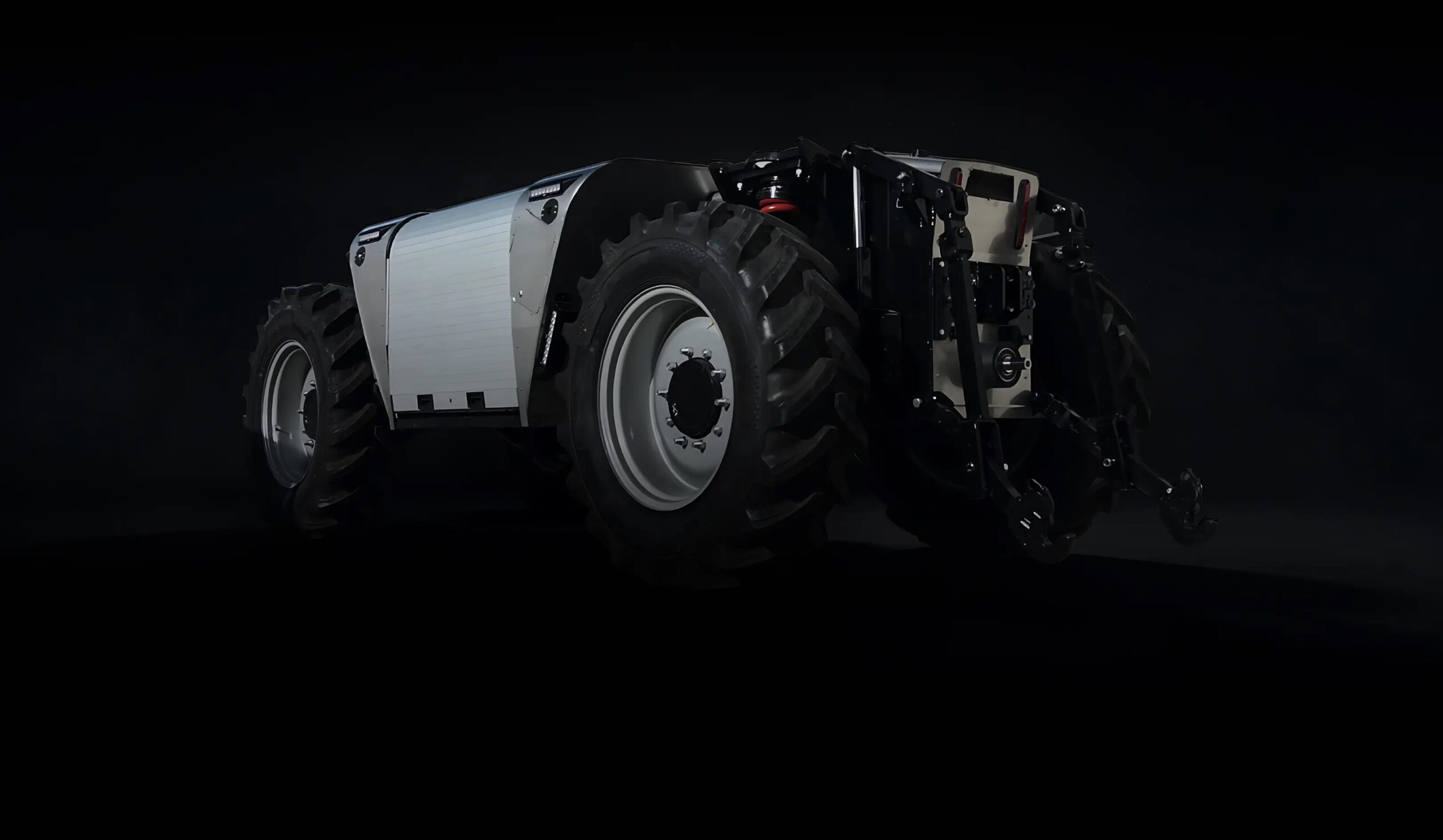
Voltrac is moving tractor Thor towards series production with an architecture that breaks with the conventional tractor layout. Instead of a traditional mechanical drivetrain and gearbox, the autonomous platform uses four independent electric motors, one for each wheel, powered by a 200 kWh swappable battery. The result is a vehicle conceived from the outset around electrification, simplified mechanics and autonomous operation.
The current Thor 2 has entered the pre-series stage, while the subsequent Thor 3 is expected to represent the first production-ready version of the vehicle. Voltrac is preparing its 1,200-square-metre manufacturing facility in Valencia for an initial capacity of 96 units per year, with longer-term plans indicating a potential expansion to around 1,000 vehicles annually.
From an engineering perspective, one of Thor’s defining features is that the vehicle was conceived around electric propulsion and autonomous operation from the outset, rather than deriving from the conversion of a conventional diesel tractor.
The drivetrain uses four independent electric wheel motors, eliminating much of the mechanical transmission normally required in agricultural machinery. According to Voltrac, this architecture reduces the overall number of components by approximately 70%, with the aim of simplifying maintenance while increasing reliability in demanding operating environments.
Energy is supplied by a 200 kWh battery system. The battery packs are swappable, a solution intended to minimise vehicle downtime during intensive field operations. Voltrac states that the capacity can provide up to eight hours of ploughing or around 20 hours of less energy-intensive driving, depending on the application.
Despite its unconventional drivetrain, Thor has been designed to work with existing agricultural equipment. The platform retains interfaces for conventional implements, including a three-point hitch and PTO, allowing electrification and automation to be introduced without requiring a complete redesign of the machinery connected to the vehicle.
The Thor 2 development programme has also involved updates to the propulsion system, PTO and hydraulics, together with improvements to autonomous assistance for the tele-operator and easier access for maintenance and repair operations.
Autonomy remains another central part of the architecture. The platform can be remotely supervised and operated locally, while Voltrac is developing a model in which a single operator can oversee several vehicles working in different areas. The machine integrates a 360-degree camera system and redundant connectivity through two SIM cards and satellite communication.
Thor is also increasingly being positioned beyond the agricultural sector. In October, Voltrac joined Espai Aero Comunitat Valenciana, the regional aerospace and defence cluster, highlighting the platform’s potential as an unmanned ground vehicle for logistics, towing, evacuation and operations in hazardous environments.
The move into pre-series production therefore marks a significant stage for the project: the focus is shifting from prototype development and field validation towards repeatable manufacturing of an electric vehicle architecture conceived specifically for autonomous operation.