Dürr is supplying final assembly systems for Volvo Cars’ new electric vehicle manufacturing plant in Košice, Slovakia. This plant, scheduled to start production in 2027, will use integrated conveying, fluid filling and end-of-line measurement systems. The project also reflects some of the changing requirements of EV manufacturing, particularly in thermal-management fluids and final vehicle calibration.
The facility is designed for a maximum annual capacity of 250,000 vehicles, with production currently scheduled to begin in 2027. The contract covers the design and turnkey implementation of several elements of the final assembly process, including conveying, fluid filling and end-of-line testing. The systems are being integrated under Dürr’s NEXT.assembly concept, which combines handling, assembly, filling and testing technologies within a modular production architecture.
For an EV plant, one technically relevant area is fluid handling. The filling equipment specified for Košice is being designed to accommodate future low-conductivity coolants as well as next-generation air-conditioning refrigerants. Low-conductivity fluids are becoming increasingly relevant in electrified vehicle thermal-management architectures, where cooling circuits may operate close to high-voltage components. The release does not provide details of the vehicle platform or individual cooling-loop architecture, but the provision for alternative fluids indicates that the filling infrastructure is being designed with future powertrain and thermal-management requirements in mind.
End-of-line measurement and calibration
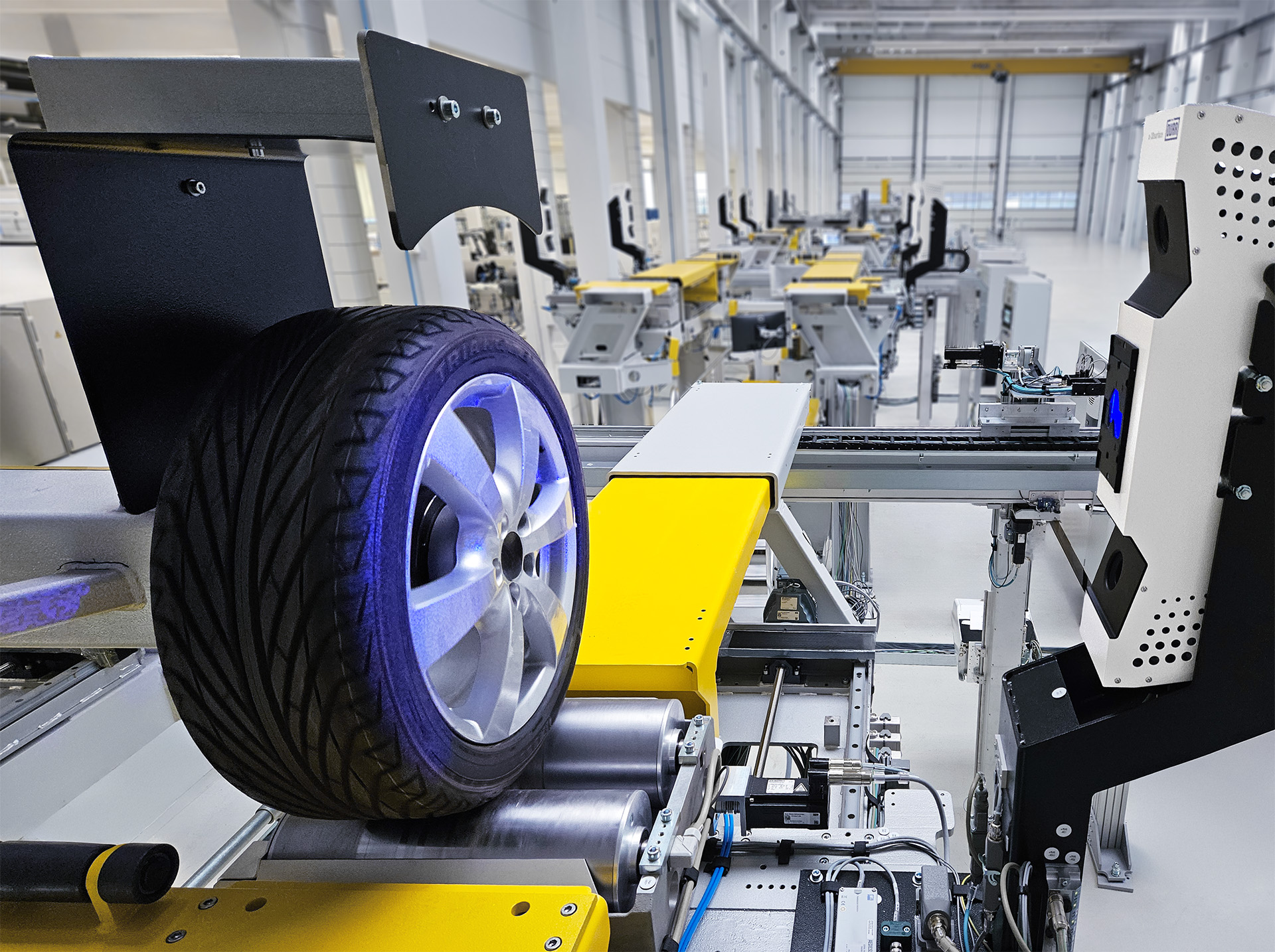
Dürr will also provide equipment for chassis geometry measurement and headlamp adjustment. The x-wheel system will be used for measuring and setting wheel alignment, supported by the contactless x-3Dsurface sensor. According to the supplier, the sensor can measure larger surface areas and is designed to work with different tyre types and body geometries.
The vehicle driving axis determined during this process is subsequently used as a reference for headlamp and integrated LED module alignment. This is becoming a more demanding end-of-line operation as lighting systems incorporate larger numbers of individually controlled LEDs and more complex beam functions.
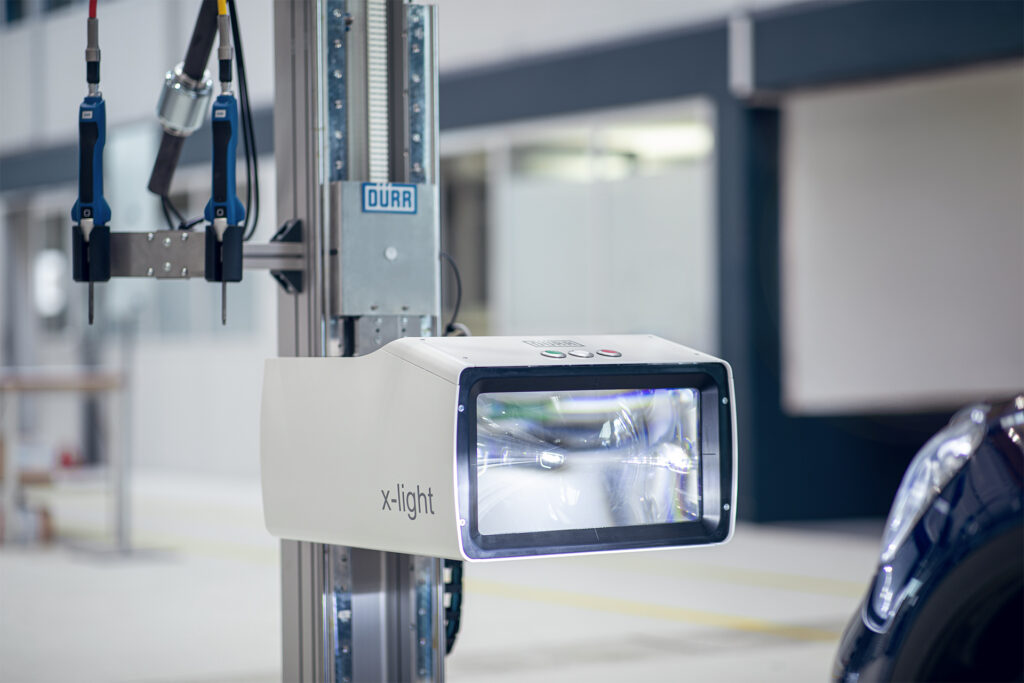
For this stage, the plant will use Dürr’s camera-based x-light system, which measures and adjusts low-beam, high-beam and fog-light functions. The system is intended for semi-automatic adjustment in accordance with ECE and SAE requirements.
More than three kilometres of conveying equipment
The material-flow system is another substantial part of the installation. More than three kilometres of conveyors will move vehicle bodies and doors through the final assembly area. The equipment includes electric monorails, skillet platforms and modular chain conveyors.
In a high-volume EV factory, this type of transport infrastructure determines how individual assembly and inspection stations are linked and synchronized. Its role is therefore less about vehicle technology itself than about maintaining production takt, routing flexibility and availability across the line.
The project is notable from an electric-vehicle manufacturing perspective because it concerns the downstream integration of EV production rather than the manufacture of the traction motor itself. Dürr’s announcement does not disclose electric motor assembly, inverter production or propulsion-system testing equipment for Košice. Instead, it illustrates how the transition to electric architectures is also affecting conventional final-assembly operations, from coolant filling to vehicle geometry measurement and automated material handling.