
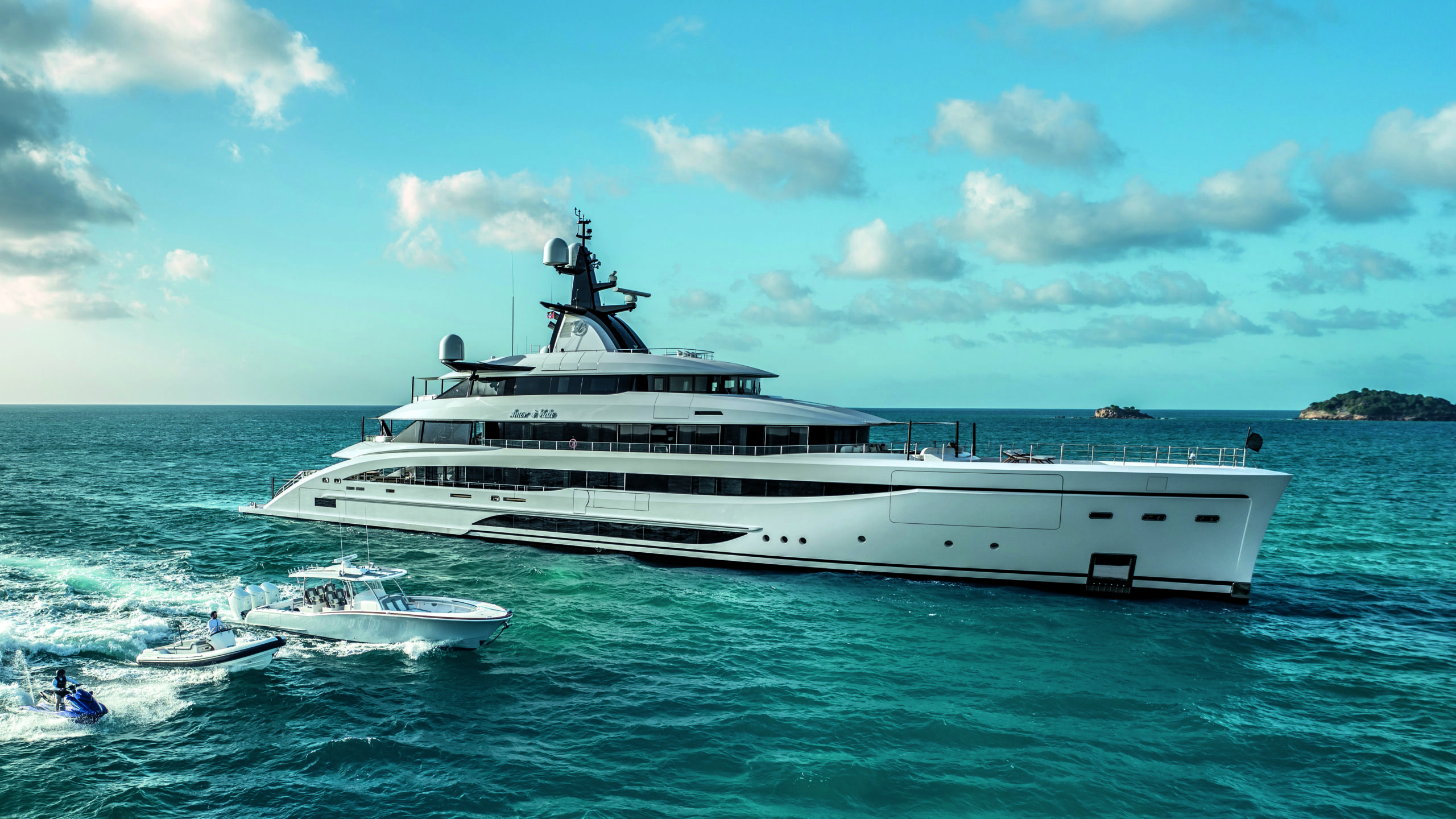
The hybrid system of Amor à Vida, a custom yacht built by CRN, can be described as an integrated architecture at the heart of which lies a 260 kWh battery pack. This storage system is not an isolated component but works in symbiosis with internal combustion engines – both the main propulsion engines and the onboard generators – and with electric motors to create an advanced energy ecosystem.
The distinctive feature of this system is not hybrid or fully electric navigation: Amor à Vida is not designed to sail in silent mode, requiring that at least one thermal system be active at all times. The engineering merit of the onboard hybrid system is evident on three fronts: the ability to operate the engines at their points of maximum efficiency, i.e., under conditions of minimum specific consumption per kWh produced; the reduction in system operating hours; and the possibility to power onboard electrical loads (hotel load) even without generators running.
In short, the hybridization of Amor à Vida does not change the energy source, but redefines its efficiency in use. As Filippo Belcecchi, Head of CRN and Ferretti Group Superyachts Division Engineering Dept, points out: «We are not reinventing the laws of physics; energy must still be generated, and to date the main source of generation is fossil fuel. The advantage lies in being able to optimize engine performance.» It is on this balance that the entire system is built.
System Architecture
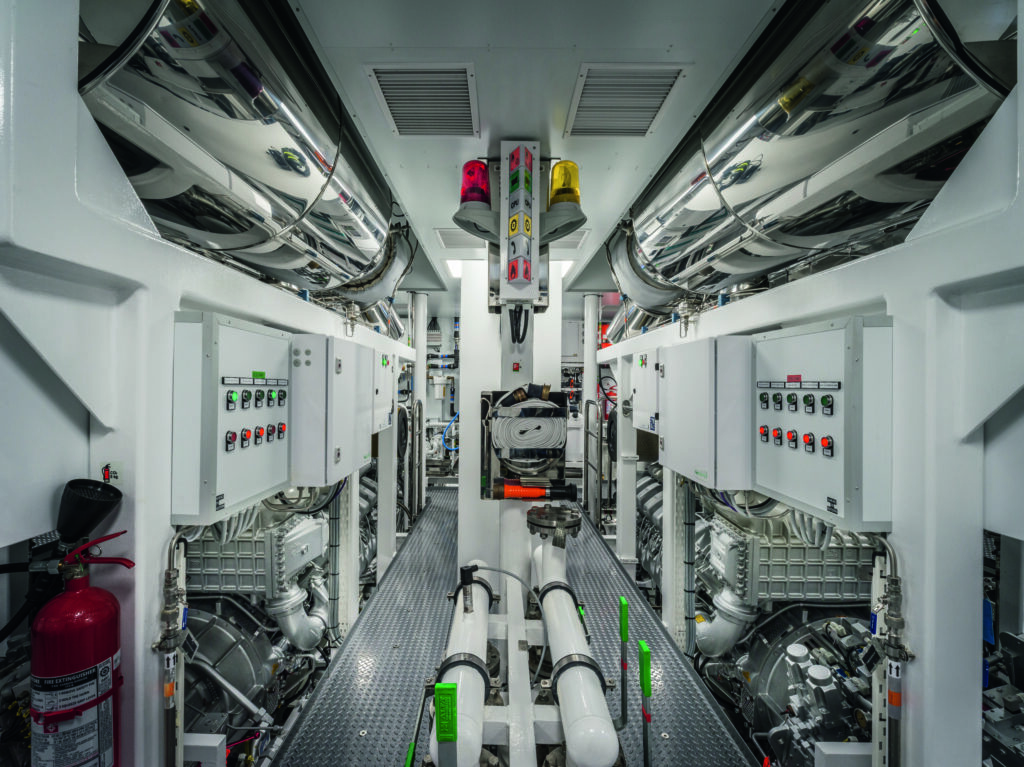
The system is built around a classic configuration for this class of yacht, based on two independent shaft lines, each associated with a main internal combustion engine (an MTU 12V4000 M63 – approximately 1,500 kW at 1,800 rpm) and an Oswald Elektromotoren permanent-magnet AC synchronous electric motor installed in-line (actually mounted above the shaft line and mechanically coupled via a gearbox).
The electric motors have a nominal power of approximately 200 kW, with an operational output of around 150 kW and up to approximately 200 kW in absorption (generator mode). These are high-efficiency machines, with efficiencies in the order of 96%, capable of delivering around 1,150 Nm of torque – rising to over 1,270 Nm under overload conditions – and operating over a wide speed range up to approximately 3,000 rpm thanks to field weakening, modulating torque according to speed.
The system is therefore symmetrical. While this does not correspond to class redundancy requirements, it still provides a degree of operational robustness: under certain conditions, the system can continue operating, albeit at reduced power, even with only one section active.
This propulsion architecture is complemented by a hybrid electrical system organised into two domains: a main AC network, powered by generators and supplying onboard loads, and a DC network built around a DC bus acting as an energy collector.
DC bus and power conversion: the core node
The DC bus represents the heart of the architecture. All the power sources of the hybrid system converge on this direct current busbar, and energy flows branch out from it to the various loads.
Connected to the DC bus are: the two battery banks (2 × 130 kWh), the AC/DC and DC/AC power converters, and the two electric motors on the drive shaft. The connection between the DC and AC networks is ensured by inverters and transformers, which perform a dual function: energy conversion and separation of the two systems, ensuring safety and voltage management.
The result is a fully bidirectional system, in which power can flow in both directions between the propulsion system, the batteries, and onboard electrical loads.
PTO Mode: propulsion becomes power generation
In operational mode, the system operates in PTO (Power Take-Off) mode. During navigation, the two main combustion engines provide propulsion, with each engine driving its own electric machine to generate power. This power, produced as alternating current, is converted to DC, fed into the DC bus, and redistributed to the hotel load or batteries.
In this scenario, it is possible to shut down the generators completely. The system thus switches from a traditional configuration with five active internal combustion engines (2 main engines + 3 generators) to a configuration with only two active engines.
As confirmed by operational experience: «During the yacht’s transfer from Europe to the United States» Belcecchi emphasizes, «PTO mode was used continuously, with a very positive perceived level of onboard comfort.»
Dynamic control and system logic
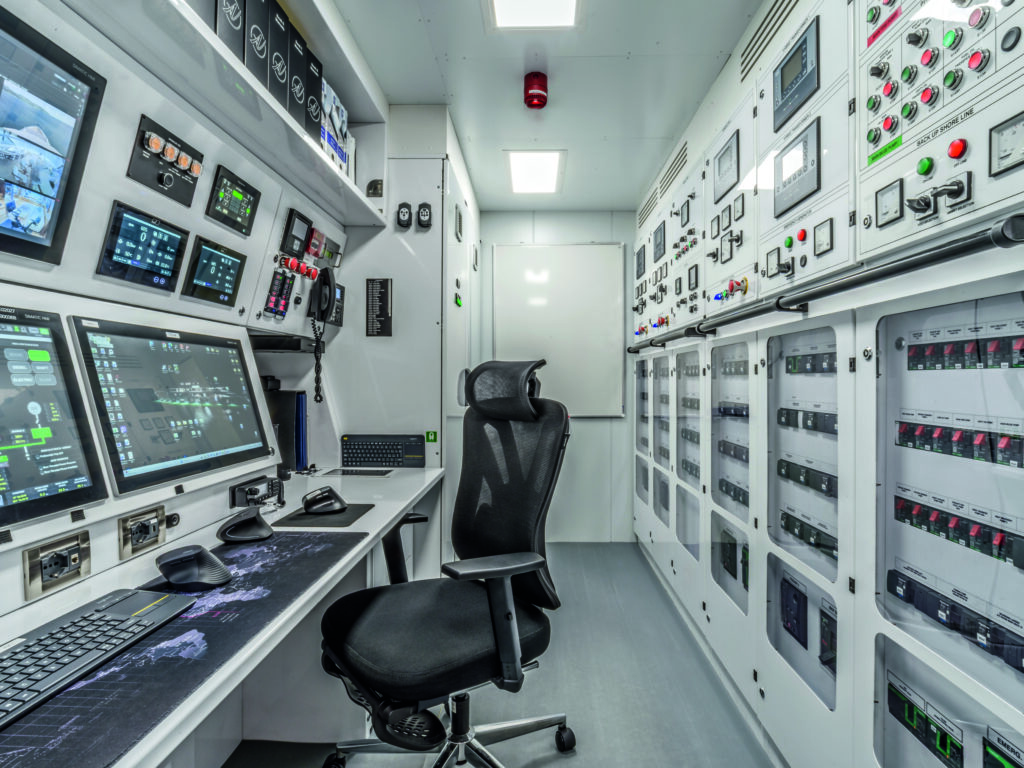
Energy management is handled by a multi-level system consisting of the Power Management System (PMS) and the Battery Management System (BMS), both developed in collaboration with development partners.
The PMS represents the top level and controls in real time which generators are active, their load level, and the role of the batteries (charging or discharging). The system is based on dynamic control, explains Belcecchi, «optimizing the system configuration based on feedback data from the peripherals, such as instantaneous load and power demand.»
A key element is the generator controller (DEIF), which modulates power output via frequency signals (around 50 Hz), determining at every moment whether to increase or decrease output.
Peak shaving and load balancing
In this context, the 260 kWh batteries play a fundamental role as an energy buffer. «When the load suddenly increases – explains Belcecchi – with the activation, for example, of 30–40 kW loads, the system avoids starting a second generator by engaging the batteries. This is the principle of peak shaving. At the same time, the PMS distributes the load among the available sources to keep the generators within their optimal range, typically between 70% and 80% of the rated load. This is the load balancing function. The reason is well known: a motor operating at 70–80% is much more efficient than two motors at 40–45%.»
Energy balance
Analysis of the data collected during the initial sea trials reveals an interesting trend. At the same speed (around 12 knots), in hybrid mode the main engines show an increase in fuel consumption of approximately +40 L/h compared to traditional propulsion, due to the additional torque required by the electric motors. However, it is to consider that the generators (there are 3 on board Amor à Vida), which consume about 45–50 L/h each at 70% load, can be completely shut down. The result is a net positive balance, with total savings of up to 40 L/h.
Added to this are indirect benefits such as reduced generator running hours, lower maintenance costs, and reduced noise and vibration. Switching from five to two active units represents a significant leap in terms of comfort.
Heat recovery, thermal integration of the system
In addition to managing electrical flows, Amor à Vida also integrates a heat recovery system that contributes to the overall optimization of onboard energy consumption.
The principle is relatively simple: the heat produced by the engines and generators, normally dissipated through the cooling circuits, is captured via heat exchangers and transferred to a closed water-glycol circuit. This heat transfer fluid conveys the energy to onboard services, specifically the three onboard boilers and, under certain operating conditions, the heating of pools and other spaces.
«The system allows for a reduction in the use of dedicated electric heating elements in the boilers,» Belcecchi points out, «which on vessels of this scale can require power in the range of 20 kW (3 heating elements of ~7 – 7.5 kW each). The integration of heat recovery therefore allows for the utilization of energy already available on board, improving the overall efficiency of the system without affecting primary power generation.»
Although it is a separate subsystem from the hybrid architecture, heat recovery follows the same design logic: maximizing the use of generated energy and reducing waste throughout the entire operating cycle.
Limitations of electric propulsion in yachts
The current configuration does not allow Amor à Vida to operate in zero-emission mode. «To understand why, just look at the numbers: to move the yacht at about 7 knots, approximately 100 kW per shaft is required, for a total of 200 kW for propulsion alone; the hotel load requires an additional 100 – 150 kW. The total power requirement is therefore around 300 – 350 kW.»
With an installed capacity of 260 kWh (the maximum that could be installed in the available space at the time of the Amor à Vida project), the theoretical range would be limited to just a few minutes. Not surprisingly, even with newer 300-kWh batteries, the operational window in zero-emission mode is estimated at around 20 minutes. The design choice was therefore clear: prioritize energy management and comfort over limited and insignificant electric propulsion.
Evolving Technology
One of the most interesting aspects is the speed at which the technological landscape is evolving.
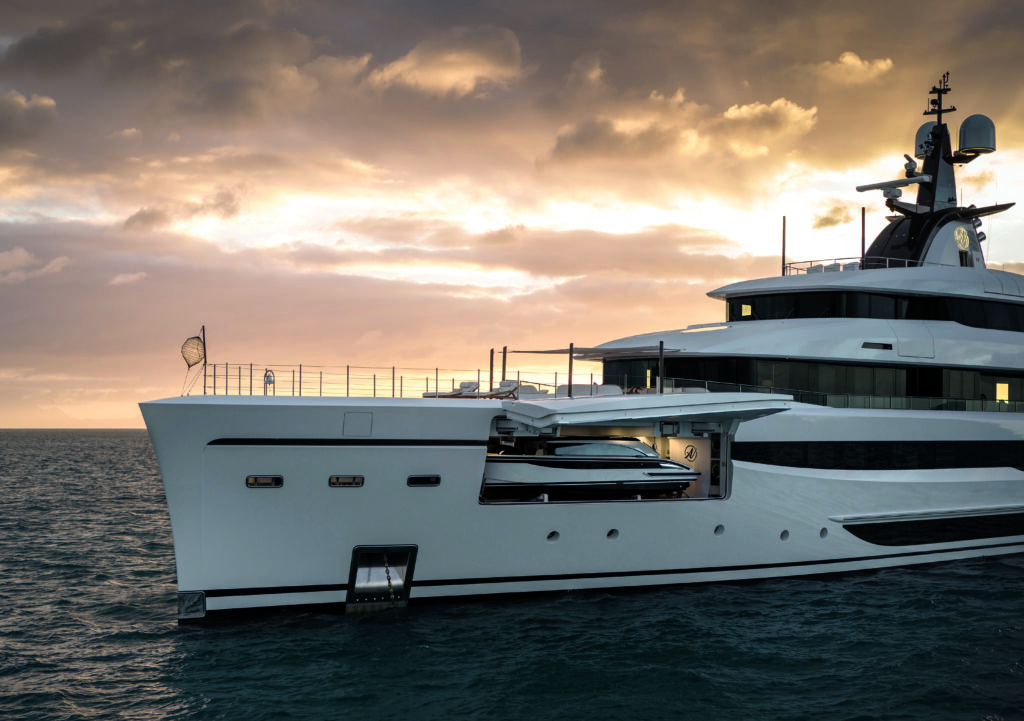
Delivered in 2025 after a three-year development cycle, Amor à Vida already represents an intermediate stage. For the same volume, current batteries allow for a capacity increase of about 20%, and above all, higher C-rate values: these have risen from C-rates around 1 to 1.5, with prospects reaching 3 (batteries available today with high C-rates, 3–5, have too low a continuous discharge rate for the demands of a yacht of this type).
The units currently under construction by CRN on platforms similar to Amor à Vida are, however, incorporating these advancements, while also introducing limited electric propulsion capability. The picture remains open, however: «It’s hard to say today where we’ll be in ten years,» says Belcecchi. «Batteries, hydrogen, alternative fuels: the most sensible approach is to design flexible systems.»
Amor à Vida’s hybrid system is not a “pure hybrid” solution in the strictest sense of the term. Energy continues to be generated by fossil fuels. There is no structural reduction in the primary fuel source, nor a real possibility of zero-emission navigation. The value of this hybridization lies in energy management. It allows for the optimization of energy flows, enables engines to operate at their maximum efficiency, reduces the number of active engines, and improves onboard comfort.
In other words, it doesn’t change how energy is produced, but how effectively it is used.
With a gross tonnage of approximately 1,447 GT, it features four main decks, plus a sub-deck and crow’s nest, and can accommodate up to 12 guests in six cabins and 17 crew members.
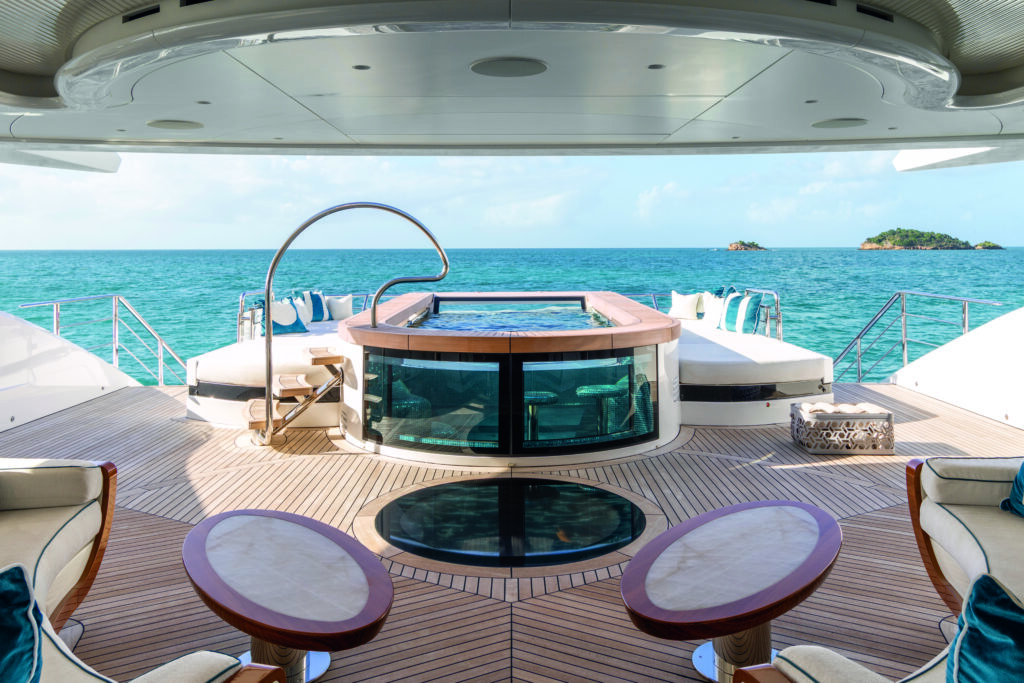
A yacht like Amor à Vida combines residential features (cabins, living areas, outdoor spaces, professional kitchens, swimming pools and hot tubs, spa-wellness facilities); advanced technical systems (propulsion, power generation and distribution, automation); and infrastructure typical of a small ship (handling, safety, crew management). It is a unique, custom-designed integrated system, where every design choice impacts performance, management, and life on board..