
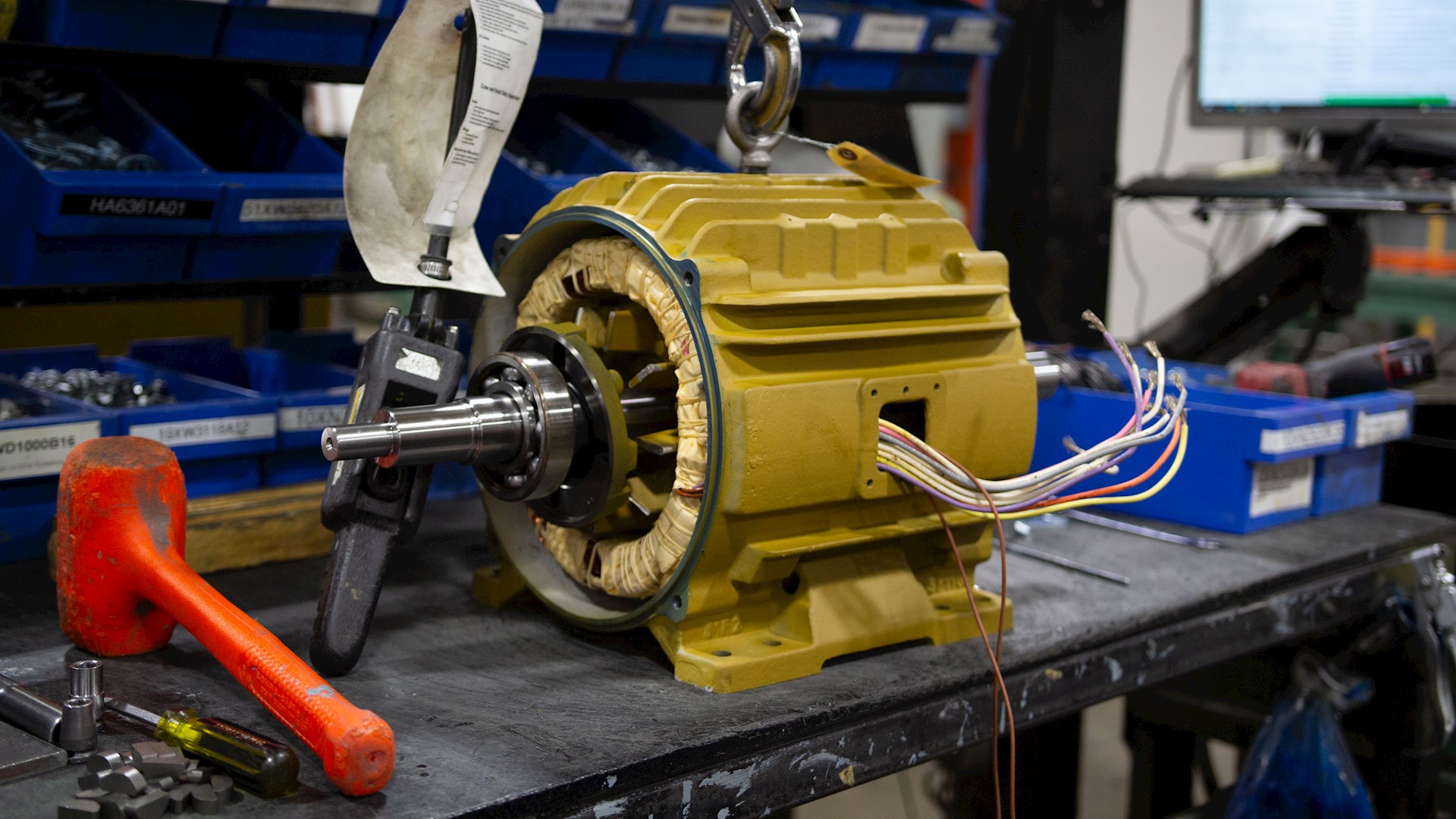
ABB is preparing to introduce a new generation of severe-duty industrial motors under its Baldor-Reliance brand, with the official unveiling scheduled for the EASA 2026 Convention in Orlando, Florida.
According to ABB, the launch will focus on a motor platform designed for demanding operating environments, where reliability, uptime and ease of specification are key requirements for industrial users.
Severe-duty motors are typically used in applications where standard motor designs may be exposed to harsh mechanical, thermal or environmental conditions. These include sectors such as processing industries, water and wastewater, mining, oil and gas, pulp and paper, aggregates, chemical production and other continuous-duty operations where unplanned downtime can have a significant impact on productivity and operating costs.
For this reason, the development of severe-duty motor platforms is linked to nominal efficiency and also to enclosure design, bearing protection, thermal behaviour, mechanical robustness and compatibility with variable-speed operation. In many industrial plants, the electric motor is part of a wider electromechanical system that includes drives, pumps, fans, compressors or conveyors. Its performance therefore depends on both electromagnetic design and the ability to withstand real operating conditions over long service intervals.
ABB said the new Baldor-Reliance platform is intended to address the industrial market’s need for durable motor solutions that can support reliability and operational continuity. While the company has not yet released full technical specifications ahead of the official presentation, the announcement points to a focus on ruggedness, safety and simplified product selection for users and service providers.
The timing of the launch is also relevant in the context of increasing attention to motor efficiency and lifecycle performance. Industrial electric motors account for a major share of electricity consumption in manufacturing and process industries, and users are increasingly evaluating motor replacement or modernization not only on the basis of purchase cost, but also through total cost of ownership, energy savings, maintenance requirements and resilience in harsh environments.
The EASA Convention is a significant venue for this type of launch because it addresses the ecosystem around rotating electrical equipment, including repair specialists, motor service companies, distributors and industrial maintenance professionals. For severe-duty applications, this service network is particularly important, as reliability depends not only on the motor design itself, but also on correct installation, maintenance practices and the availability of technical support during the operating life of the machine.