The electric mobility market continues its race on a global scaIe. In the first quarter of 2025, 4.1 million electric car registrations were recorded, with the 29% increase compared to the same period in 2024. Forecasts for 2025 estimate that the global sales of electric vehicles will reach 15,1 million units, with a market share that will rise from 13,2% to 16,7% on a world scale (source). The two-wheeled sector is not less remarkable, as it is expected to reach a value of 1,5 billion dollars within 2030, with a compound annual growth rate (CAGR) by 6,43% from 2025 to 2030 (source).
If in this scenario China confirms its leader role in terms of shares sold and for its ability to constantly introduce innovations, Europe is not standing by idly and features a significant growth: in January 2025 over 250,000 electric vehicles were sold, corresponding to 21% increase compared to January 2024. Data that should lead the market share of electric vehicles to 20,4% by the end of 2025, with a 43,4% growth compared to the previous year.
Besides, one of the great technological champions of the sector is European. Established in 1926 in Mindelheim, in the outskirts of Munich, GROB is one of the few reference players on the international market able to supply technologies covering the entire manufacturing process of an electric motor. From the feasibility study to the project development in all of its phases, GROB experts work side by side with companies to give birth to customized designs, with different automation degrees, in all electrification ambits: from stand-alone machines up to tailored lines for several sectors, automotive included.
A real “factory of factories”, which maintains an outstanding pillar of its growth in Italy, that GROB Italy located in Pianezza, on the outskirts of Turin, has become the competence centre for some of the technologies dedicated to the electric mobility of the future, with particular focus on the Light E-Mobility solutions of light electric vehicles. It is the only Italian entity, and one of the few globally, capable of providing turnkey plants for electric motor production.
But what is the importance of the competencies developed in Italy within the strategy of a player operating on a global scale? We have asked Pier Paolo Villois, CEO of GROB Italy.

The technologies developed in Italy certainly play a significant role in the Group’s strategies and overall offering, especially concerning the lines dedicated to the light electric mobility, which includes 4-to-40 kW powertrains for two-and three-wheeled vehicles such as scooters and electric motorcycles, as well as electric microcars, agricultural vehicles, e-boats and the so-called “for fun” vehicles like golf carts, karts and jet skis.
What components do you deal with?
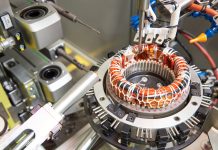
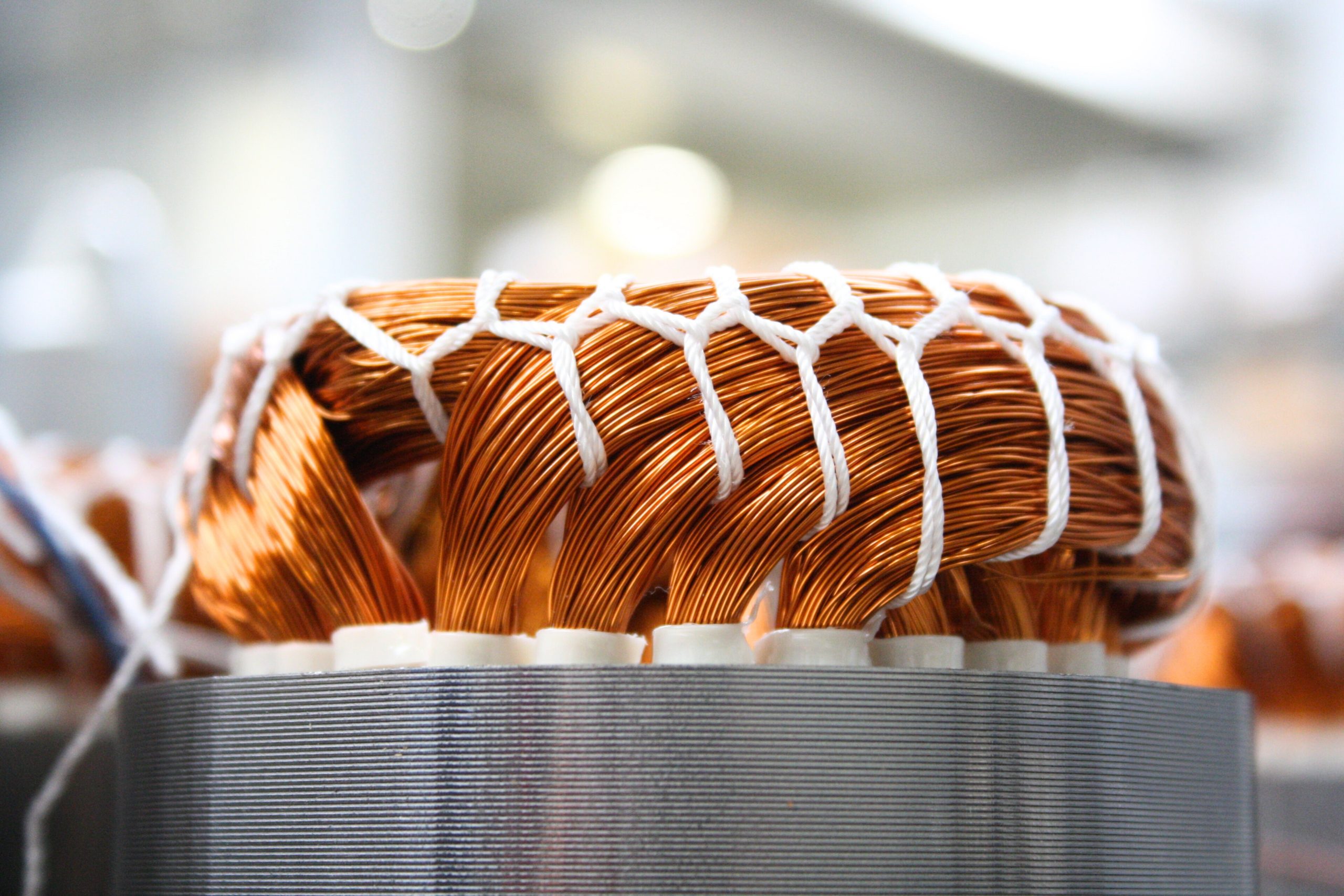
We particularly focus on the technologies for the manufacturing of distributed winding stators or linear winding stators, permanent magnets rotors, wound rotors, but we can also manage the impregnation and the final assembly phases. These are extremely broad competencies, representing unique expertise in the market, as our competitors generally focus on just one of these elements.
This competitive edge was recently confirmed, at the first edition of Coiltech North America, where not only technologies but also our project management approach was highly appreciated by the companies that we had the opportunity to meet.
Is that thanks to Made in Italy style?
Partly, yes, because we offer tailored management with customized, always unique solutions for each customer, is at stake. However, the difference mostly consists in being member of a large Group, with an industrial and commercial presence in the major continents and the ability to develop synergistic value chains that accelerate the development of innovative solutions.
We are a global company, but with the unique capability to operate in individual markets, thanks to our branches, from the United States to India, from Europe to China and to South America.
How does this flexibility translate from a technological perspective?
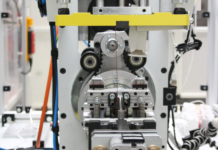
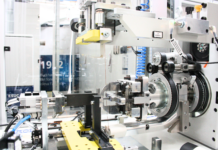
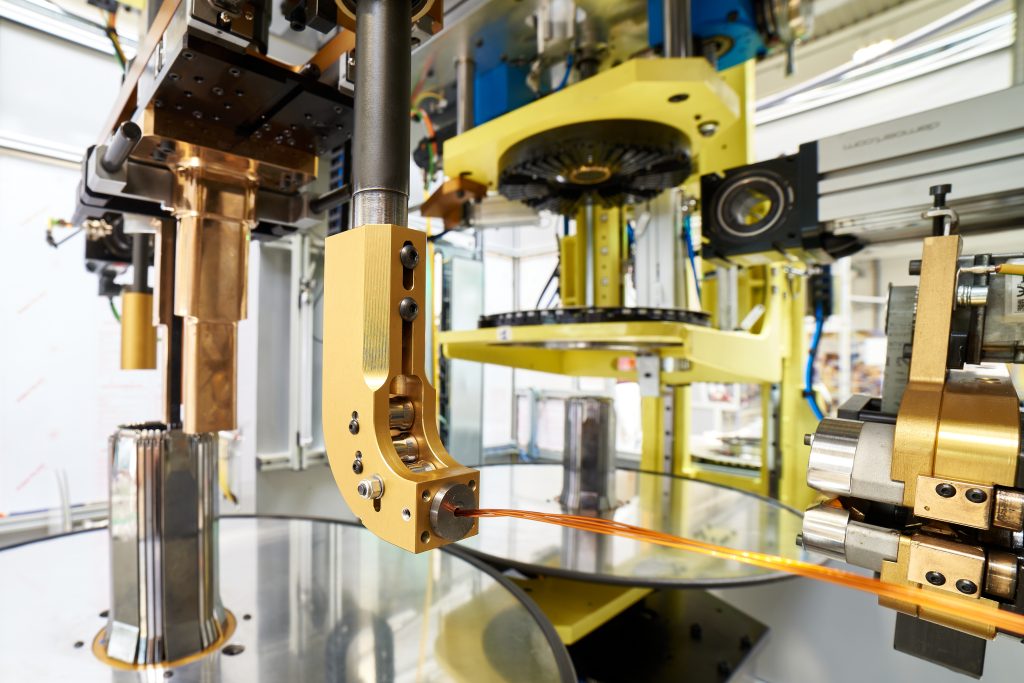
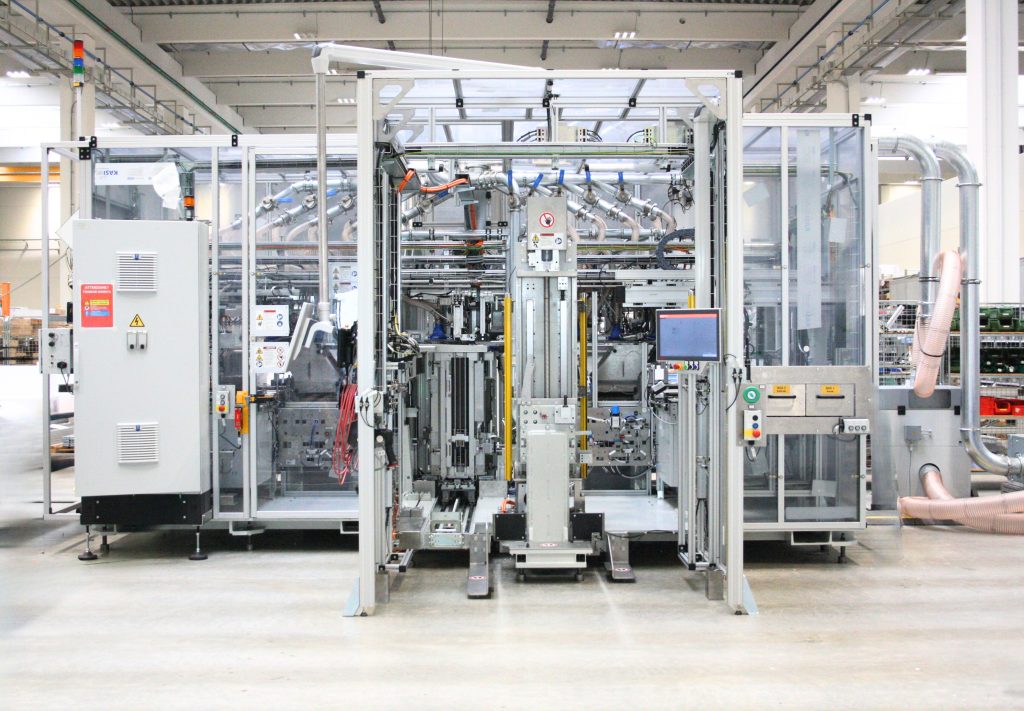
GROB Italy develops stand-alone machines that can be mutually integrated using workpiece transport systems or robotic automation cells. GROB systems are designed to be modular and flexible, ensuring high adaptability to various manufacturing needs. This configuration allows optimizing the workflow and shortening idle times, ensuring that each production phase of the production process can be managed independently and without interruptions. Furthermore, the ability to integrate different machines and systems enables the creation of customized solutions that meets specific customer requirements, providing a significant competitive advantage in the electrification sectors.
What are the main competitive advantages offered by GROB Italy’s technology in electric motor manufacturing?
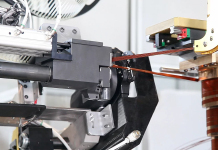
Our technology stands out for its combination of production efficiency, flexibility and focus on quality. One example is the patented Antitwist system, which enables the orderly winding of multiple wires in parallel: improving motor efficiency through optimal stator slot filling. We have also introduced the Flip system, which reduces eddy current losses at high frequencies, and the Leads Twisting, which optimizes the insertion of the insulating sheath, improving the the quality of manual operations.
Are there some specific innovations in the rotor manufacturing as well?
Yes, we use a minimum amount of glue to fix permanent magnets, which helps reduce costs. Moreover, by positioning the magnetizer at the end of the process, we can work with non-magnetized magnets, ensuring greater cleanliness and reliability during assembly.
How does the winding impregnation take place?
We use the Trickling technique which exploits capillarity to allow resin to penetrate components: a method that grants an efficacious and controlled impregnation, improving the motor performances and durability.
Let’s talk applications: do electric motors produced with GROB technologies have uses beyond automotive?
Absolutely. Our technologies are compatible also with motors intended for the industrial application, the home automation and the E-marine.
Are there particularly promising motor types for these markets?
An interesting trend is the use of segmented stators, which can outperform traditional needle-wound brushless motors thanks to optimal slot filling. This is a growing segment, particularly in the so-called “white goods” sector.
GROB is investing in the light mobility, too. What is the direction?
Light electric mobility is experiencing rapid growth. We have already introduced lines dedicated to both permanent-magnet rotors and to the stators for light two- and three-wheeled vehicles. At the same time, we are continuing to invest in solutions for axial-flux motors and in fuel cells, a emerging technology that can play an important role in the energy transition. Our goal is to offer a complete range of solutions to meet the various demands of the electrification market.
In GROB’s view, what is the current direction of innovation?
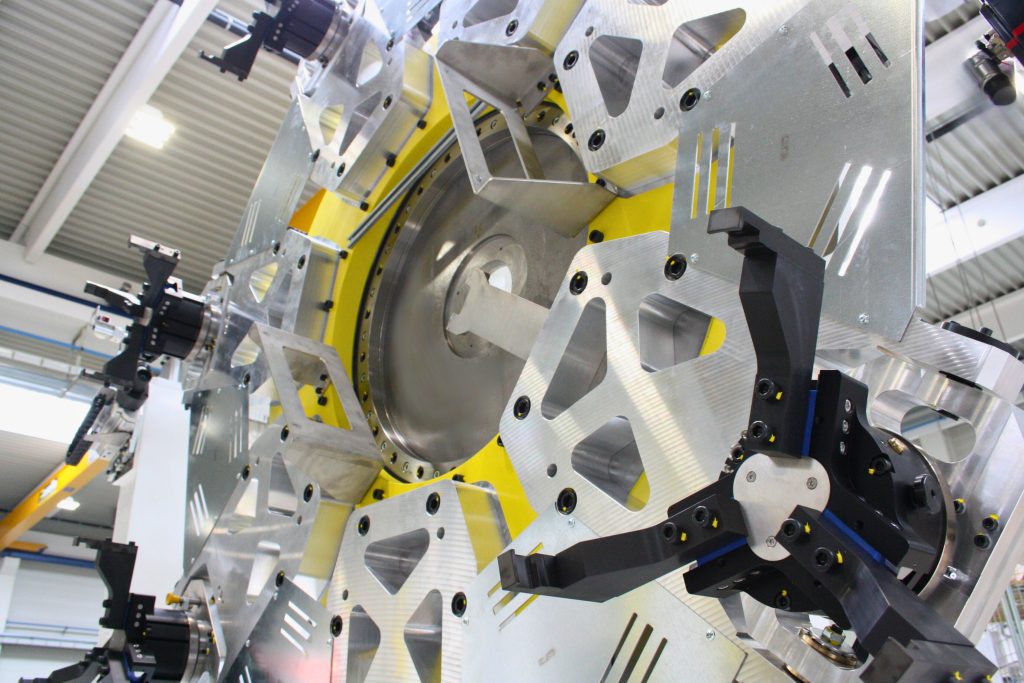
Today, innovation means not only introducing new technologies but also adapting them precisely to customer needs. Our goal is to transform each manufacturing need into a concrete, scalable and sustainable solution. Whether it’s automotive, home appliances or light mobility we offer industrial know-how developed in Italy with global reach. Because innovation is not a style exercise – it is a strategic driver for those who want to shape the future, not chase it.