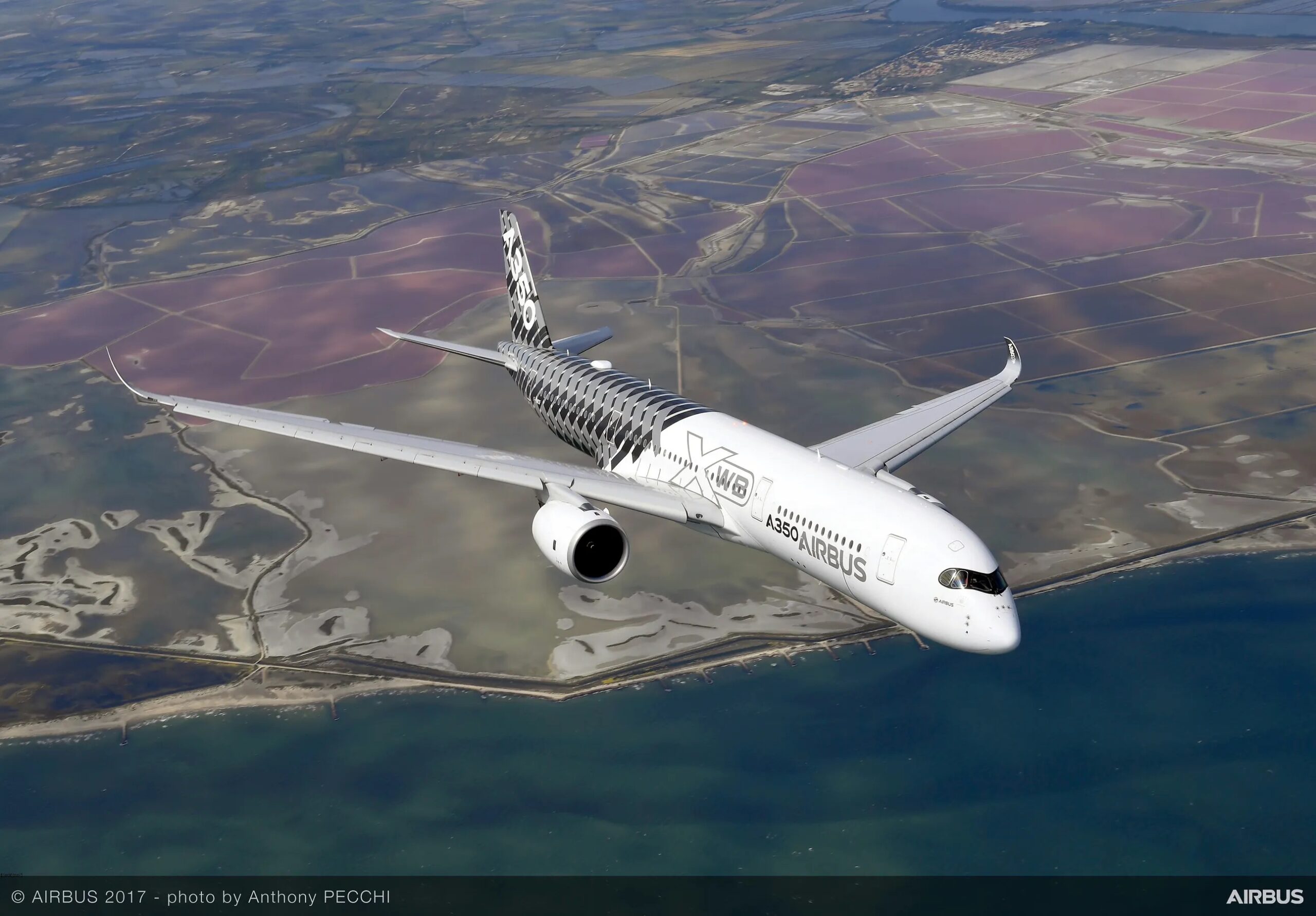
Airbus and MTU Aero Engines plan to establish a joint venture for the development and commercialisation of a hydrogen fuel-cell electric propulsion system for commercial aircraft.
The agreement follows the Memorandum of Understanding signed by the two companies at the Paris Air Show in June 2025. Subject to regulatory approvals and employee consultation procedures, the new company is expected to begin operations in 2027.
The dedicated organisation will oversee the complete development cycle, including system design, testing, validation, certification and commercialisation. Engineering and manufacturing teams from Airbus and MTU will support the programme.
A megawatt-class electric powertrain
The proposed architecture will use hydrogen in fuel cells to generate electricity, which will power electric motors connected to the aircraft’s propulsive system. Unlike hydrogen combustion, the electrochemical process does not produce carbon dioxide during flight.
The powertrain will integrate fuel-cell stacks, electric motors, power electronics, high-voltage distribution, hydrogen storage and supply equipment, control systems and thermal-management components.
Airbus will contribute its experience in commercial aircraft integration, liquid-hydrogen technologies and fuel-cell propulsion. MTU will provide expertise in engine development, system integration, validation, certification and maintenance.
“Our planned joint venture is the next logical step in our shared vision of a hydrogen-based propulsion concept for aviation,” said Bruno Fichefeux, Head of Future Programmes at Airbus.
Stefan Weber, Senior Vice President Engineering and Technology at MTU Aero Engines, said the objective is to develop a propulsion system that is safe, reliable and economically viable.
Engineering challenges
Achieving the required power density will be one of the main technical challenges. The system must deliver megawatt-scale output while limiting the mass of fuel-cell stacks, electric machines, cooling equipment and cryogenic hydrogen tanks.
Thermal management will be particularly important, as fuel cells generate significant heat that must be dissipated without excessive weight or aerodynamic drag.
The electric section will also require high-efficiency motors and inverters capable of operating at high voltage and altitude, while meeting aviation requirements for redundancy, insulation, electromagnetic compatibility and fault containment.
Liquid hydrogen adds further complexity because it must be stored at approximately –253 °C. The aircraft will therefore require insulated tanks and dedicated systems for pressure control, boil-off management and fuel distribution.
The partners aim to create a European technology platform covering the entire lifecycle of hydrogen fuel-cell propulsion systems. No target aircraft, power rating or entry-into-service date has yet been disclosed.