Drones and e-Mobility: the new industrial frontier between growth, automation and production quality.
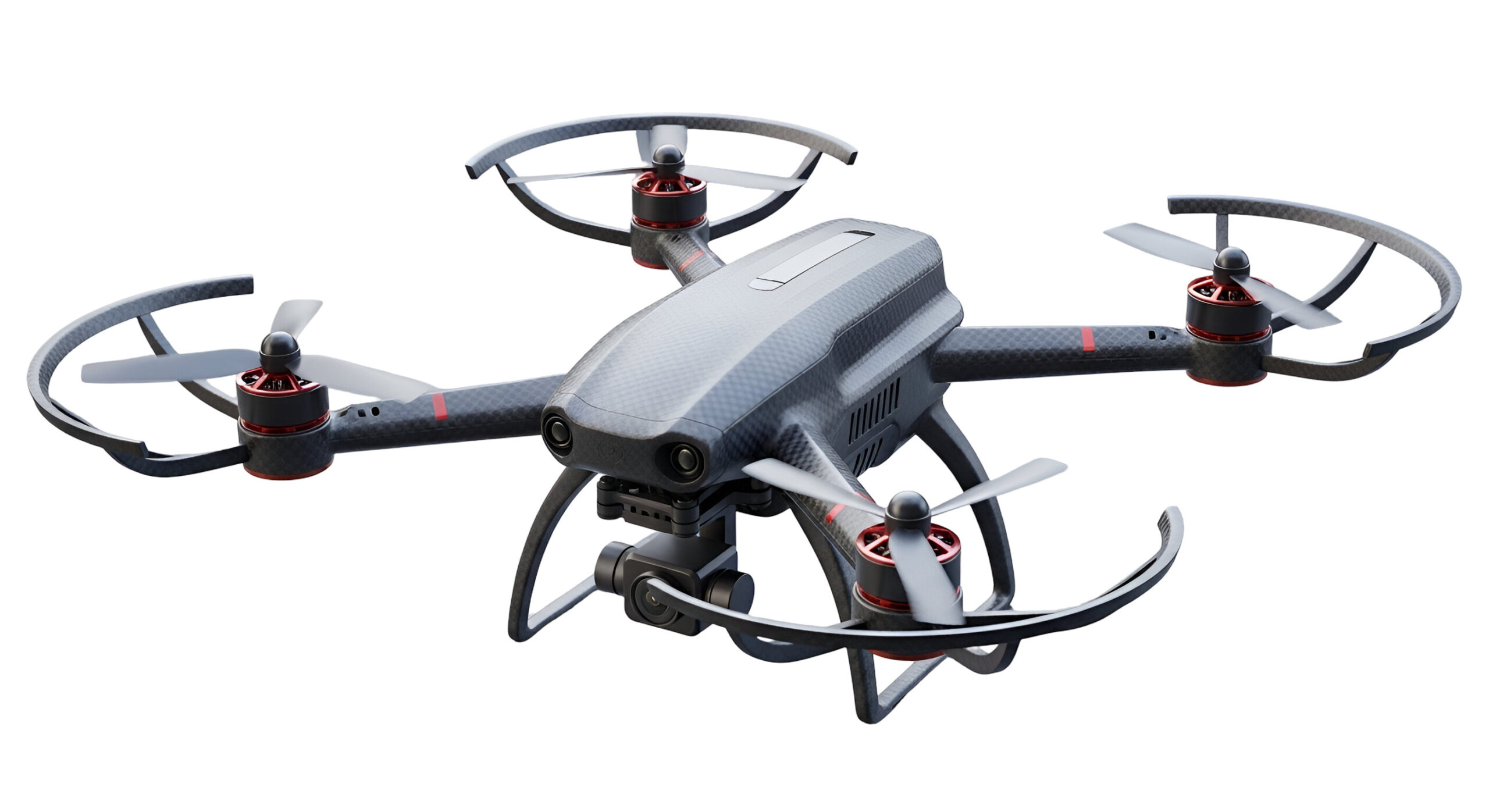
Within the e-mobility landscape, the drone segment is emerging as one of the most dynamic and promising areas. For GROB, both the drone market and humanoid robotics represent important strategic growth fields. Currently, drones are experiencing strong momentum, with internal estimates indicating a market increase of approximately 30% over the next three years. This reflects not only expanding demand but also the sector’s ongoing industrial maturation.
This growth is supported by a significant expansion of applications. Among the sectors expected to develop most strongly are precision agriculture, urban security, mountain rescue, and, in the longer term, light transport. In all these areas, drones offer clear operational advantages: rapid response times, reduced costs, and greater accessibility in complex or hard-to-reach environments.
Industrialization: from niche to mass production
The sharp increase in demand is pushing manufacturers toward a more structured industrialization process. While drone production in the past was characterized by limited volumes and a high degree of craftsmanship, today there is a clear shift toward mass production logic. This transition requires reliable equipment, standardized processes, and consistent quality over time.
To sustain large-scale industrial production, several key factors become essential: machine robustness, operational sustainability, preventive maintenance, line accessibility, and process repeatability. Only by ensuring these elements is it possible to guarantee production continuity and long-term competitiveness.
The challenges of automation
Despite technological progress, one of the main obstacles remains full process automation. In particular, the balancing and connecting unit phases are still critical bottlenecks.
The connecting process, in particular, still requires a high level of human labor: a production line with an 11-second cycle time may require up to 20 operators dedicated to this step. Even in balancing, although measurement can already be automated, the addition of material to balance the rotor is still mostly manual.
These critical issues highlight the need to develop advanced technological solutions that reduce dependence on manual labor while improving efficiency and precision. The automation of these stages represents one of the main innovation drivers for the sector in the coming years.
The crucial role of winding
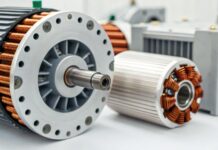
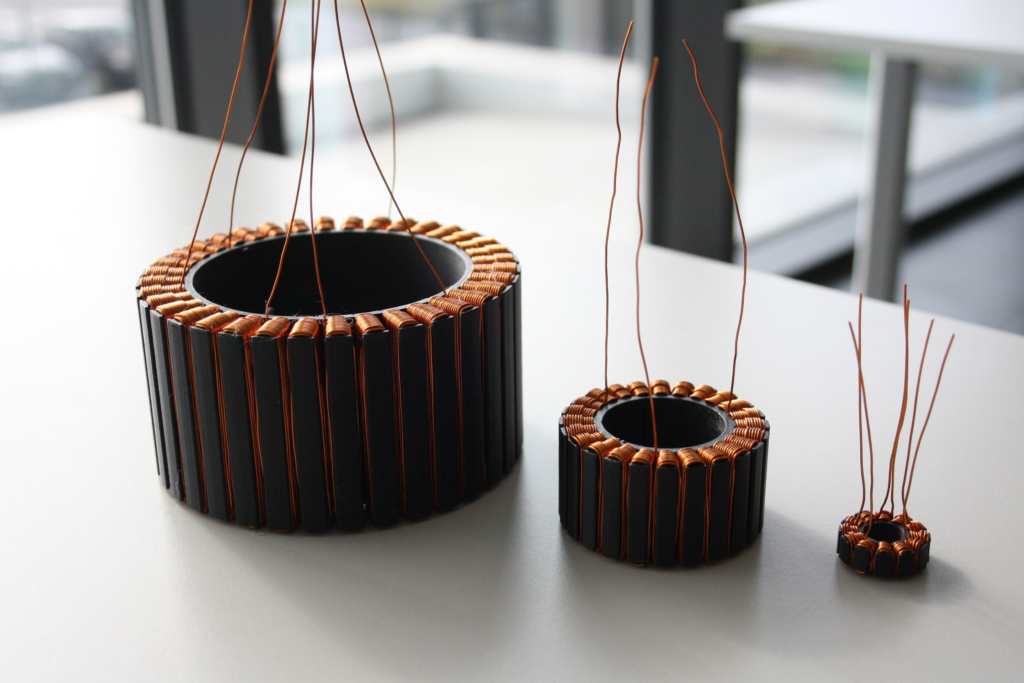
Among the most important technical elements in the production of drone motors, winding plays a central role. Motor performance is directly linked to the quality of the windings, which influence key parameters such as payload, i.e., the drone’s ability to carry loads.
Optimized winding allows for an increase in the Kv value, meaning the number of revolutions the motor performs per volt applied under no-load conditions. To achieve a higher Kv, it is necessary to reduce the motor’s internal resistance by increasing the winding volume through the use of multiple copper wires or thicker gauge wire.
Precise winding improves the fill factor, reduces thermal losses, and increases overall motor efficiency. It also contributes to greater long-term reliability, a crucial aspect for critical applications such as security or transport.
GROB added value
In this context, GROB stands out for its strategic positioning based on quality, reliability, and independence. One of its distinguishing factors is the ability to offer technological solutions not dependent on Chinese markets, an increasingly important aspect for European and American customers seeking greater supply chain security.
This is complemented by fast and effective after-sales service, ensuring operational continuity and timely support. The robustness of GROB’s products and processes represents a key element for medium- to long-term investments, providing customers with the certainty of stable and sustainable production over time.
The future: an integrated industrial vision
Looking ahead to the coming years, the drone sector is set to undergo significant evolution, in which technology, automation, and production quality will become increasingly interconnected. The main challenge will be to combine rising volumes with high standards of efficiency and reliability, while reducing operating costs.
The automation of critical phases such as balancing and connecting will be a fundamental step toward achieving these goals. At the same time, the optimization of key components such as winding will continue to play a decisive role in improving drone performance.
In this scenario, companies like GROB are destined to play a central role, thanks to their ability to provide advanced and sustainable industrial solutions. The combination of technological innovation, production robustness, and customer support forms the foundation for successfully addressing the challenges of a rapidly expanding market.
In short
The future of drones will not be solely about quantitative growth, but about qualitative evolution. The transition toward mass industrial production will require targeted investments, new skills, and a strong focus on innovation. In this context, those who can ensure efficiency, reliability, and independence will gain a decisive competitive advantage, helping define the standards of a sector destined to become increasingly central to the global economy.