The Chinese manufacturer Changan presented developments in hybrid powertrain management, battery technology and electric vehicle charging, alongside new BEV and PHEV models for the European market.
Changan Automobile used the 2026 Paris Motor Show to outline its approach to vehicle electrification, combining battery-electric propulsion with hybrid architectures designed for different operating conditions. The technologies presented included the BlueCore Hybrid powertrain family, the Golden Shield Battery system and new electrified models scheduled for introduction in Europe.
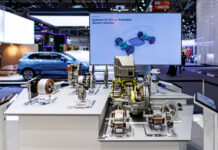
One of the main technical developments concerns the BlueCore Hybrid platform, introduced in March 2026 and covering hybrid electric vehicles (HEVs), plug-in hybrids (PHEVs) and range-extended electric vehicles (REEVs). The latest HEV architecture integrates an internal combustion engine, an electric motor, a battery and an adaptive energy management system. Cloud-based route planning is also used to support powertrain control and optimise energy consumption according to driving conditions.
In urban traffic, the control strategy prioritises electric propulsion, particularly during low-speed operation and frequent acceleration. At higher speeds, the combustion engine can provide direct mechanical drive, reducing the energy conversion losses associated with alternative power flow paths, while the electric motor supplies additional torque when required. This operating principle is illustrated by the CS55 BlueCore HEV, presented outside China for the first time.
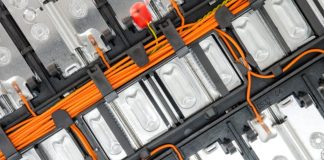
Battery technology represents another area of development. Changan’s Golden Shield Battery system, used in the NEVO Q05 and DEEPAL range, incorporates CATL cells and an intelligent battery management system known as iBC. According to the manufacturer, the system continuously monitors battery operating conditions, with particular attention to safety, durability and charging performance.
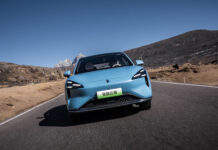
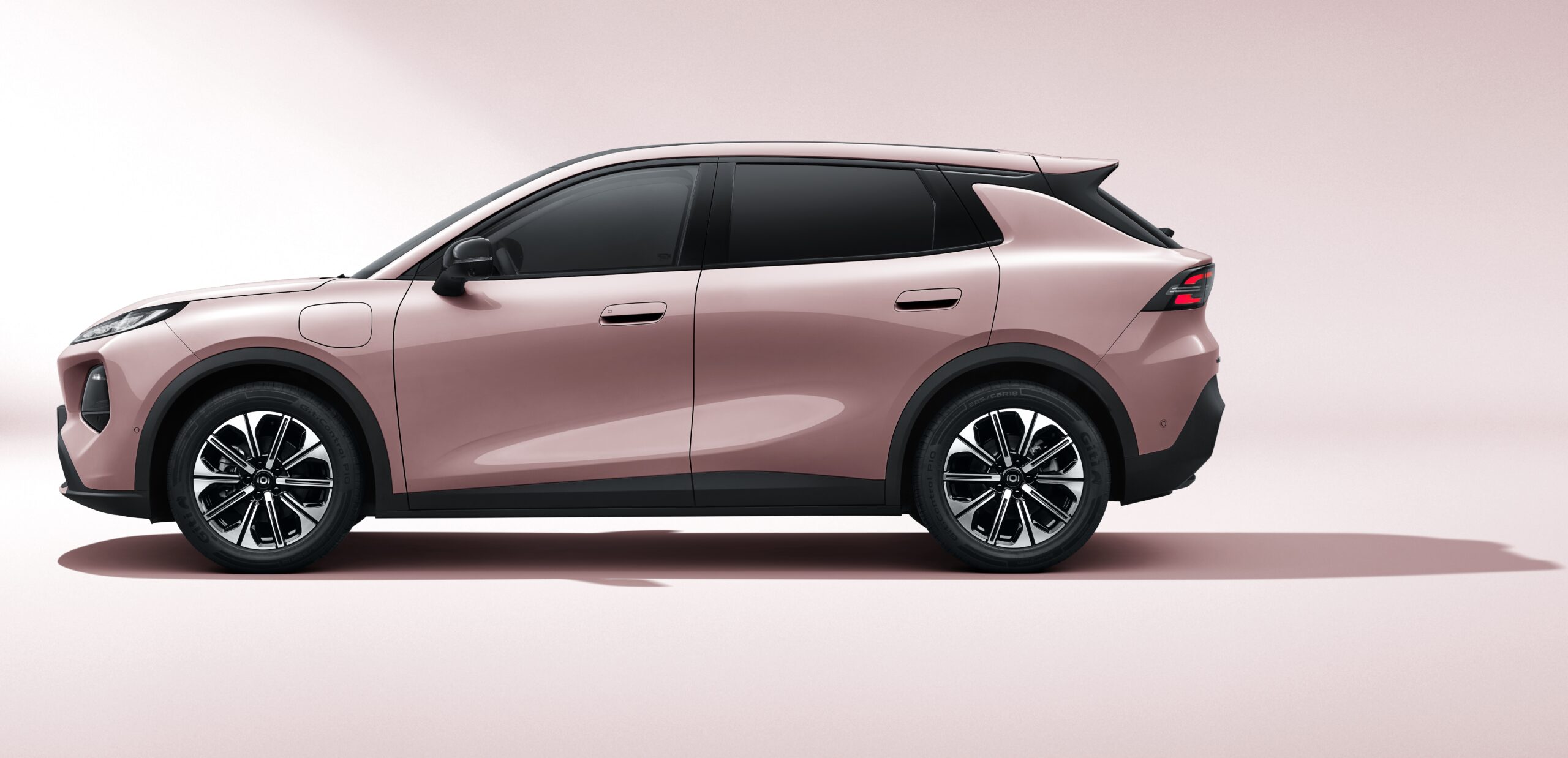
The new NEVO Q05 battery-electric SUV offers a declared WLTP driving range of up to 450 km and supports DC fast charging from 30% to 80% state of charge in 15 minutes. The model is scheduled to reach Italy and Spain in the first quarter of 2027.
Changan also presented the DEEPAL S07 PHEV, which combines electric propulsion with a combustion engine. The manufacturer reports an electric-only range of up to 100 km under the WLTP cycle, while its 3C charging capability enables a 30–80% battery recharge in 15 minutes. Both the S07 PHEV and S05 PHEV are reported to offer a combined driving range exceeding 1,000 km.
Although these figures provide an indication of the vehicles’ energy management and charging capabilities, the technical documentation released at the event does not specify key parameters such as battery capacity, electric motor power, peak charging power or measured powertrain efficiency. These data would be necessary for a more detailed comparison of the respective propulsion systems.
Alongside powertrain developments, Changan presented SDA Pilot, an advanced driver assistance architecture based on an end-to-end approach integrating vision-language-action and world models. Its development involves simulation and real-world driving datasets, with redundant functions covering perception, decision-making, steering, braking, communication, power supply and human-machine interaction. The technology remains subject to adaptation and validation for European regulations and road conditions.
The expansion of Changan’s electrified vehicle portfolio is accompanied by engineering activities at its European Design Centre in Turin and research and development facilities in Birmingham, UK. Together, these operations support the adaptation of vehicle technologies to European market requirements, including powertrain integration, regulatory compliance and local operating conditions.