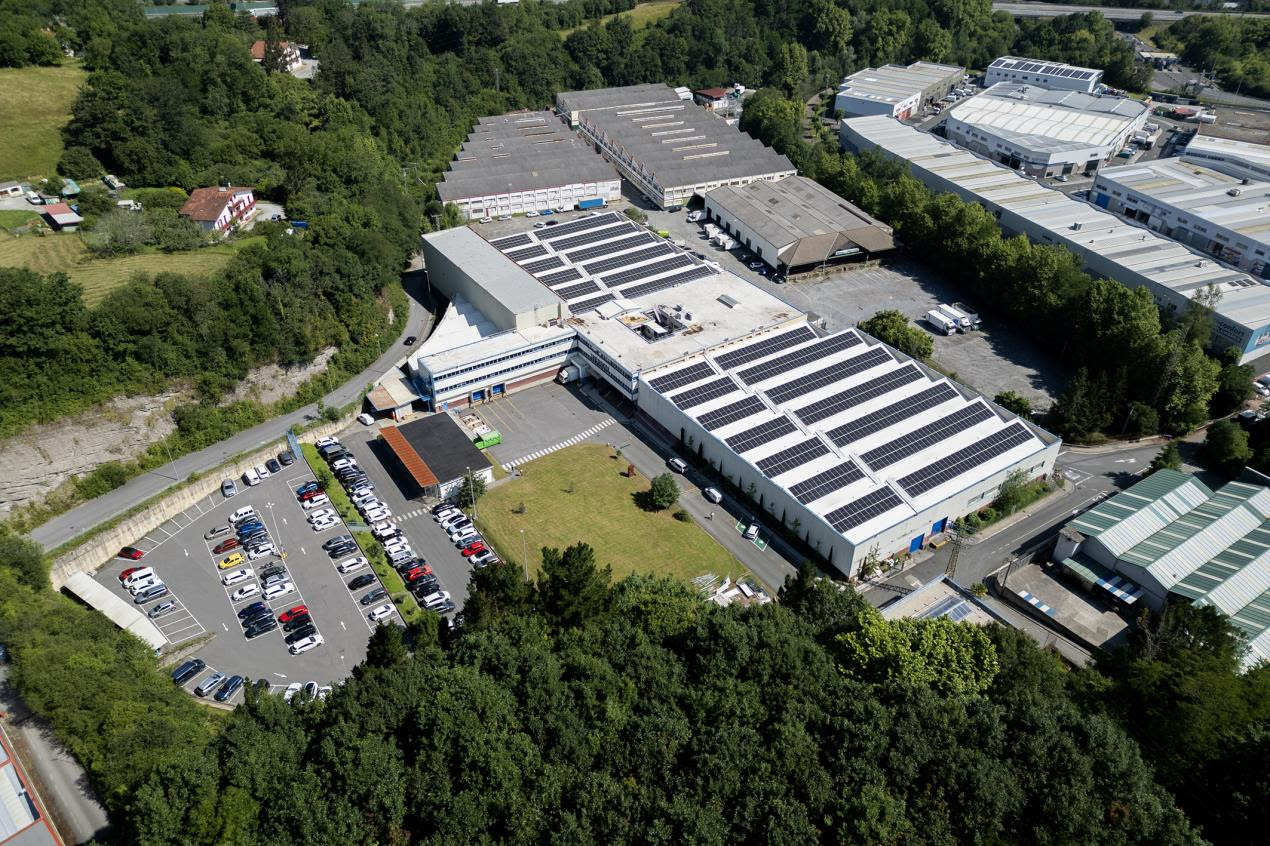
ABB has converted its 110‑year‑old factory in Oiartzun, Spain, into its first site in the country operating with zero stated operational emissions under the company’s internal “Mission to Zero” program. The plant manufactures wiring accessories and smart home components, making it a relevant case study for low‑voltage electrical equipment production under decarbonisation constraints.
The site combines on‑site renewable generation, contracted renewable electricity, heat recovery and building automation as part of a broader roadmap that also covers resource efficiency and circular product design. The focus in this article is on technical measures and their implications for energy‑intensive plants, rather than on the corporate sustainability narrative.
Energy system: electrification and renewables
The Oiartzun facility reports a 42 percent reduction in energy consumption compared with 2019, achieved over roughly five years through efficiency measures and digital monitoring. This reduction has been obtained without relocating production, which makes the plant a practical example for operators of existing sites rather than new builds.
On the supply side, the factory has installed more than 580 kWp of rooftop photovoltaic capacity and sources the balance of its electricity from certified renewable contracts. All process and building energy needs are stated to be covered by electric power, with fossil fuels phased out from operations such as heating, which have been shifted to electric and heat‑recovery‑based solutions.
Digital monitoring and load optimisation
A key element of the retrofit is extensive metering and digital supervision of energy use across the site. ABB’s own building automation and energy management systems are used to control lighting, HVAC and power distribution, while a cloud‑linked platform (eLink) provides real‑time visibility into consumption at subsystem level.
For plants with a significant installed base of electric motors and drives, this level of metering enables more precise correlation between production schedules, partial loads and auxiliary consumption. In practice, such data can support decisions on motor sizing, drive settings, maintenance intervals and demand‑side management strategies aimed at shaving peaks and reducing idle or stand‑by loads.
Circular design and material flows
In parallel with energy measures, the Oiartzun plant has adopted circular‑economy criteria in its product and process design under ABB’s EcoSolutions framework. Certain wiring accessory ranges are reported to use up to 95 percent recycled material in painted surfaces, and switch inserts are designed for full recyclability.
From an industrial engineering viewpoint, these choices affect material sourcing, quality control, tooling and end‑of‑life handling, and require compatibility between recycled feedstocks and existing manufacturing assets. The facility has obtained ISO 50001 certification for energy management and has been designated “Zero Waste to Landfill”, indicating that waste streams are diverted to reuse, recycling or recovery rather than disposal, subject to the accuracy of reporting and local waste‑processing infrastructure.
Implications for existing industrial sites
Oiartzun is one of several ABB locations being upgraded under the Mission to Zero framework, alongside plants in Europe, Asia and North America. While the program is proprietary, the technical components—rooftop PV, electrified heating, advanced metering, building automation, and circular product engineering—are widely available technologies.
For operators of motor‑intensive factories in similar age brackets, the case mainly illustrates that substantial reductions in operational emissions and energy use can be obtained through phased retrofits, rather than full replacement of existing infrastructure. The specific performance figures and transferability of results will depend on local grid mixes, building envelopes, process profiles and the level of investment in both hardware and energy‑data analytics.