The evolution of electric motors is driving the need for manufacturing processes that are increasingly flexible and controllable, capable of adapting rapidly to new design requirements without compromising quality or repeatability. In this context, the production of stator and rotor stacks represents an area where process innovation can simplify industrialization while increasing manufacturing flexibility.
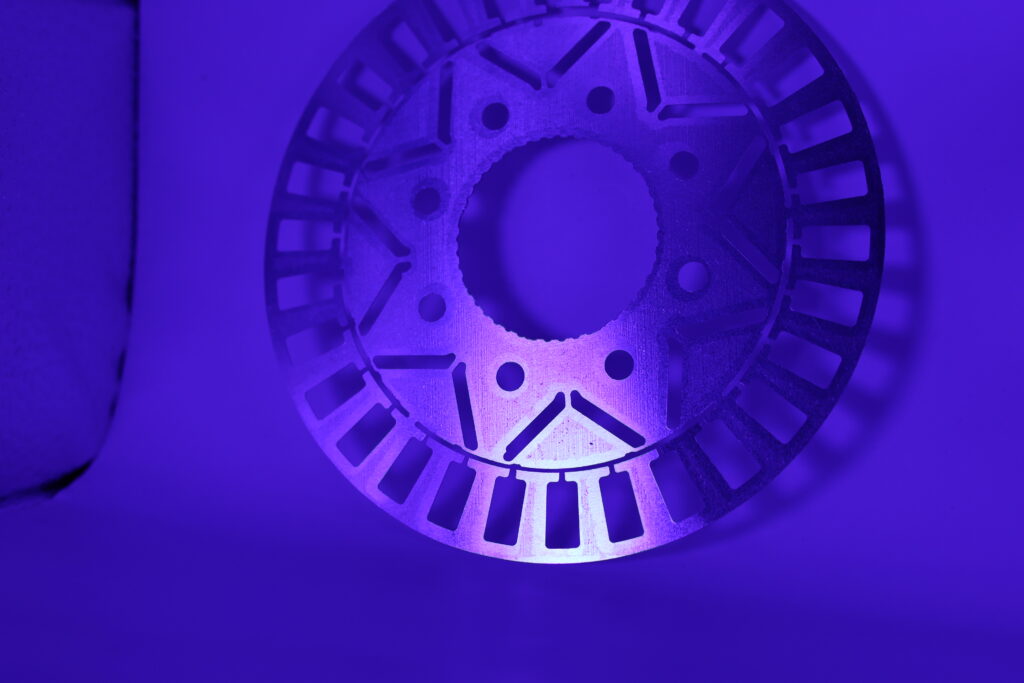
Today, laminated stacks are typically bonded using one of two approaches: adhesive application inside the stamping die or Backlack laminations, where the bonding layer is already integrated into the electrical steel. Developed to address these challenges, DEMA StackBond™ introduces a new approach to the production of bonded stator and rotor stacks.
The technology is based on two key principles:
- the use of conventional electrical steel laminations instead of the more expensive Backlack laminations;
- the relocation of adhesive deposition outside the stamping die, where it becomes an independent and fully digitalized process.

«StackBond™ introduces a different concept by moving adhesive deposition outside the die and creating the bond through digitally controlled, selective adhesive application.»
In conventional in-die gluing manufacturing processes, adhesive deposition is often integrated into the stamping die. With StackBond™, this operation is instead performed in a dedicated station, separate from the stamping process. This allows the bonding phase to be managed independently, making it easier to control and adapt to different production requirements.
StackBond™ introduces a different concept by moving adhesive deposition outside the die and creating the bond through digitally controlled, selective adhesive application.
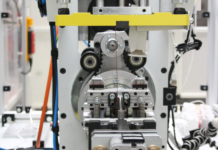
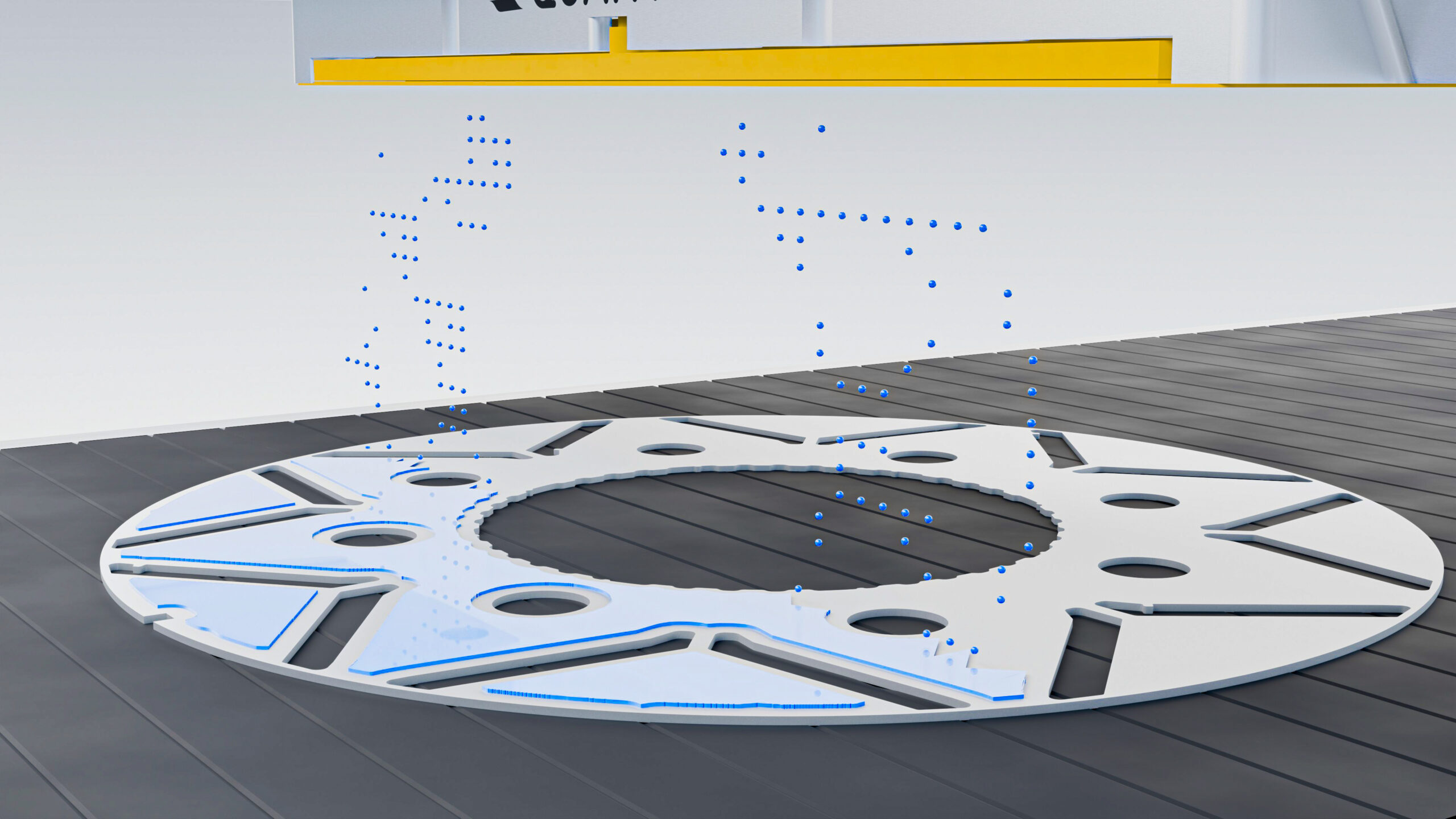
The process begins with the automatic transfer of individual laminations on a conveyor to the adhesive deposition station. Here, the adhesive is applied by means of an inkjet printhead with individually controlled nozzles, capable of generating highly complex deposition patterns. This makes it possible to apply adhesive only where required by the design, both for bonding the laminations and for creating specific functional features, such as sealing areas within the stack. Each lamination is then automatically transferred to the subsequent stacking process, where the complete stator or rotor stack is assembled.