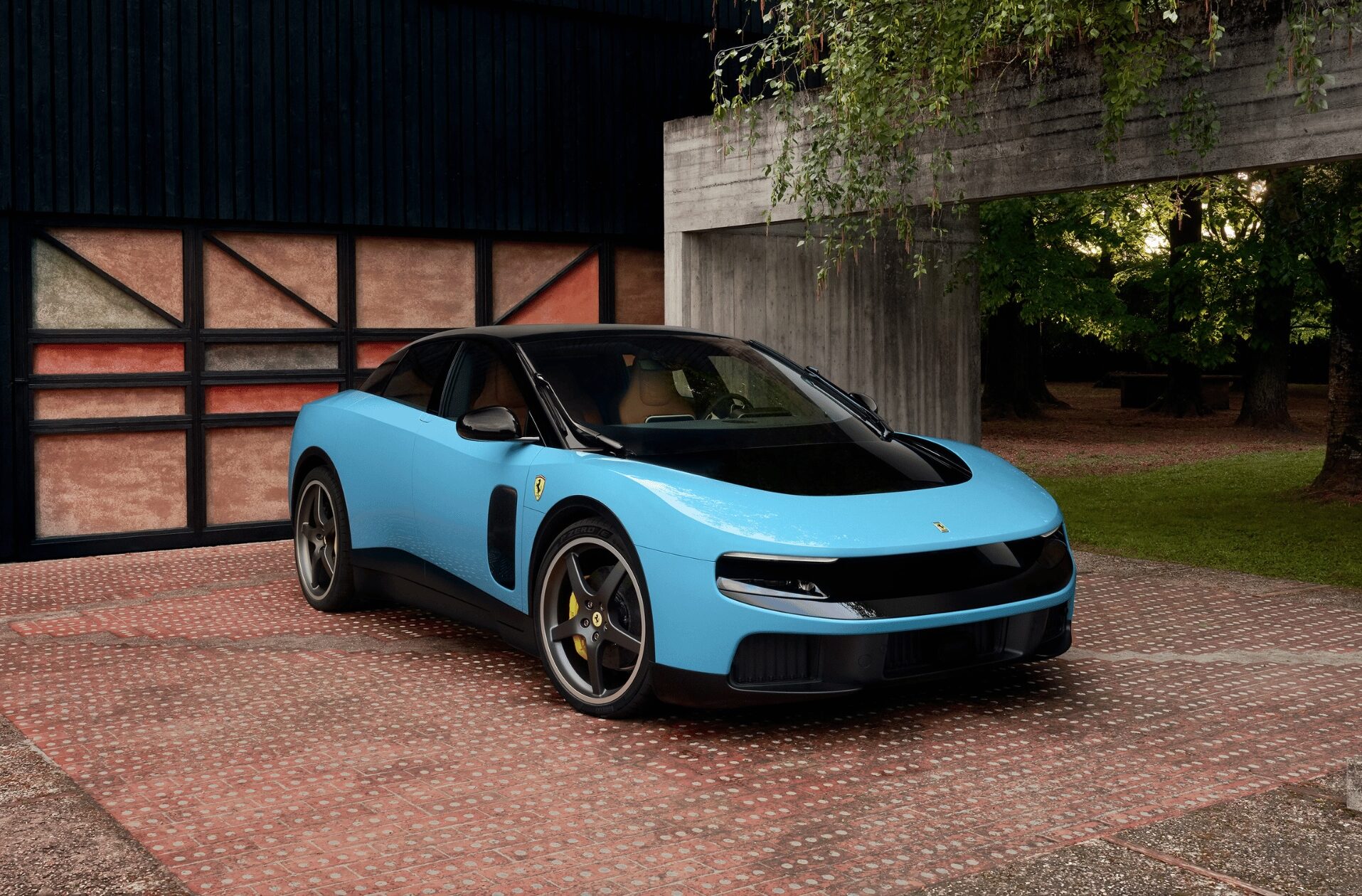
Ferrari has presented the Luce, its first fully electric production car, marking one of the most significant technical and strategic shifts in the company’s recent history.
Unveiled in Rome on 25 May 2026, the model introduces a four-door, five-seat configuration and positions Ferrari’s entry into battery-electric mobility not as a replacement for combustion performance, but as a new high-end platform designed around electric propulsion, software-enabled vehicle dynamics and luxury packaging. Deliveries are expected to begin in the fourth quarter of 2026, with the Luce priced at around €550,000, or about $640,000.
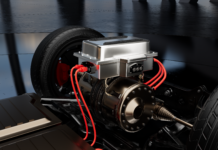
The Luce is equipped with four electric motors, delivering more than 1,000 hp in total output. The use of one motor per axle side places the model in the field of high-performance torque-vectoring EVs, where propulsion is no longer only a matter of peak power, but of how precisely torque can be distributed in real time. This architecture allows Ferrari to exploit the instant response of electric machines while maintaining the dynamic control expected from the brand’s performance cars. The top speed of more than 310 km/h and a range exceeding 500 km, placing the Luce in the upper tier of electric luxury performance vehicles.
Unlike many EV launches centred mainly on battery capacity or digital interfaces, Ferrari has framed the Luce around the preservation of driving emotion. The company is seeking to compensate for the absence of a combustion engine by developing systems capable of reproducing natural mechanical feedback and vibrations. Ferrari has worked on the ability to simulate natural engine vibrations, an approach that reflects one of the central engineering challenges for electric sports cars: retaining sensory involvement when the traditional acoustic and mechanical signatures of internal combustion disappear.
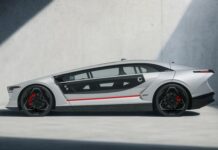
From a product architecture perspective, the Luce also represents a departure from Ferrari’s traditional two-seat or 2+2 sports-car formula. It is Ferrari’s first five-seat model and was developed with design input from former Apple design chief Jony Ive and his collective LoveFrom. The four-door body, 600-litre boot and more spacious layout indicate that Ferrari is using electrification not only to create a high-output powertrain, but also to explore a different packaging concept for ultra-luxury mobility.
The launch comes at a complex moment for premium electrification. Ferrari is moving into the EV segment while other performance brands, including Porsche and Lamborghini, have moderated some of their electric ambitions because of weaker-than-expected demand. In this context, the Luce is not simply a product launch, but a test of whether the Ferrari brand can transfer its performance identity into an electric platform without diluting its core appeal.
Ferrari Chief Executive Benedetto Vigna has defended the Luce’s positioning, stressing that the electric model will not replace the company’s other powertrain technologies. His comments suggest that Ferrari intends to treat the Luce as an additional technological pillar alongside combustion and hybrid models, rather than as the beginning of a full transition away from internal combustion engines.
For the electric motor industry, the most relevant aspect of the Luce is the way it confirms a broader shift in high-performance vehicle engineering.