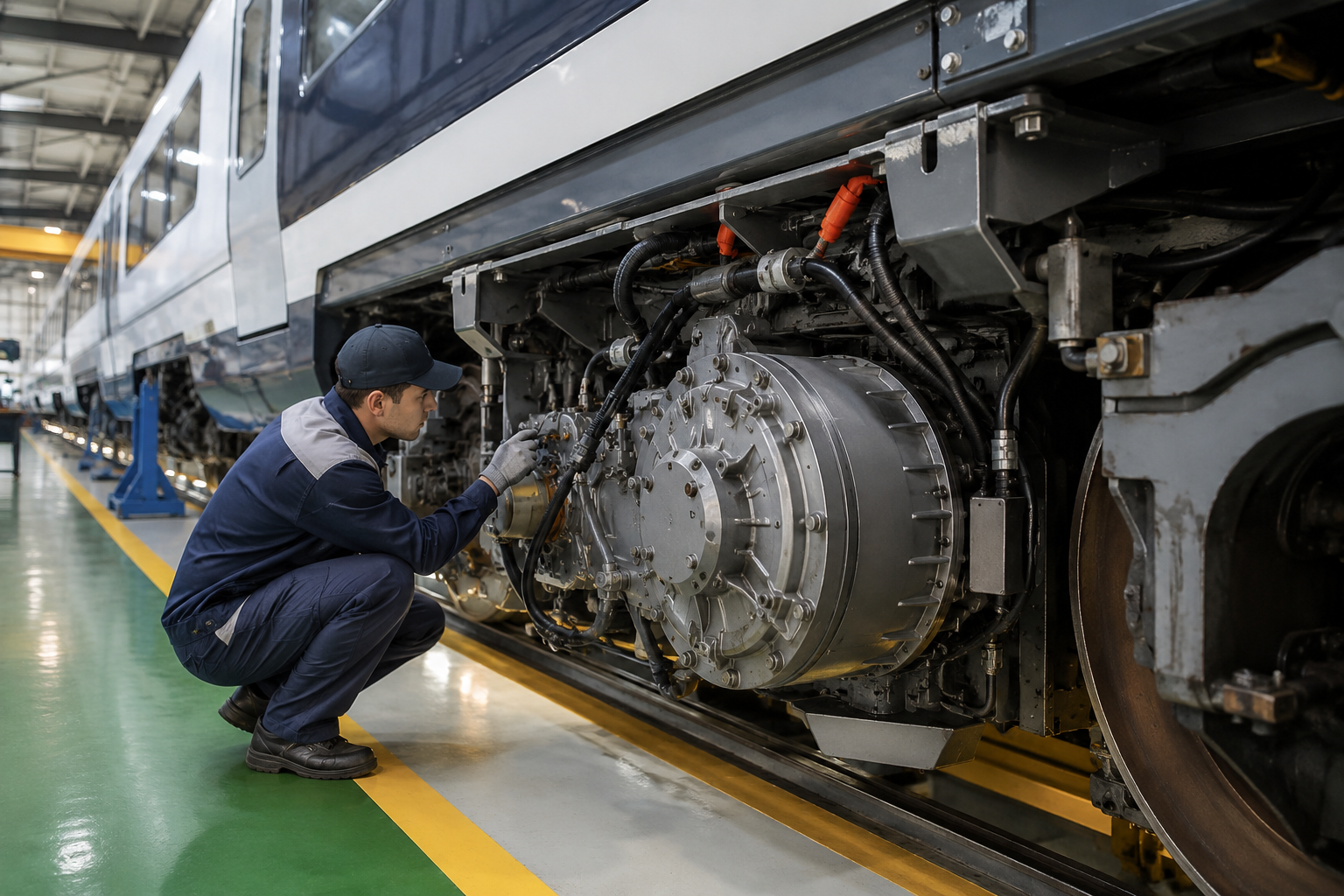
The railway industry is entering a new phase of technological transformation. Driven by ambitious decarbonization targets, increasing passenger mobility and the modernization of freight transportation, rail is becoming one of the key pillars of sustainable mobility worldwide. European initiatives such as the Green Deal and the ‘Fit for 55’ package, together with similar investment programs in Asia and North America, are accelerating the deployment of new rolling stock while promoting the refurbishment of existing fleets. In both cases, electric traction systems are expected to deliver significantly higher levels of efficiency, reliability and operational flexibility than in previous generations.
At the heart of this evolution lies the traction motor. While electric propulsion has been a mature technology in the railway sector for decades, today’s engineering priorities are fundamentally different. Designers are no longer focused exclusively on achieving the required power output and mechanical robustness. Instead, they must simultaneously optimize power density, energy efficiency, thermal management, maintainability, life-cycle costs and environmental sustainability, often within increasingly constrained installation spaces.
Performance requirements across applications
Modern railway vehicles illustrate this trend clearly. High-speed trains require compact propulsion systems capable of delivering exceptional power while minimizing axle loads. Regional multiple units seek maximum efficiency across highly variable duty cycles, where repeated acceleration and regenerative braking dominate energy consumption. Urban metro systems demand compact motors capable of operating almost continuously, whereas freight locomotives prioritize durability, overload capability and long service intervals.
These diverse operating profiles have one common denominator: every kilogram saved, every percentage point of efficiency gained and every reduction in maintenance requirements translates directly into lower operating costs over the vehicle’s lifetime. Since railway assets typically remain in service for thirty to forty years, even marginal improvements generate substantial economic benefits.
From component design to system engineering
Reliability is a fundamental design requirement. Components must withstand millions of thermal cycles, severe mechanical vibrations, dust, humidity, wide temperature variations and continuous electrical stress. One of the most significant engineering challenges arises from the need to increase power density without sacrificing thermal stability, making thermal management an integral part of the machine architecture.
Traction motors can no longer be designed as stand-alone machines. Their performance is increasingly linked to silicon carbide power converters, digital control algorithms, onboard energy management systems and condition monitoring platforms. Advanced finite element analysis, CFD and multi-physics simulations now allow engineers to predict electromagnetic behaviour, thermal distribution, structural stresses and vibration characteristics before prototypes are built. The next generation of railway traction motors will result from the careful integration of advanced materials, optimized electromagnetic design, innovative cooling solutions and sophisticated digital engineering methodologies.
High power density: materials, cooling and multi-physics simulation
Increasing the power density of railway traction motors is far more than simply delivering more kilowatts within a smaller package. Every improvement introduces new engineering challenges involving electromagnetic loading, thermal behaviour, mechanical integrity and manufacturing complexity. Advanced optimization algorithms refine stator slot geometry, rotor topology, air-gap dimensions and winding configurations to improve efficiency while minimizing losses.
Electromagnetic design, thermal and mechanical optimization
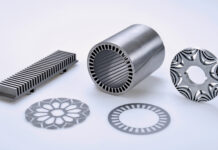
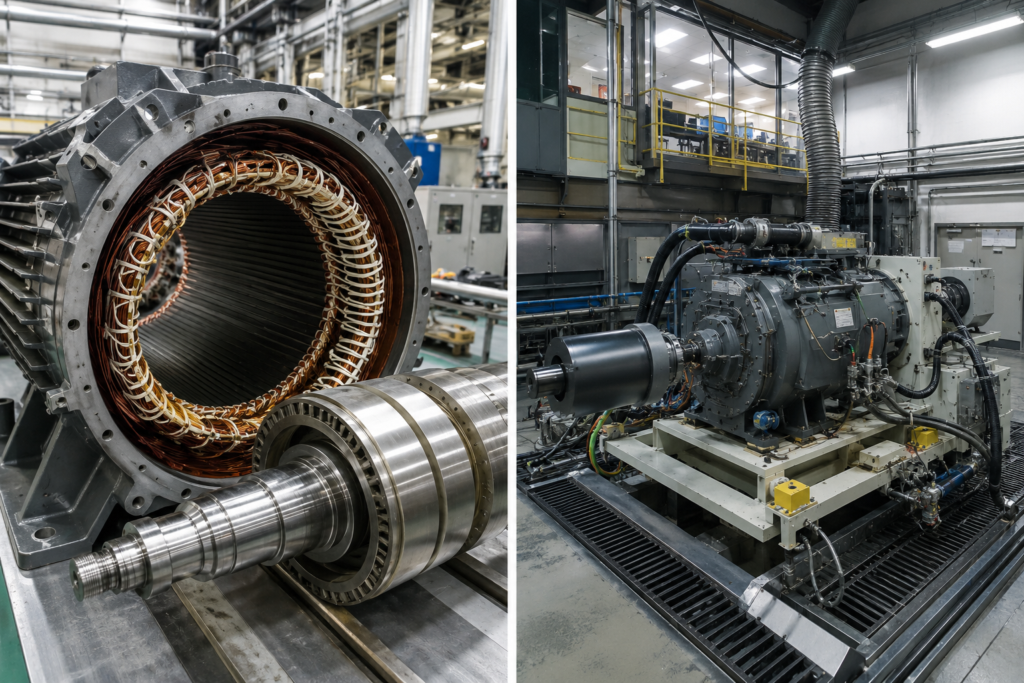
High-grade electrical steels with reduced core losses, thin laminations and improved copper technologies such as hairpin windings contribute to higher current density and better thermal behaviour. Designers are also exploring hybrid excitation concepts and advanced synchronous reluctance configurations to reduce dependence on rare-earth materials.
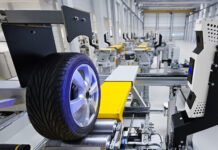
If electromagnetic optimization defines motor performance, thermal management ultimately determines its operating limits. Heat generated by copper losses, iron losses and mechanical friction must be removed efficiently to preserve insulation integrity and guarantee long service life. Liquid cooling, integrated water jackets, direct winding cooling and advanced dielectric fluids are becoming increasingly common (figure 2).
Rotor dynamics, bearing selection and structural stiffness are carefully optimized to withstand high rotational speeds while minimizing vibration and acoustic emissions. Lower vibration improves passenger comfort while extending component life and increasing overall reliability.
The role of multi-physics simulation
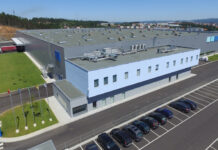
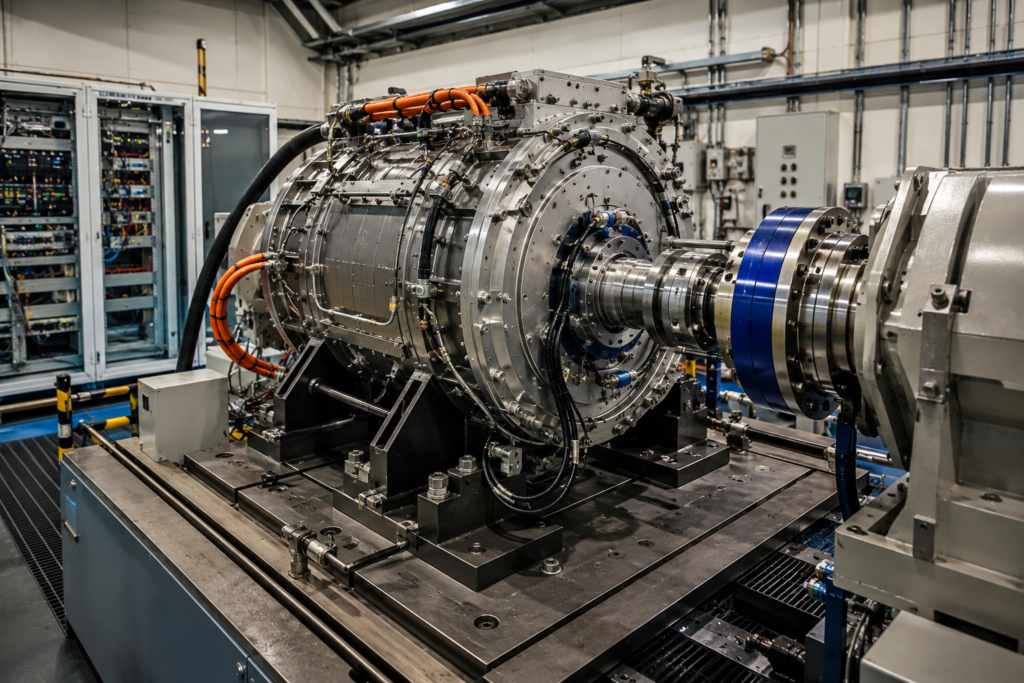
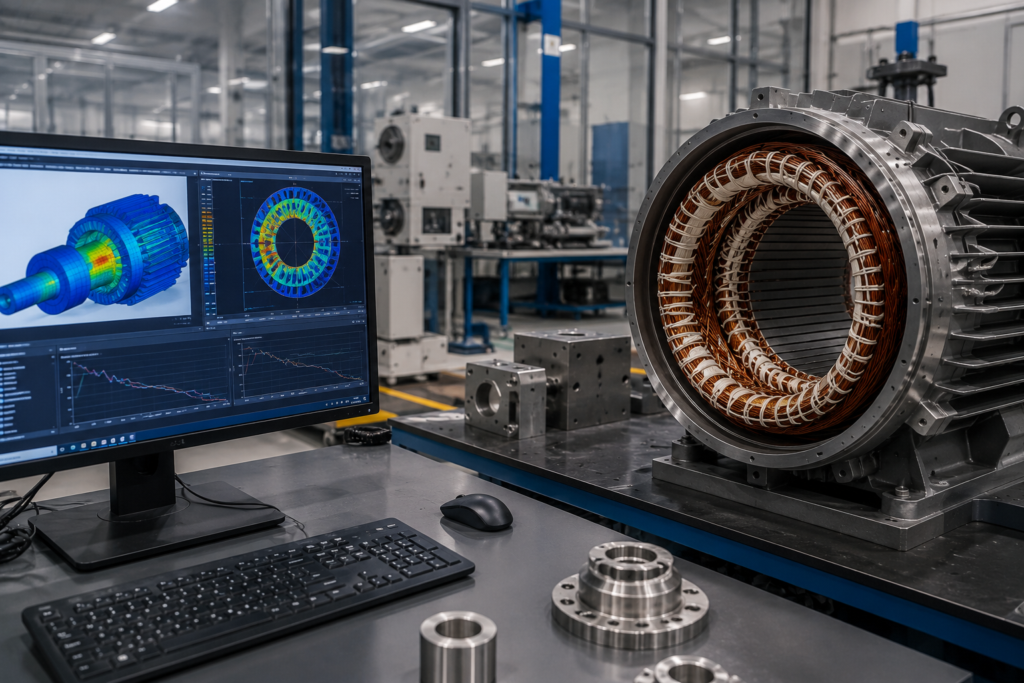
Recent design environments combine finite element electromagnetic analysis with computational fluid dynamics, thermal modelling and structural simulation to evaluate the complete behaviour of the machine before hardware is manufactured. Engineers can predict temperature distribution, electromagnetic forces, mechanical stress and cooling efficiency within a single workflow (figure 3).
High-performance computing and artificial intelligence accelerate optimization by evaluating thousands of design iterations and identifying the best compromise between efficiency, weight, manufacturing cost and reliability. Higher power density therefore results from the successful integration of advanced materials, optimized design, innovative cooling and sophisticated simulation.
Future directions: digital engineering, AI and sustainable traction systems
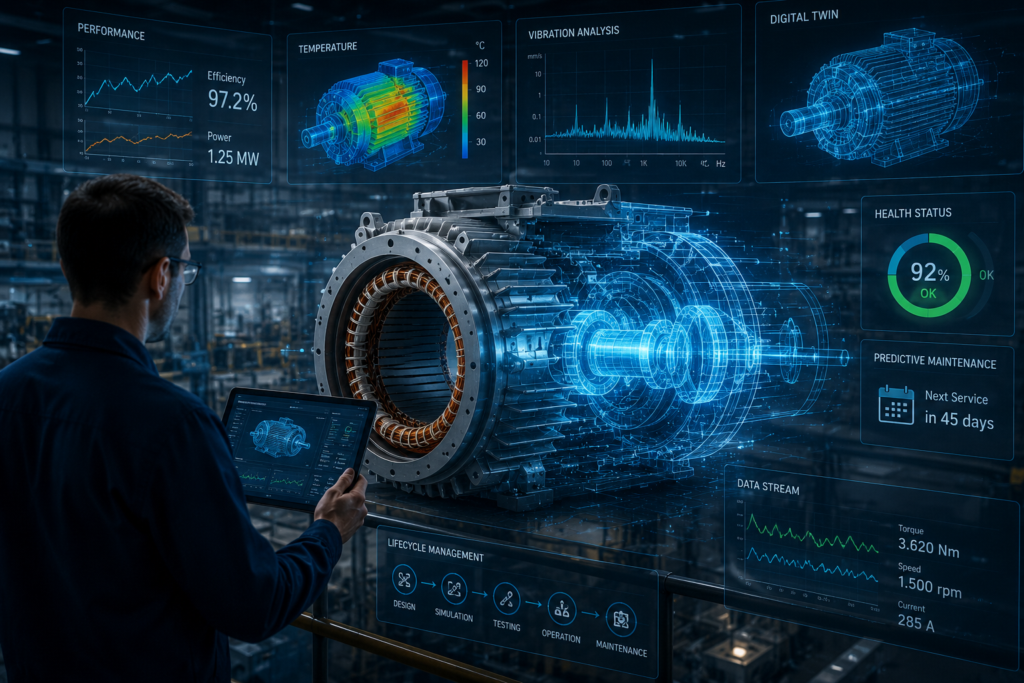
Future railway traction motors will increasingly rely on digital engineering throughout the product life cycle. Digital twins continuously compare operational data with predictive models using information from sensors monitoring temperatures, vibration, bearings and insulation. This enables predictive maintenance based on actual machine health rather than fixed maintenance intervals. Condition-based maintenance minimizes unnecessary servicing while reducing the risk of unexpected failures, improving fleet availability and lowering operating costs.
Artificial intelligence and sustainable design
Artificial intelligence is becoming a valuable engineering tool both for diagnostics and for machine design. Machine learning algorithms identify subtle degradation patterns long before conventional methods, while optimization routines explore thousands of design configurations to balance efficiency, power density, cost and thermal performance.
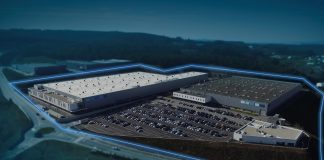
Sustainability is also reshaping traction motor development. Manufacturers are adopting recycled materials, lower-carbon production processes and improved recovery strategies for copper, electrical steel and permanent magnets, while investigating alternatives that reduce dependence on critical raw materials (figure 4).
Towards intelligent integrated propulsion systems
Electrification trends including battery-electric, hydrogen-powered and hybrid trains require motors capable of operating efficiently across increasingly variable duty cycles. Future traction systems will integrate motors, inverters, sensors, software and onboard energy storage into intelligent cyber-physical platforms.
The future of railway traction motors will therefore depend not on a single breakthrough but on the convergence of materials science, digital simulation, artificial intelligence, power electronics and sustainable manufacturing. Together these technologies will deliver higher efficiency, greater reliability and lower environmental impact for the next generation of rail transportation.