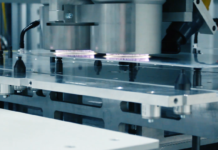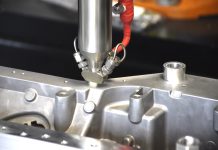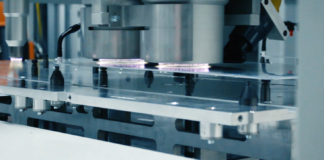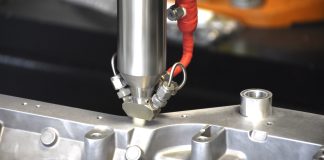
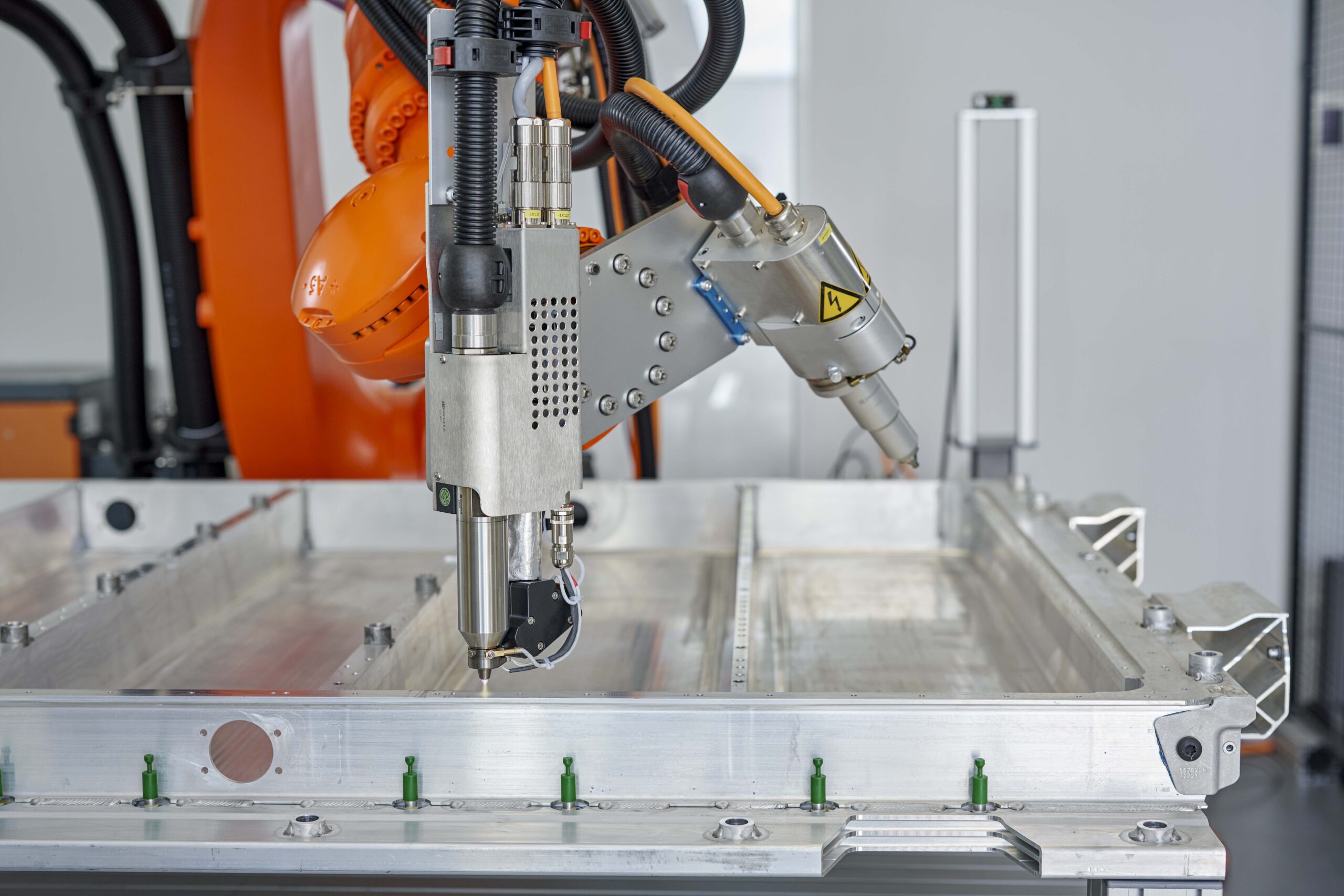
From fine cleaning to corrosion protection, Plasmatreat solutions demonstrate how atmospheric pressure plasma makes metal surfaces reliable for subsequent steps such as coating, sealing, bonding and printing.
Plasmatreat’s innovative plasma processes, such as Openair-Plasma, HydroPlasma, and PlasmaPlus, not only ensure effective surface modification and maximum efficiency, but also make processes more efficient and environmentally friendly.
Removing inorganic residues
With HydroPlasma, Plasmatreat has developed a new cleaning process that combines the physical effect of Openair-Plasma with the chemical reactivity of water. Water is fed into the plasma process and ionized. The resulting reactive species dissolve organic and inorganic residues and convert them into soluble or gaseous components. The effect is similar to intensive cleaning with detergent in warm water, but without the need for additional chemical cleaning agents.
Ultra-fine cleaning: precise and chemical-free
The surfaces of metal components are often contaminated by the release agents, lubricants, cutting oils, or drawing greases required in the manufacturing processes. These contaminants must be removed to ensure flawless further processing. Conventional cleaning processes usually involve chemicals. Nevertheless, residues often remain, which make further processing of the components, e.g., bonding, sealing, or coating, difficult. Plasmatreat’s Openair-Plasma technology is a thorough and environmentally friendly alternative to wet chemical cleaning. This technology requires only compressed air and electricity to remove organic contamination. It is therefore a very clean technology that is efficient, suitable for inline use, and can be applied selectively.
A nano-coating preventing corrosive infiltration
PlasmaPlus, another process developed by Plasmatreat, applies a nano-coating to metal substrates. A precursor is added to the plasma to create an ultra-thin, highly effective layer on the metal surface, which performs a specific function depending on its composition: the PlasmaPlus AntiCorr process is used for high-performance corrosion protection coatings, which serve, among other things, as a protective layer under housing seals. This protects components from infiltration corrosion, effectively preventing damage to electronic components, for example. The key advantage of AntiCorr is its selective inline treatment, which means that only the desired and necessary areas of the component are treated. Compared to other corrosion protection processes, this saves a lot of chemicals, logistics costs, time, and money, while also protecting the environment.
How Openair-Plasma and PlasmaPlus optimize industrial processes
When plasma with its high energy level comes into contact with materials, it changes the surface properties, for example from hydrophobic to hydrophilic. Plasma technology requires only compressed air and electricity for operation. Fine cleaning with Openair-Plasma® gently and reliably removes dust, release agents, additives, plasticizers and hydrocarbons from surfaces. Especially with non-polar plastics, plasma treatment achieves surface activation. It supports the increase of surface energy by introducing hydroxyl groups and thus improves adhesion in subsequent processes such as bonding, printing, painting and sealing. Even oxide layers on metal surfaces can be reliably removed inline during the production process using plasma technology. Plasmatreat’s PlasmaPlus® technology can also be used to create targeted functionalized surfaces with defined properties by applying (depositing) nanocoatings, e.g. as an additional adhesion promoter layer. Plasmatreat’s HydroPlasma® is used to remove stubborn organic and inorganic soils – an innovative cleaning method that uses only water, compressed air and electricity in an environmentally friendly manner.