Novelis is expanding its portfolio of coated aluminium sheet for battery components, combining automotive-grade alloys with pre-applied surface treatments designed to improve formability, corrosion resistance and, where required, electrical insulation.
As electric vehicle battery systems evolve towards higher levels of integration, material selection is increasingly influenced not only by weight reduction but also by manufacturing efficiency, corrosion behaviour and electrical requirements. Against this background, Novelis has expanded its range of advanced coated aluminium solutions for electric mobility and stationary energy storage applications.
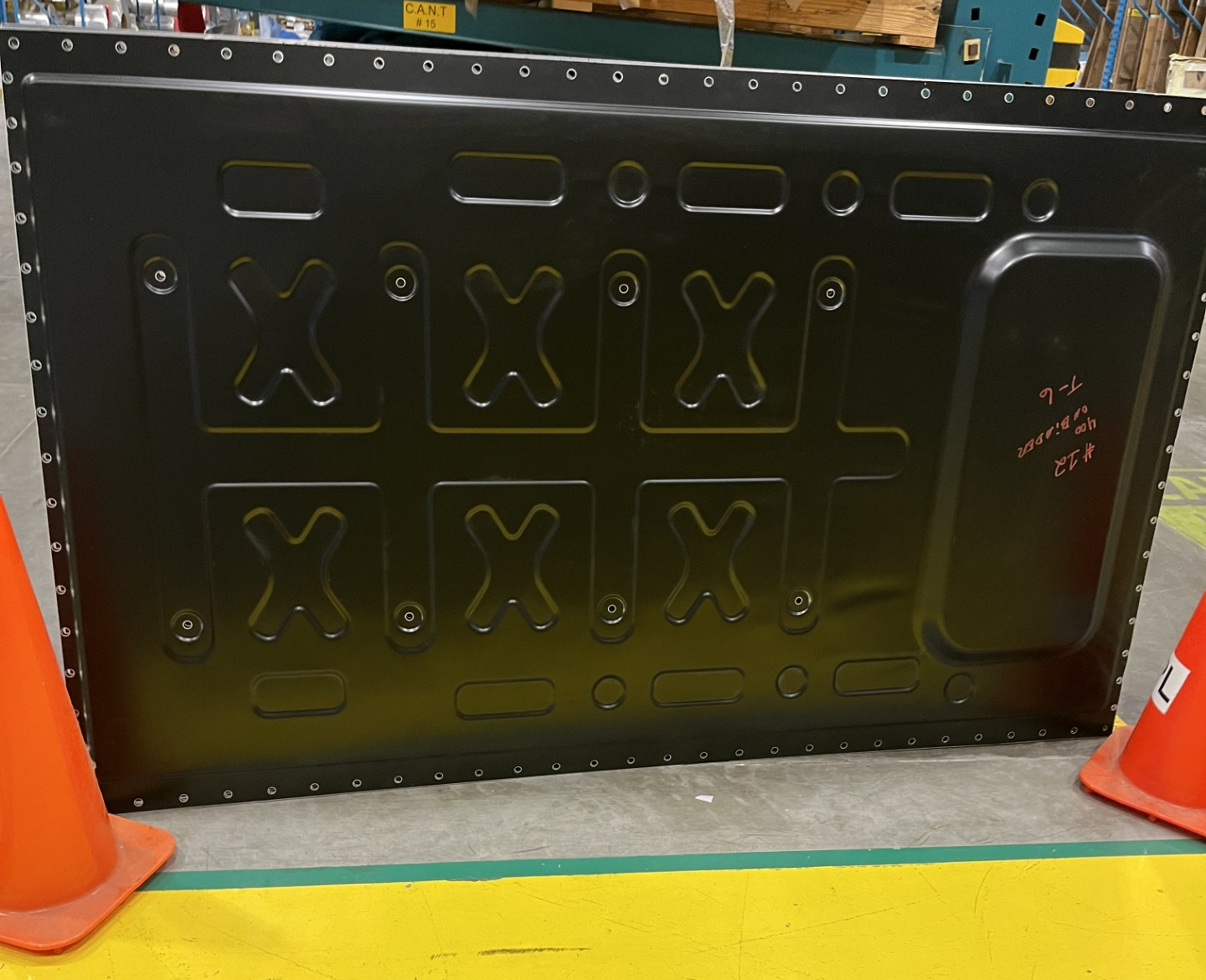
The materials are intended for components including battery enclosures, casings, busbars and other structural or electrically functional parts of battery systems. The approach combines automotive-grade aluminium sheet with surface technologies applied directly to the coil before the forming stage.
One of the main technical aspects is the use of a water-based coating system already deployed on Novelis’ advanced coating line in Germany. Because the coating is applied before stamping and remains functional after forming, it is designed to provide both corrosion protection and improved material processing during component manufacture.
This pre-coated approach can also simplify the production sequence. According to Novelis, the surface treatment can reduce or eliminate the need for external lubrication during forming and, depending on the application, additional e-coating operations. This could reduce the number of manufacturing steps required for components such as battery housings while improving consistency between forming and surface protection processes.
Electrical insulation as a material function
The coating system can also be engineered to provide electrical insulation. This is particularly relevant for battery architectures in which metallic structural components are located close to conductors, cells or high-voltage connections.
Rather than treating electrical insulation exclusively as a secondary operation or adding separate insulating elements, manufacturers can therefore specify different surface characteristics directly at material level.
This capability is potentially relevant to components such as busbars and battery enclosure elements, where the combination of electrical behaviour, mechanical performance and corrosion protection needs to be controlled within increasingly compact assemblies.
The company says its development work builds on aluminium sheet technologies already established in automotive manufacturing. For battery applications, formability remains important because large enclosures and stamped components often require complex geometries while maintaining dimensional stability and surface integrity.
Aluminium also offers a favourable strength-to-weight ratio for EV battery structures, where reducing non-cell mass can contribute to overall vehicle efficiency. At the same time, battery housings have to provide mechanical protection for the cells and withstand environmental exposure throughout the vehicle lifetime.
From automotive sheet to battery systems
The move reflects a broader evolution in the use of aluminium within electrified powertrains. While aluminium has long been employed in vehicle body structures and thermal systems, battery packs are creating additional requirements related to electrical isolation, corrosion resistance and high-volume manufacturing.
Integrating these properties into coated sheet material may allow component suppliers to reduce downstream processing and adapt the material more closely to individual battery designs.
The same material strategy can also be applied outside the vehicle sector. Stationary energy storage systems use many comparable components, including aluminium housings, electrical connections and structural elements, although weight requirements and operating conditions can differ significantly from those of automotive batteries.
Sustainability is another factor behind the development. Novelis is combining the coated products with aluminium containing increased levels of recycled material and with closed-loop recycling models. Because aluminium can be repeatedly recycled, recovering production scrap and end-of-life material can reduce demand for primary metal and lower the carbon footprint associated with battery component production.