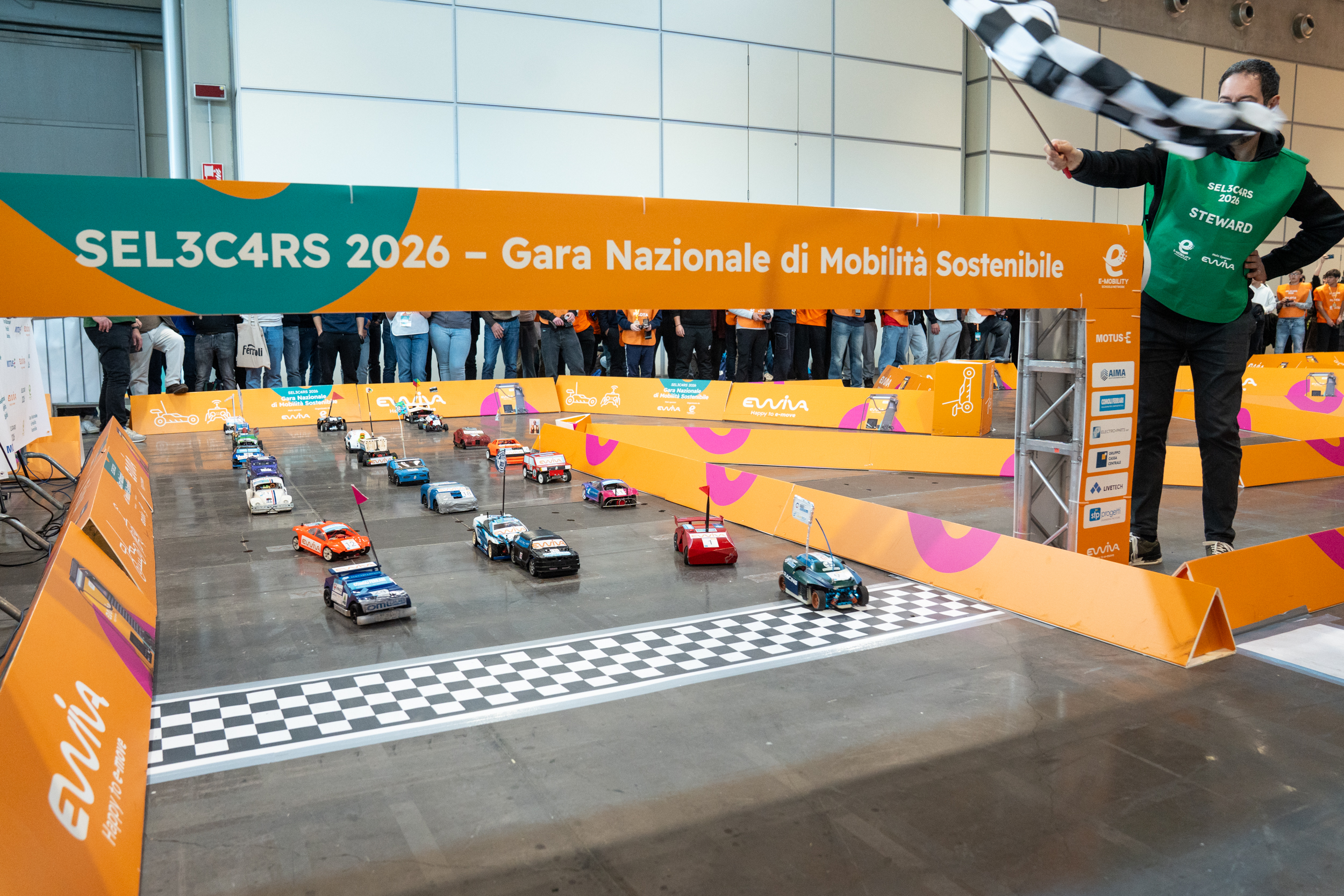
At the 2026 Sustainable Electric Cars Race in Rimini, high-school student teams showcased advanced radio-controlled EV prototypes combining 3D printing, CAD design, and intelligent power management—demonstrating the next generation’s readiness to lead the e-mobility transition.
At the KEY – The Energy Transition Expo in Rimini, which took place recently, the 2026 edition of the Sustainable Electric Cars Race for Students (SEL3C4RS) showcased the creativity and technical skills of young innovators shaping the future of electric mobility. Sponsored by Ewiva, one of Italy’s largest network of ultra-fast charging stations powered by Enel, the national competition brought together 25 teams from high schools and technical institutes across Italy—an impressive leap from the 17 teams of the previous year.
Advanced Prototypes at the Heart of the Competition
The top spot on the podium went to the Cerebotani Racing Team from IIS “L. Cerebotani” in Lonato del Garda (Brescia). Their radio-controlled electric vehicle, inspired by the classic Herbie Beetle, stood out for its balance of design originality and functional ingenuity. Using a newly arranged internal layout, the team optimized component distribution for improved weight balance and stability. An onboard intelligent electronic system continuously monitored current, voltage, and temperature, automatically adapting performance in real time. Even the remote controller was custom-designed and 3D-printed, reflecting the integration of mechanical, electronic, and additive manufacturing skills.
Second place went to IIS “Verona Trento” from Messina with X-MEME, a lightweight all-wheel-drive (4×4) prototype featuring dual differentials. The project combined 2D and 3D digital modeling, 3D printing, and CNC machining to produce a precision-built chassis and drivetrain aimed at maximizing traction and energy efficiency during endurance tests.
Closing the podium, the 3AMotion Team from IIS “Il Tagliamento” in Spilimbergo (Pordenone) impressed judges with an eco-conscious approach. Their prototype integrated sustainable and recycled materials and involved local enterprises through sponsorship and outreach, highlighting how community engagement can complement technological innovation.
Training for the Energy Transition
More than 150 students and 50 teachers participated in this year’s race, transforming it into a national laboratory of applied research and skill building. For Ewiva, supporting initiatives like SEL3C4RS means strengthening the foundation of Italy’s electrification ecosystem.
“Empowering students with practical skills in electric mobility and energy management is crucial for driving the transition,” an Ewiva representative commented. “These young talents are the future of sustainable transport—our role is to give them the tools and opportunities to experiment and innovate.”
Through partnerships like this one, Ewiva reinforces its dual mission: expanding Italy’s EV charging infrastructure and investing in the knowledge required to sustain it.