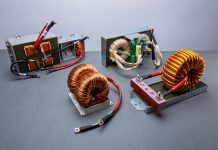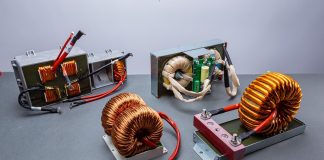
In an international context where elements of instability are on the rise, PowerCoils is implementing measures to ensure resilience and further strengthen its position as a reliable technology partner, even in increasingly complex situations.
In recent years, the ongoing uncertainty in the markets has put companies under severe strain, with threats of trade wars and conflicts that complicate the international landscape. If we then add to this the volatility of raw material and energy costs, it becomes increasingly difficult for companies to make forecasts and define strategies. Furthermore, a widespread instability causes companies to be very cautious, with the risk of investments and projects being put on hold. We discussed these issues with Roberto Colombo and Ciriaco Petruzziello, respectively CEO and Sales Director of PowerCoils, who explained how the company is continuing its growth path despite the current difficulties. PowerCoils, which designs and manufactures wound components for various sectors and applications, is focusing on a combination of technological innovation, efficiency, and flexibility to continue expanding and remaining competitive.
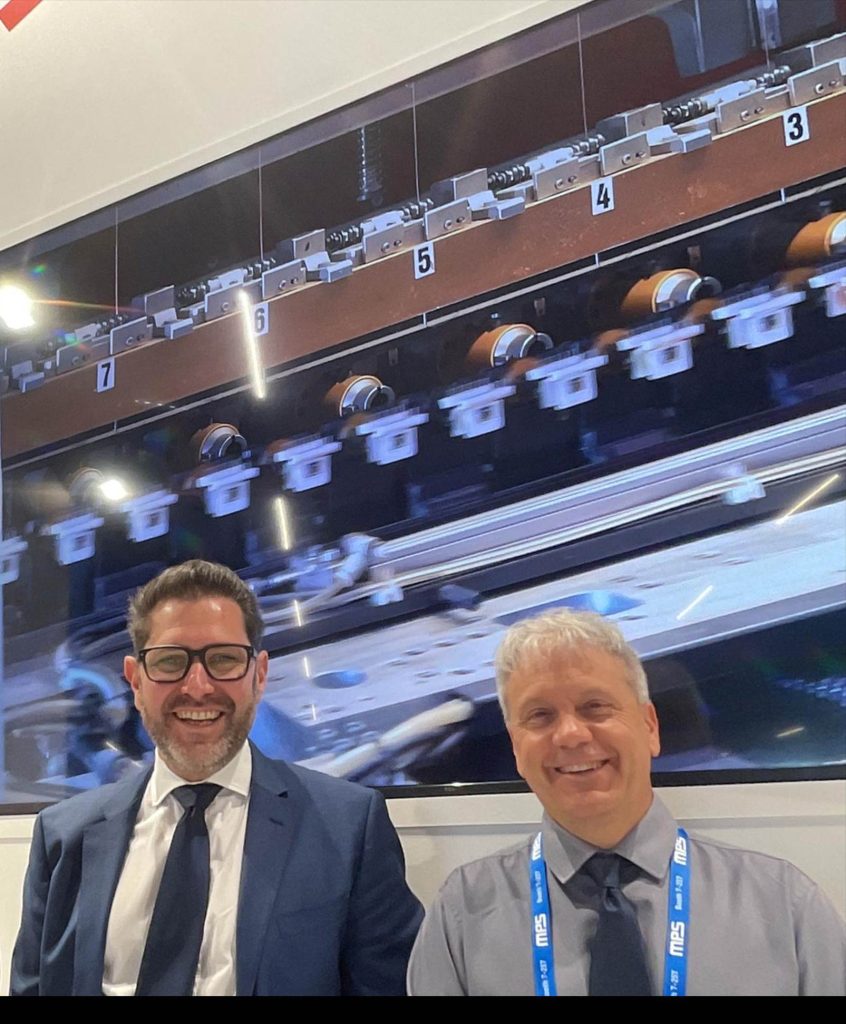
Is the climate of strong global uncertainty also affecting your sector?
Yes, geopolitical instability is also having a tangible impact on our sector. PowerCoils operates in a global supply chain, and international tensions – such as armed conflicts, sanctions, logistical disruptions, and instability in energy markets – directly affect the availability of raw materials (such as copper, ferrites, and insulating materials) and the timeliness of supplies.
Specifically, one of the main challenges we are facing is the volatility of raw material costs, particularly copper and ferromagnetic materials, which are essential for our products. Further difficulties relate to delays in supply chains, especially from Asian markets or areas involved in trade tensions. Finally, another element of complexity is the uncertainty in planning, both on the production side and on the demand side, particularly for customers in sectors subject to external shocks, such as energy or defense.
How are you addressing these challenges?
We have implemented a series of strategic measures, including supplier diversification. We are reducing our dependence on individual countries or producers by focusing on European sources and multi-year agreements with reliable partners. In addition, we are trying to have a larger stock of critical materials to avoid production stoppages in the event of slowdowns. These measures are complemented by investments in production efficiency and flexibility, to adapt capacity to actual demand, and by the strengthening of partnerships with customers to share supply chain information and plan supplies together in a more predictable manner.
Despite the difficulties, however, we believe that there may also be opportunities in the current situation: the growing push towards energy transition and electrification – also as a response to geopolitical crises – is generating new demand for our products, especially in the railway, medical, and energy sectors. Our strategy is therefore geared not only toward protecting operational continuity, but also toward strengthening our position as a reliable technology partner in complex contexts.
What is your opinion on the recent US tariff policies?
PowerCoils does not export directly to the US, but several of our customers are active in that market and use our components in equipment or systems intended for export to the US. As a result, US tariffs affect us indirectly, but not insignificantly.
US protectionist policies, especially those aimed at penalizing imports of technology and components from Europe, can have a significant impact throughout the value chain. For us, this can translate into cost pressures (to contain the final prices of solutions exported overseas) and uncertainty about the continuity of projects already underway (especially those with an international vision).
In your opinion, could the uncertainty generated by US policies have created the conditions for a strengthening of trade within the European Union?
We don’t think so. The economic and trade policies of the United States have not encouraged increased intra-European trade, but rather have created a climate of considerable uncertainty at global level, affecting all players in the value chain, including end consumers.
This uncertainty has translated into widespread caution on the companies’ side, which have often postponed investment, development, or expansion decisions, waiting for clearer and more stable scenarios. As a result, the entire economic system tends to slow down, and instead of encouraging new trade relations within the European Union, there is a freeze on initiatives, with a negative impact on both production and consumption.
In our case, as PowerCoils, we have observed that many customers – even though they are based in Europe – have preferred to adopt conservative strategies, limiting orders, postponing projects, and focusing on managing existing business. This attitude is understandable, but it shows that global instability does not necessarily favor a strengthening of the European market, but rather freezes industrial and technological development on a larger scale.
How important are exports to your turnover?
Exports are in the growth phase and represent a strategic axis of development for the coming years: we believe that the international market offers interesting opportunities in the medium to long term. Last year, we defined an expansion plan abroad with the aim of increasing our presence in selected markets.
At present, our growth target remains valid, but it will be implemented more gradually and selectively, depending on how the international economic situation evolves. The priority today is to ensure solidity, reliability, and operational flexibility, even in a complex and constantly changing scenario.
Which markets are you focusing on most?
Over the last three years, we have focused primarily on the German market, which is a strategic reference point for us in terms of both volume and technological standards. We have invested in consolidating commercial relationships with German customers and in developing tailor-made solutions for highly specialized sectors.
However, in recent months, we have begun to look more closely at the Spanish market, which is proving to be particularly dynamic and receptive for our products and the type of technical and commercial support we can offer.
For this reason, we have finalized the opening of a sales office in Spain, with the aim of establishing a more direct presence in the country and building solid commercial relationships with new local partners. In this regard, we also participated in a trade fair held in Madrid.
In your opinion, is automation one of the strengths for remaining competitive in a constantly changing scenario?
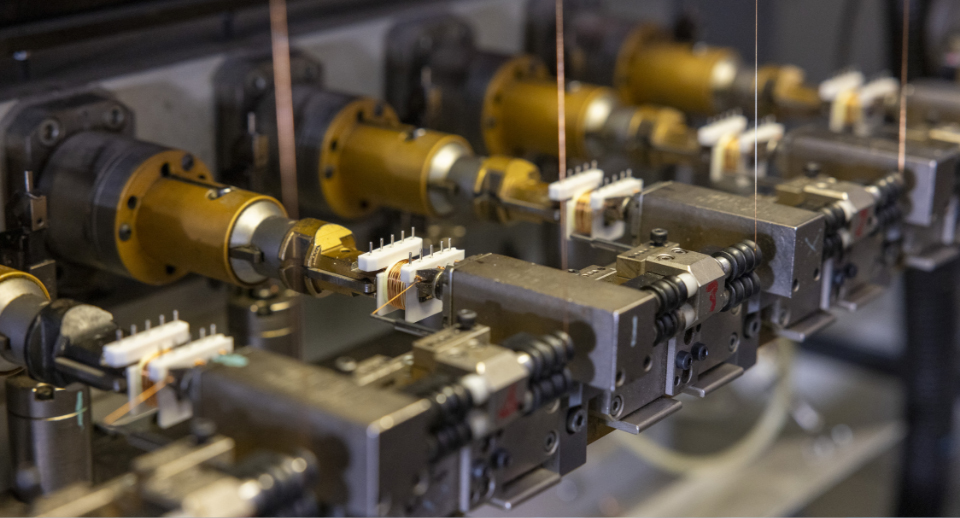
Absolutely. PowerCoils has always believed strongly in automation as a strategic lever for combining “Made in Italy” with industrial scale, reducing costs, eliminating downtime, and defending Italian craftsmanship. In terms of investment, since 2021 we have introduced automatic winding, welding, and assembly lines equipped with robotic systems for loading/unloading and handling components. These innovations have enabled us to guarantee reliability and repeatability of operations. In addition, in collaboration with Smiro (a provider of intelligent warehouse management solutions), we have extended automation to materials logistics, saving time and increasing competitiveness. We believe that this approach represents a modern vision of Made in Italy, because automation does not mean giving up handcrafted quality, but enhancing it, making it scalable and competitive, while keeping the heart of production in our Country.
As for the present and the near future, the investments in innovation started in 2021 are still proceeding successfully. We are continuing to develop new solutions and improve production processes, with a particular focus on automation and energy efficiency. This allows us to maintain a competitive advantage and respond more effectively to customer needs.
Can the ability to develop customized solutions be an effective way to build customer loyalty in an increasingly changing and uncertain environment?
Surely. In an unstable context, customization is a key value: it allows us to respond precisely to customer technical requirements and strengthens the relationship over time. At PowerCoils, we have made design flexibility one of our strengths, offering tailor-made solutions that integrate perfectly into our partners’ systems.
Does having production sites in different geographical areas give you any advantage in the event of a further worsening of the global uncertainty?
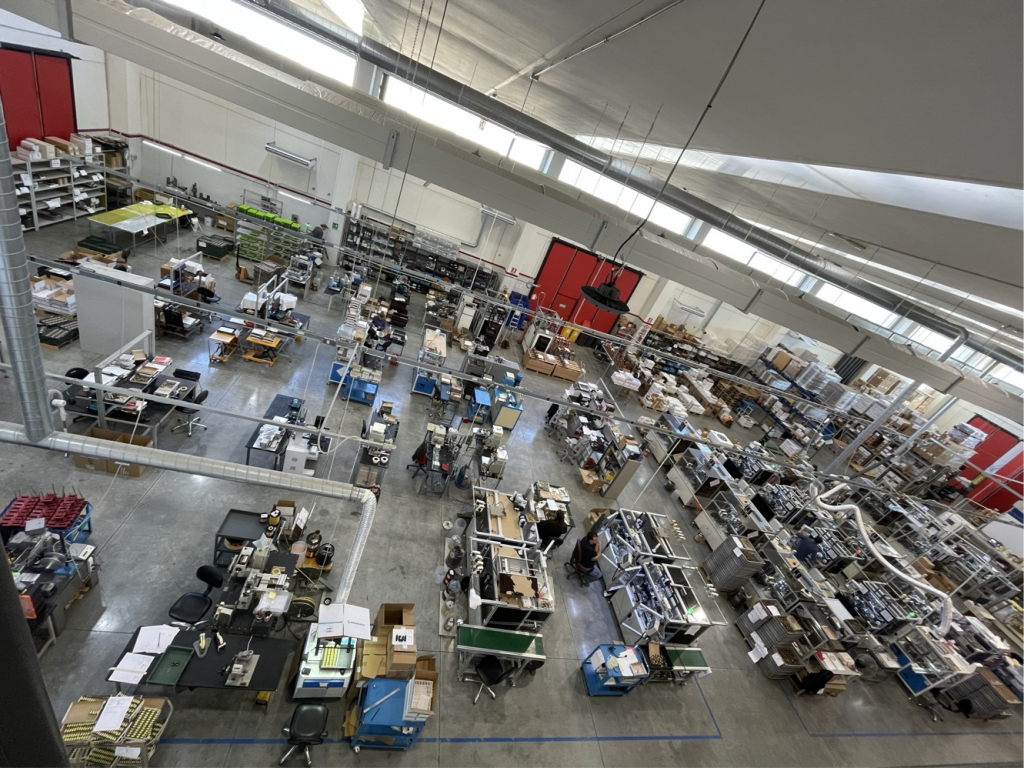
Yes, having production sites in Italy, Tunisia, and China allows us to diversify our production and reduce the risks associated with any geopolitical or logistical issues. This flexible structure allows us to adapt quickly to changes in the global market, ensuring continuity of supply and greater resilience in uncertain situations.