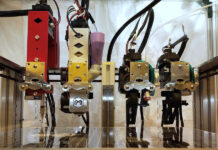

ESOX Group, a new pan-European defence technology company, has officially launched to accelerate the development of next-generation unmanned vehicles for NATO and allied forces. The group integrates advanced electric propulsion systems with intelligent software, creating fully integrated solutions for uncrewed ground, airborne, and maritime defence platforms.
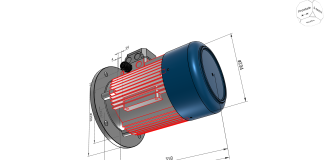
Formed through the strategic demerge of Donut Defence from mobility innovator Donut Lab and the acquisition of Finnish unmanned aerial systems specialist ESOX Aero, the new entity brings together deep expertise in powertrain engineering, electric motor design, AI-driven control software, and complex technology manufacturing. Its engineering focus centres on high-torque, power-dense electric motors, supported by sophisticated simulation tools and next-generation software architectures.
Software-defined defence platforms
The ESOX Group’s strategy reflects the shift towards software-defined military vehicles, allowing complex R&D to be carried out virtually before prototypes are deployed. Using advanced digital twin technology, engineers can model mission scenarios, collect operational telemetry, and refine systems repeatedly—all within secure, classified environments. This continuous improvement loop makes battlefield adaptation faster and safer, providing significant defensive advantages.
With operational sites in the UK, Finland, and Estonia, ESOX Group is already engaged in discussions with NATO, national defence ministries, major contractors, and technology partners about future vehicle programmes. The acquisition of ESOX Aero adds a dedicated autonomous vehicle testing and development centre near Helsinki, giving the company a secure base for early-stage research, prototyping, and full system validation.
The vision
Dan Walmsley, former senior executive at McLaren Automotive and Retrac Group, has been appointed CEO. He emphasises that protecting lives, assets, and borders with smarter technology is central to the group’s mission: “The integration of electric propulsion with bespoke software, AI, and advanced simulation marks a step-change in defensive capability. Modern conflicts increasingly rely on unmanned systems, and our platform is designed to ensure allied nations hold the advantage.”
The company’s AI engine leverages data harvested from its digital twin environment to adapt continually to evolving battlefield conditions. “The side with the smartest AI wins,” says Walmsley. “Our continuous training cycle ensures NATO forces operate at peak readiness, with vehicles capable of responding to new threats in real time.”