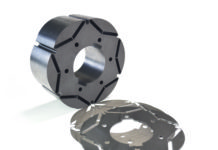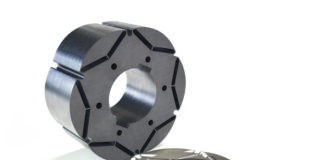
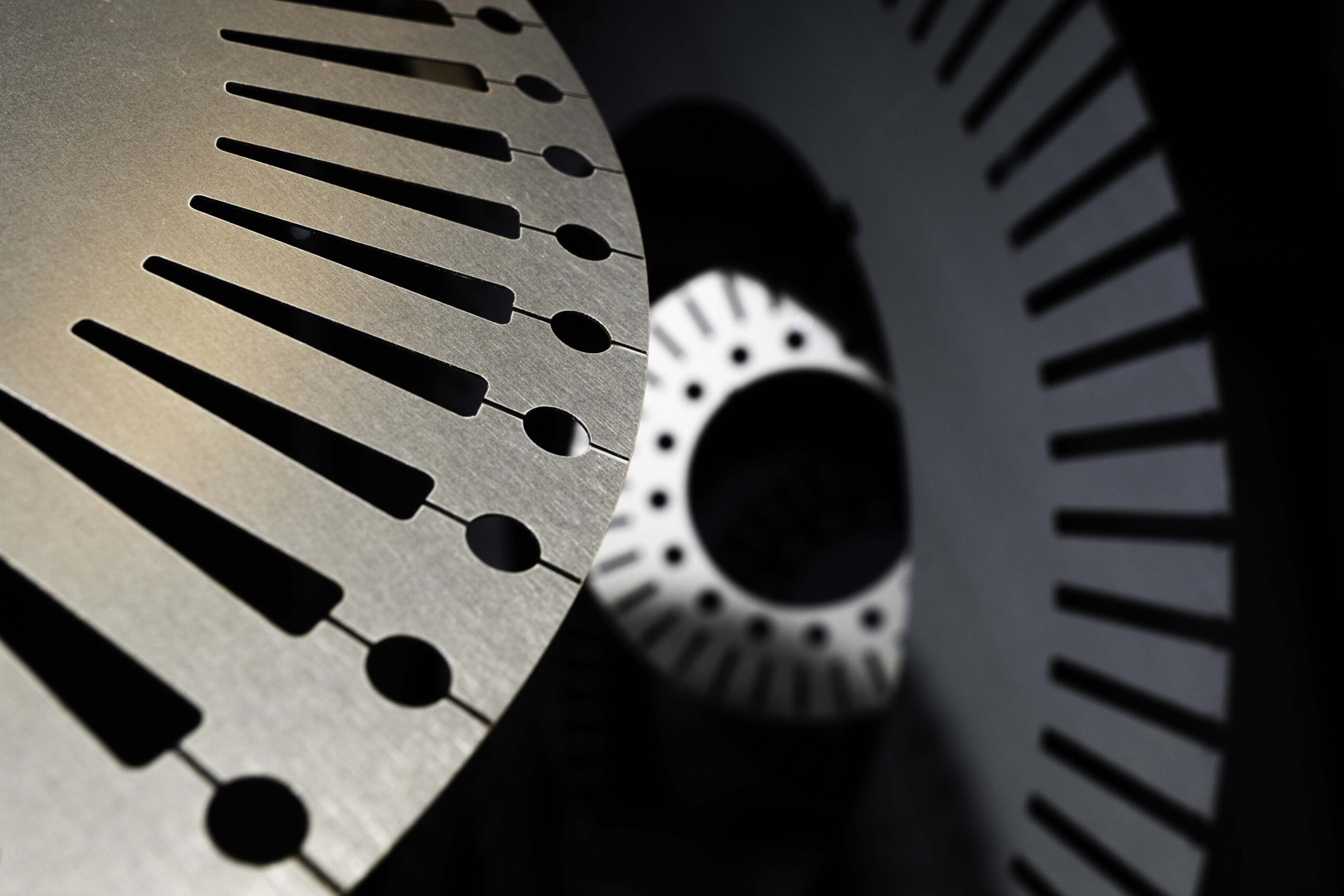
Variability is becoming the norm in electric motor design: more versions, more iterations, more prototypes and more pre-series. In this scenario, the bottleneck is not only designing rotor and stator laminations but also being able to cut it with high precision, repeatable quality and times compatible with development, without immediately investing in a stamping die. This is where the German company Stiefelmayer Lasertechnik positions its proposal: not “a laser for sheet metal”, but a cutting technology optimised for electrical sheet metal, with a very clear thesis: ‘Laser cutting is not only laser cutting’. Jochen Müller, CEO of the company, states: «Many negative assessments of lasers in the e-motor field come from tests carried out with ‘general purpose’ sheet metal laser cutting machines, designed for other priorities (different thicknesses, geometries, dynamics and tolerances). There, they ‘try out the laser’ and conclude that it doesn’t work. But at Stiefelmayer, we turn the perspective around and say: you need a platform designed specifically for electric sheet metal, for the precision it requires and for the peculiarities that characterise it. And that’s what we’ve done».

Precision in the DNA
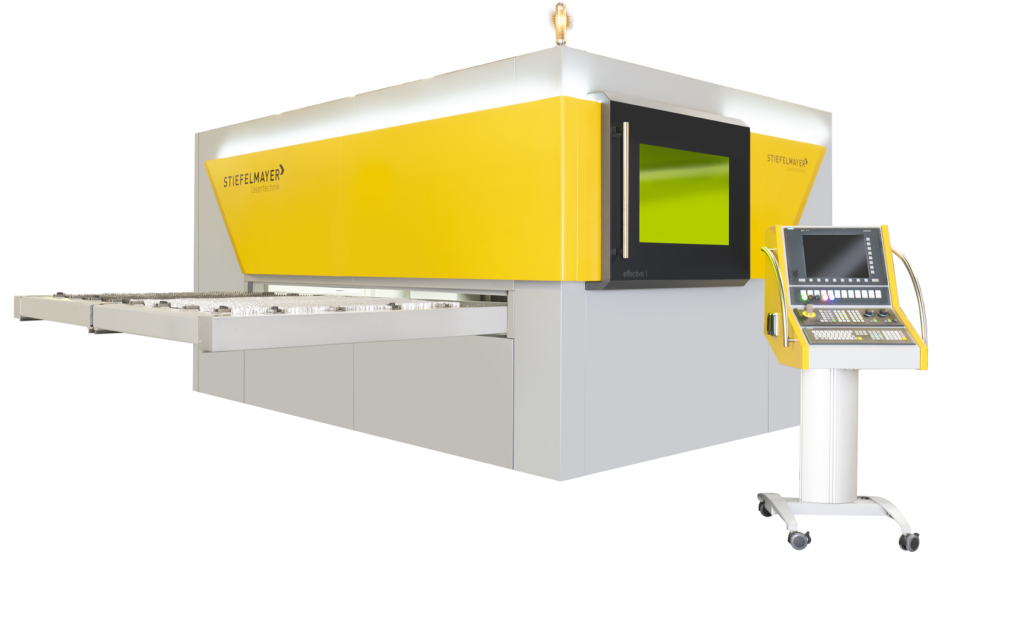
According to Stiefelmayer, what characterises a machine specifically designed for electro-sheet metal are certain elements that then affect the quality of the finished piece. Müller says: «When cutting sheet metal, the difference is not only in the laser: it is in the platform. And our machines are based on this logic.» But what are the characteristics that make Stiefelmayer’s laser cutting machines so suitable for cutting electro-sheet metal? Müller explains: «If the machine vibrates, the vibration ‘enters’ the cut edge. And on sheet metal, where tight tolerances are required, that detail becomes macro. But if the machine is robust, stable and does not move, that precision is also transferred to the product. It can be seen in the precision of the cut and the definition of the edges» This is why Stiefelmayer machines are characterised by:
- dynamic and stable kinematics, to reduce vibrations and resonances during acceleration: even minimal oscillations on thin sheet metal can result in less clean edges and less consistent tolerances;
- linear drives and lightweight structure (including carbon fibre) allow for faster and more controlled movements: less weight means less inertia and less stress, therefore greater precision even at high speeds, without the typical compromise between performance and stability;
- lasers and parameters configured for a smaller focus, with less molten material to be expelled and less influence on the cutting area, a particularly sensitive element in magnetic sheets.
The precision achieved by these machines comes as no surprise: Stiefelmayer is a long-established company (founded in 1874) that has grown with a culture of precision linked to metrology and measuring machines. It later developed laser applications for surface hardening, and afterwards introduced laser cutting, including for motor laminations. Precision is therefore in the company’s DNA. Today, Stiefelmayer is a lean organisation, with an identity as a machine manufacturer and a strong focus on process quality. In the e-motor market, the company offers its high-speed systems, designed to combine productivity, precision and quality on the thin gauges typical of electro-sheet metal.
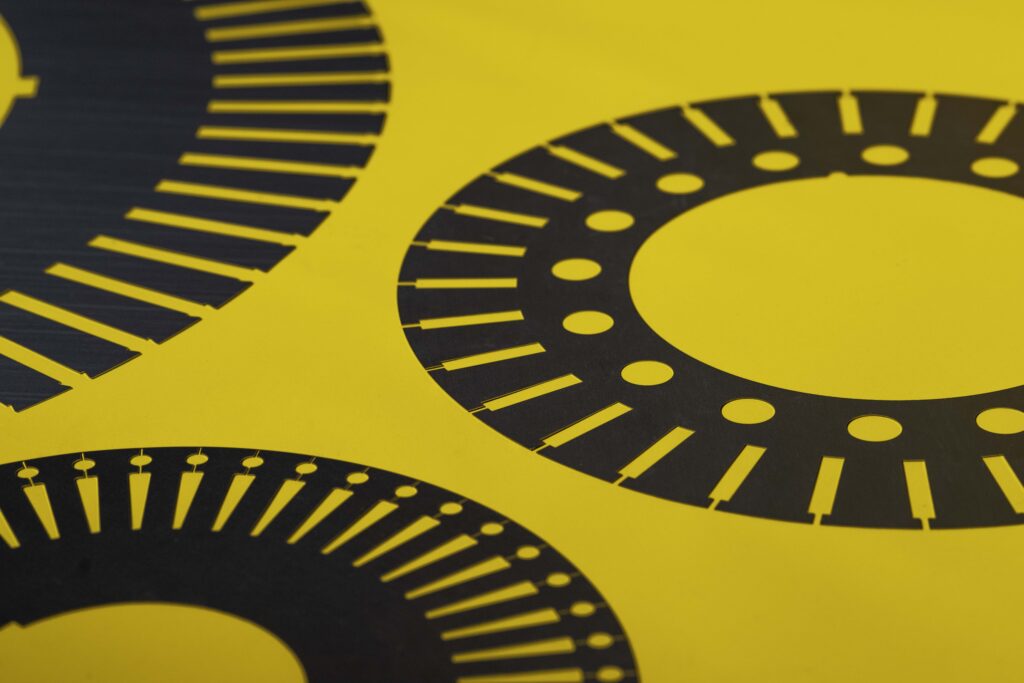
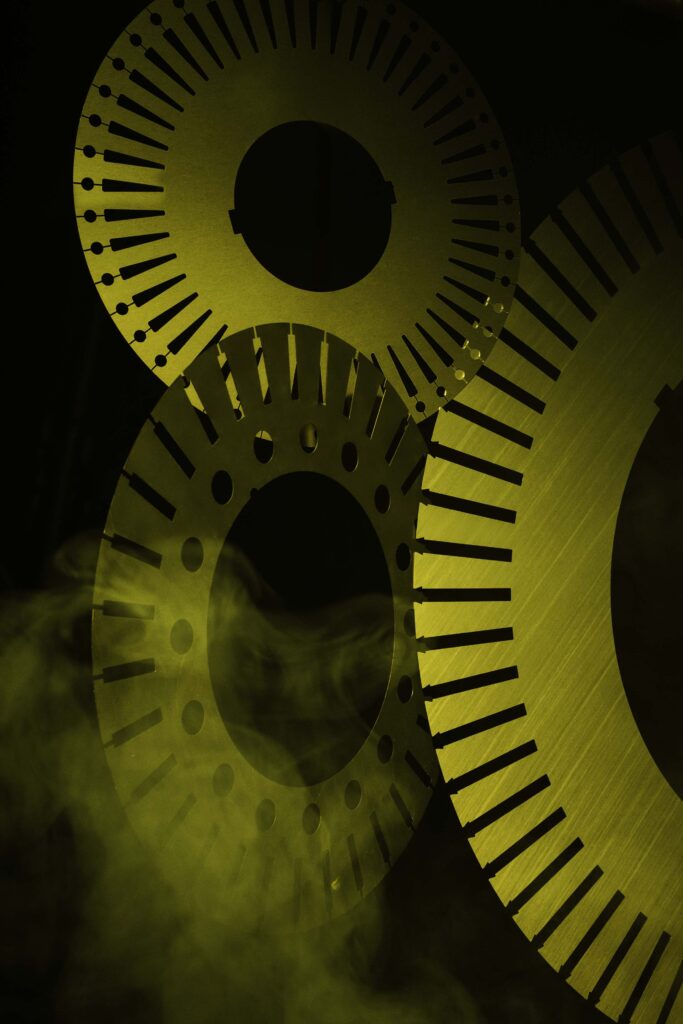
Laser vs stamping: shift in the break-even point
The industry’s prejudice against the suitability of laser cutting to produce electrical steel sheets therefore seems unjustified. «This prejudice stems from a misunderstanding: it is not the laser technology itself that does not work, but the machine with which it is tested — and above all the combination of kinematics, focus and parameters — which is often not optimised for rotor and stator laminations. With our machines, therefore, this prejudice no longer has any reason to exist».
Today, the technology that competes with laser cutting in the production of laminated sheets is stamping. When comparing it to stamping, Stiefelmayer does not deny the industrial evidence: when volumes are very high, stamping remains unbeatable. The deciding factor, if anything, is understanding when it is worthwhile to use it. Jochen Müller explains: «Stamping requires expensive and inflexible tools. Once the parameters are set, they cannot be changed unless a new stamping die is made. With lasers, on the other hand, these changes are much easier. You can adjust the parameters and change them quickly.»
The thesis is that lasers become strategic when they are needed not only for prototypes and pre-series (rapid iterations, no dedicated tooling), special engines and small series (frequent variants, small batches) or “start-up” series where samples or initial batches need to be delivered immediately to obtain the production order. They are strategic also for series production within certain numbers. Müller explains: «Laser ‘moves forward’ the moment when it makes sense to invest in the stamping die: instead of investing immediately in expensive and inflexible equipment, you can stabilise the geometry and process with laser cutting and move on to the die only when the design is finalised, and the numbers justify it.»
«By the way» adds Müller, «almost all big stamping companies that deal with stamping of electrical steel parts already have laser machines in-house: they use it when the customer asks for a quick solution, a prototype within a short timeframe or a small series ‘on the fly’. In other words, the advantage of the laser is already recognised by the market.»
Future integrations
The most interesting point for today’s sheet metal manufacturers is not choosing a technology, but building a hybrid flow:
- laser for development and variants, stamping for stable, high-volume codes.
- Laser as “insurance” when late changes (or customer requests) arrive that cannot wait for a die to be revised.
- At the same time, process integration: from cutting to stack formation.
On this last point, Stiefelmayer promotes complementarity with a machine dedicated to stack welding: the STIEFELMAYER LW2, designed to quickly join laminations into rotor/stator stacks with low heat input and minimisation of thermally altered areas and deformations—a crucial issue when seeking precise and ‘clean’ stacks.
Try it, to believe it
To help overcome scepticism, Müller invites potential customers to send him a drawing and compare samples cut on different machines. This is a concrete approach, consistent with a positioning that revolves around cutting-edge quality, precision and dynamics rather than slogans.
In short, Stiefelmayer’s offering for e-motors is not ‘cutting sheet metal with lasers’, but providing a platform (machines + services + downstream process steps welding) that makes lasers industrially credible precisely where traditional, non-specialised machines often fail: thin sheets, fine geometries, rapid iterations and high variability—i.e. the typical terrain of new-generation electric motors.