
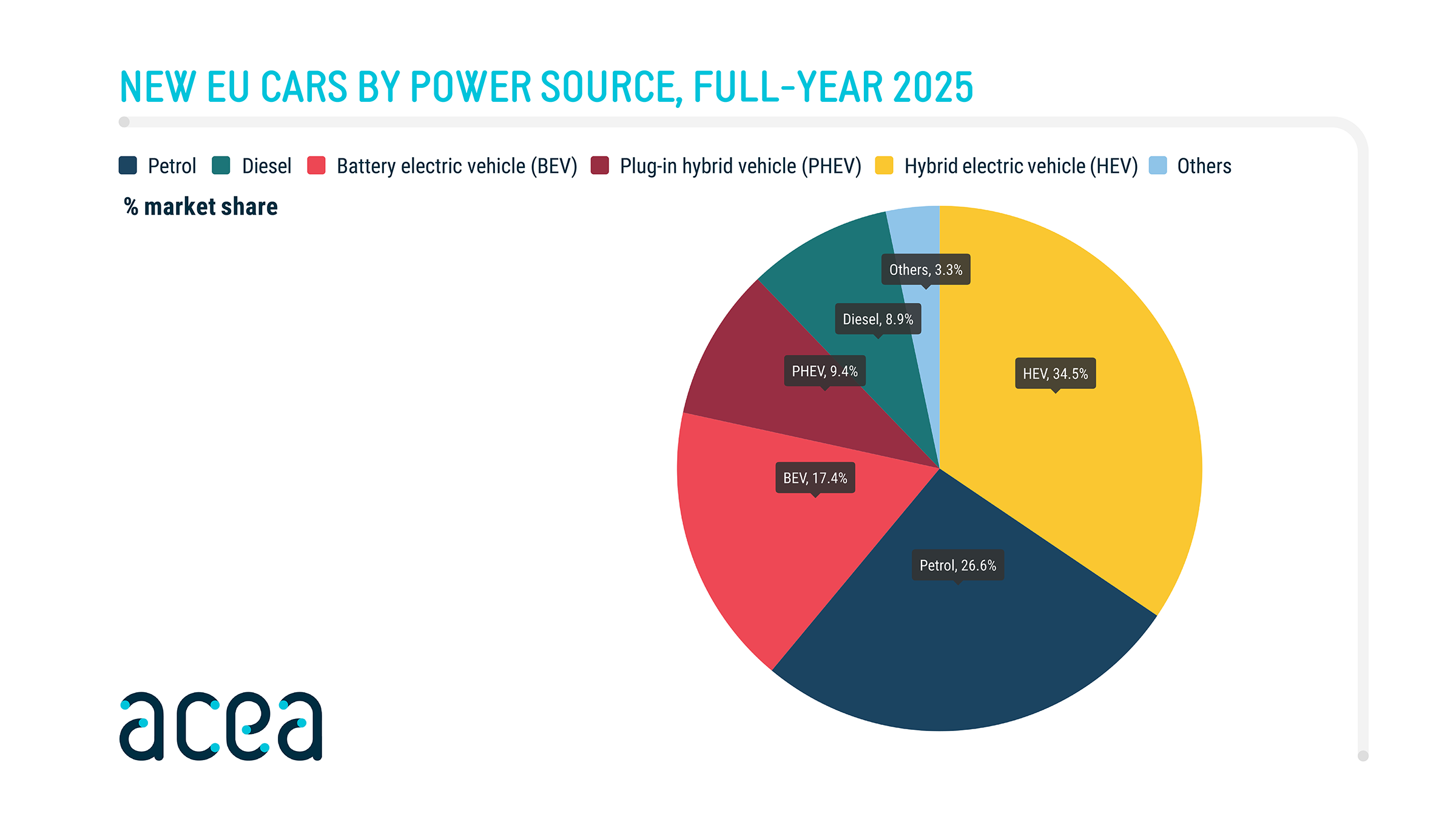
Electric cars reached a 17.4% market share in the EU, up sharply from 13.6% in 2024, while the combined share of petrol and diesel cars fell to 35.5%.
According to ACEA data, fully electric models reached a 22.6% market share in December, edging ahead of petrol cars at 22.5% and marking the first month in which zero‑emission vehicles topped EU registrations. Their advance came in a market that is barely expanding: over 2025, total new‑car registrations in the EU grew by around 1.4–1.8% and volumes are still well below pre‑pandemic levels. By contrast, battery‑electric registrations jumped by around 35% year‑on‑year in December alone and by more than a quarter in the first eleven months of the year, pushing their year‑to‑date market share to 17,4%.
This shift is happening despite a steep 38% slump in Tesla’s European sales, as traditional European groups and fast‑growing Chinese brands rush in to fill the gap with a widening range of compact and mid‑price models. Chinese manufacturers such as BYD and SAIC‑MG more than doubled their volumes in 2025, helped by aggressive pricing and new local production plans, while European brands are electrifying core models to meet stricter CO₂ targets. Hybrids also continue to gain ground and now account for roughly a third of EU registrations, but the latest figures suggest that the real momentum, in terms of growth and investment, is firmly concentrated in electric and hybrid powertrains
In December alone, battery‑electric registrations surged by 51% year‑on‑year, confirming that the turning point seen when BEVs edged ahead of petrol models is part of a broader structural shift in the market. Over the full year, 1,880,370 new battery‑electric cars were registered in the EU, with Germany, France, the Netherlands and Belgium together accounting for 62% of the total, while full hybrids rose to a 34.5% share and plug‑in hybrids to 9.4%, consolidating the weight of electrified powertrains in new‑car sales.
.