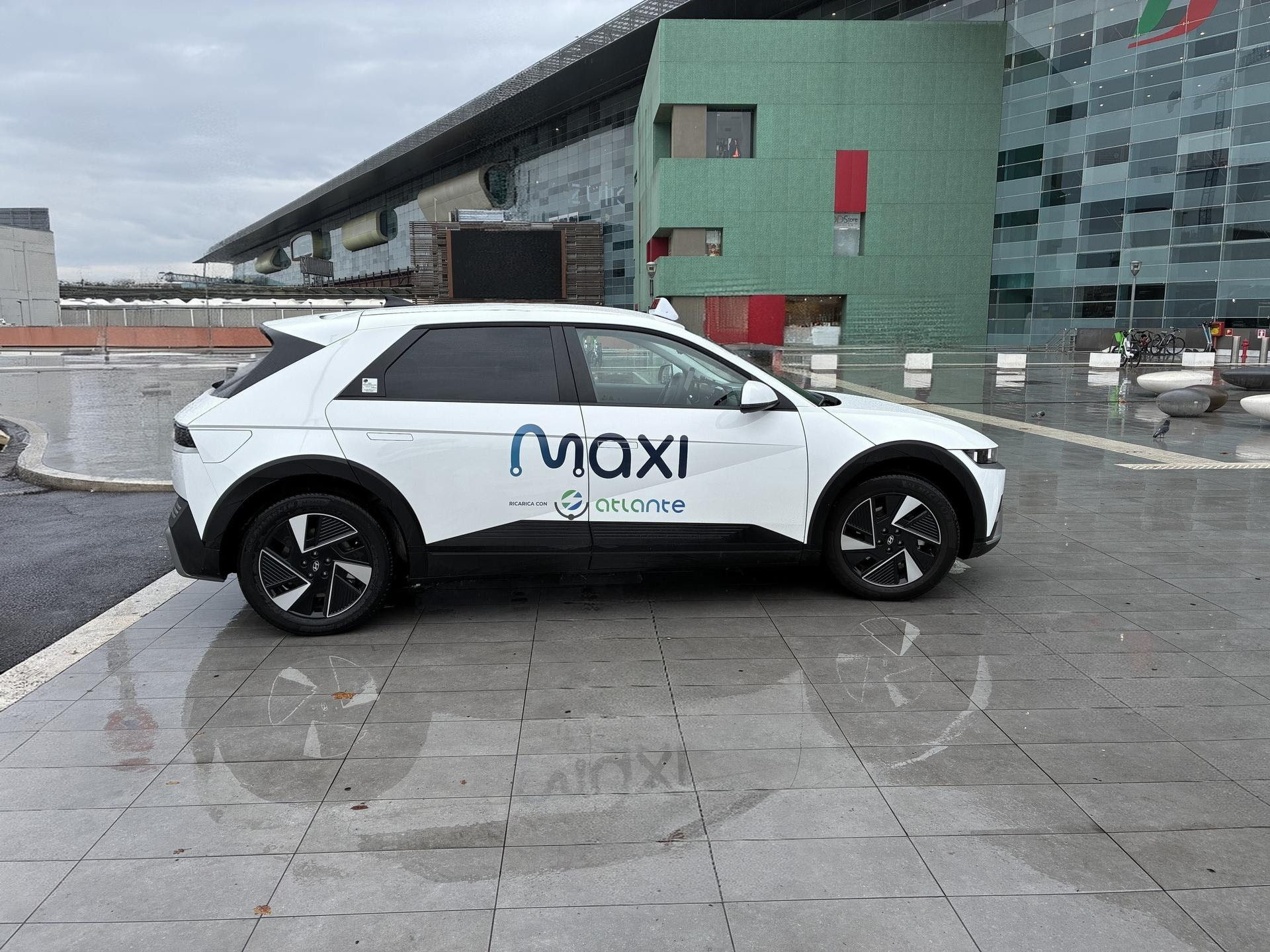
The deployment of Hyundai’s IONIQ 5 in the Maxi Mobility fleet dedicated to Italian taxi services offers a concrete case study of how high‑voltage electric architectures are moving from technical showcase to everyday work tools. Rather than a celebratory narrative about a new model, this partnership exposes the engineering trade‑offs involved when a battery‑electric crossover is subjected to intensive, urban and peri‑urban duty cycles with tight uptime requirements.
At the heart of the project is Hyundai’s E‑GMP platform, which adopts an 800 V electrical architecture as standard and enables ultra‑fast DC charging from 10 to 80% in about 18 minutes when the vehicle is connected to a high‑power column.
For an electric motor and power electronics audience, this configuration means that identical power levels can be delivered with lower currents on the DC bus and in the inverter, reducing ohmic losses and thermal loading at cable and busbar level while demanding more rigorous insulation coordination and EMC management. In a taxi application, where vehicles can accumulate far higher mileage than private cars, the durability of this high‑voltage stack under frequent fast‑charge events and repeated peak‑load conditions becomes a key technical parameter that will need to be monitored with field data rather than assumed from laboratory testing.
Another aspect that emerges clearly from the Maxi Mobility case is the impact of EV‑specific packaging on service quality and operating efficiency. The IONIQ 5 is a 4.66 m crossover with a wheelbase of 3.00 m, a width of 1.89 m and a boot capacity of 520 litres, dimensions that underscore the advantages of a skateboard architecture with the battery in the floor and compact e‑drive modules at the axles.
The long wheelbase and flat floor translate into generous legroom and easier ingress and egress for rear passengers, which are critical attributes in a taxi context and illustrate how the same electric platform decisions that benefit powertrain integration also influence the passenger experience and, ultimately, the perceived value of electric mobility in the urban environment.
From an operational perspective, Maxi Mobility’s model is built around professional fleets, with a focus on electric vehicles and integrated services including vehicle provision, charging solutions and support for day‑to‑day operations. The collaboration with Hyundai extends this approach by positioning the IONIQ 5 not only as a product but as part of a broader service ecosystem, in which the promise of competitive operating costs compared to traditional powertrains depends on the combined performance of the electric drivetrain, the reliability of fast‑charging infrastructure and the effectiveness of fleet management strategies. Previous experiences, such as the EV Rent initiative in Reggio Emilia developed with Hyundai, suggest that suitably structured rental and fleet models can accelerate the energy transition in the taxi sector, but they also highlight the need for long‑term data on battery degradation, maintenance intervals and residual values in high‑mileage use.
The industrial and corporate background of Hyundai Motor Company adds another layer to the analysis. The group operates 10 production plants and 7 research and development centres worldwide, with two European factories in the Czech Republic and Turkey capable of producing a combined 600,000 vehicles per year, supported by a European commercial network that in Italy alone counts 142 dealerships and a market share of over 3.1%. This footprint is not merely a commercial strength: for taxi operators and fleet managers, the availability of a dense after‑sales network and a mature supply chain is a prerequisite for adopting technologically advanced platforms such as 800 V BEVs, where downtime due to service or parts shortages can quickly erode the theoretical economic advantages of electrification.