CMD S.p.A. is rolling out a new hybrid propulsion strategy that targets both marine and aviation applications, leveraging its FNM42HPE platform and Blue Hybrid System as the core of a multi-domain electrification roadmap.
Following a reverse buyout completed in January 2026, CMD is once again under 100% Italian ownership, controlled by cousins Mariano and Giorgio Negri, which has enabled an independent long‑term focus on hybrid propulsion architectures. The company positions hybrid as a systems platform that couples an internal combustion engine with an electric drive and energy management layer, with the explicit goal of reducing fuel burn and local emissions without penalizing performance in demanding marine and aviation duty cycles. According to CEO Mariano Negri, future mobility will rely on on‑board “energy‑manager” logic capable of selecting in real time the optimal energy source, turning the hybrid powertrain into a connected node that continuously optimizes operating conditions rather than a mere compromise between legacy and next‑generation technologies.
Blue Hybrid System
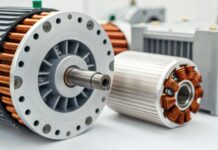
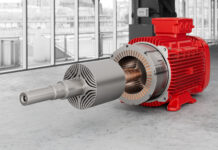
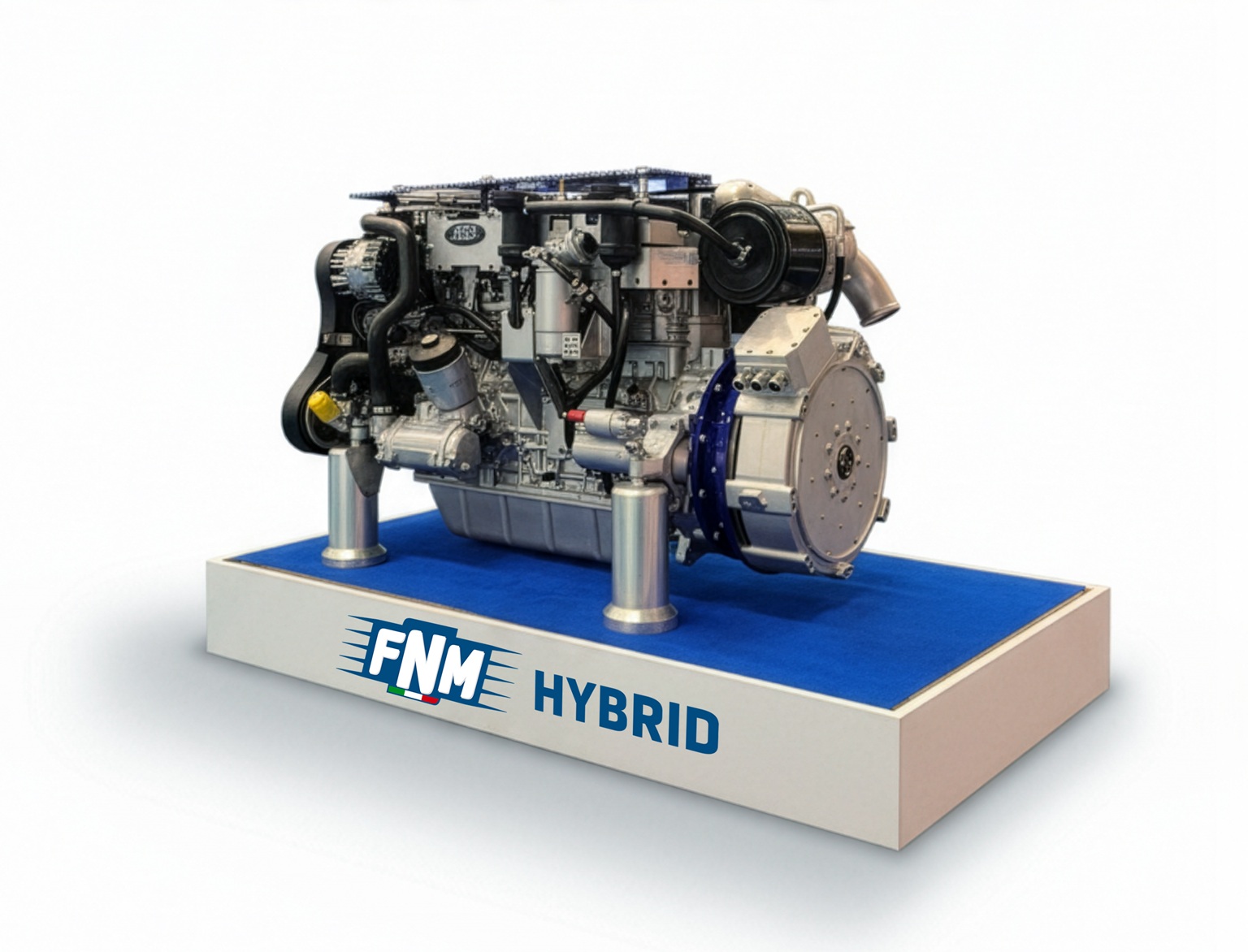
At the heart of CMD’s marine roadmap is the FNM42HPE equipped with the Blue Hybrid System (BHS) 120 kW package, a parallel hybrid configuration developed by CMD’s FNM Hybrid division in partnership with Turntide Technologies. The system combines a 4.2‑liter inline‑six common‑rail turbo‑diesel with an axial‑flux electric machine delivering a power‑to‑weight ratio above 5.1 kW/kg and torque density around 20.5 Nm/kg at 360 VDC, enabling peak electric power up to approximately 310 kW (421 hp) in a compact package suitable for constrained engine bays. BHS offers three operating modes—thermal, electric, and hybrid—allowing zero‑emission, low‑noise operation in protected marine areas, pure combustion mode for extended range, and blended operation that cuts fuel consumption and exhaust emissions at typical cruising speeds. The recommended nominal battery voltage around 720 VDC on the marine side provides the DC link for high‑efficiency operation of the electric machine within a voltage window roughly between 450 and 800 V, while a 360 VDC variant targets applications with lower system voltage constraints.
Applications in marine and aviation markets
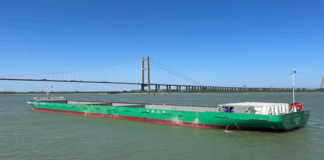
CMD has recently showcased the FNM42HPE with Blue Hybrid System 120 kW at the Napoli Boat Show, highlighting its suitability for both leisure and professional vessels that must comply with increasingly stringent emission and noise limits in coastal and inland waters across the Mediterranean and Northern Europe. The same hybrid building blocks are being engineered for aviation use cases, including light aircraft, ultralights, and unmanned systems, with the company set to present its aeronautical hybrid vision at AERO 2026 in Friedrichshafen, one of the leading events for general aviation and UAV platforms. In aviation, CMD’s approach mirrors broader sector trends in hybrid‑electric propulsion—such as distributed architectures that combine combustion engines with electric drives to improve energy efficiency and mission flexibility—while focusing on modular, certifiable subsystems that can evolve alongside battery and fuel technologies.
Industrial footprint and R&D capabilities
CMD develops and manufactures its propulsion systems in Southern Italy, with four production plants in Atella (Potenza) and an R&D and administrative center in San Nicola La Strada, near Caserta, for an overall production surface of roughly 19,000 m². The company employs more than 220 people, including over 40 engineers, and reported around 40 million euros in revenue for 2025, up from 38.5 million euros in 2024, underlining its status as a technology‑intensive player capable of competing in global marine and aviation supply chains. Originally founded in 1989 as an internal combustion engine specialist for the automotive sector, CMD has progressively diversified into nautical, aeronautical, energy and Industry 4.0 segments, using hybrid and electric propulsion as cross‑cutting technologies for sustainable mobility and distributed generation. The decision to maintain and expand operations in Basilicata is framed by management as a deliberate counter‑cyclical industrial policy move, aimed at proving that Southern Italy can host advanced propulsion engineering and manufacturing for export markets.