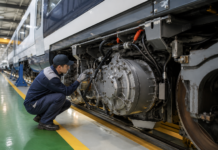
Rete Ferroviaria Italiana will invest some 200 million euros over the next years in order to replace a large part of its diesel-fuelled on-track machines, mainly used for maintenance and repairing purposes, with a new generation of hybrid and electric vehicles. The reason is that most of the circulating vehicles are becoming obsolete, after several decades of intensive usage, whereas newer models can successfully reach multiple targets. They are less polluting, in first place, and therefore able to provide employees with safer work conditions; and, nevertheless, much more effective and performing.

«All of the maintenance units», said Alessandro De Rossi, division manager at Assifer, the association that represent the Italian railway industry, «are already undergoing a phase of massive renewal. The goal is to avoid machine downtimes or breakdowns and at the same time gain efficiency, thanks to a greener and safer range of models. It has to be considered that on-track machines can solely operate during the nighttime or in a power-cut condition and every single minute of delay translates into a 2 to 5,000 euros extra-cost. This is why a share of diesel motors will still be fully operating, so to ensure the maximum possible continuity».
Good news for the supply chain
The investment program, built upon a most detailed roadmap involving all stakeholders, will address the whole RFI supply chain, made up of thousands of small-medium size businesses as well as of larger organisations. 80% of maintenance services are in fact managed by private companies, according to De Rossi, and some of them own 2-300 on-track machines each. Of course, despite earlier uncertainties and hesitations, they all saluted the initiative enthusiastically.
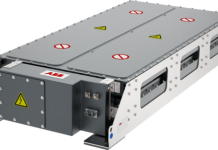
«Electric vehicles», Alessandro De Rossi continued, «are easier to manage and sometimes they can prove more effective than traditional, diesel ones. Electric motors and inverters refreshed the overall landscape with a breeze of innovation and electric traction can support diesel engines and thus enhance their level of performance, as it happens with a number of popular, modern hybrid cars. Finally, their powertrain is simpler and essential: it means that power leaks become less frequent». During the first start-up period hybrids are destined to prevail over full-electric machines, but air compressors, brakes and dynamic-hydraulic systems must be able to operate without connecting to an internal combustion motor. Powering these auxiliary systems (like compressors and oil pumps) directly from the traction batteries instead of the diesel engine offers a major advantage. It allows full subsystem functionality even when the engine is off, drastically cutting fuel consumption, emissions, and mechanical wear, while ensuring quieter and more efficient operations. In conclusion, in De Rossi’s view, the electric motor sector holds immense potential for the railway industry. Development is already underway through transitional systems (hybrid vehicles), and the future can easily evolve toward full-electric systems that draw power directly from the rail network on which the vehicles operate. Investments, partnership agreements and experiences are numerous.
Towards decarbonisation
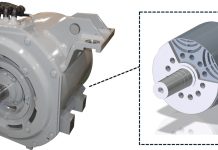
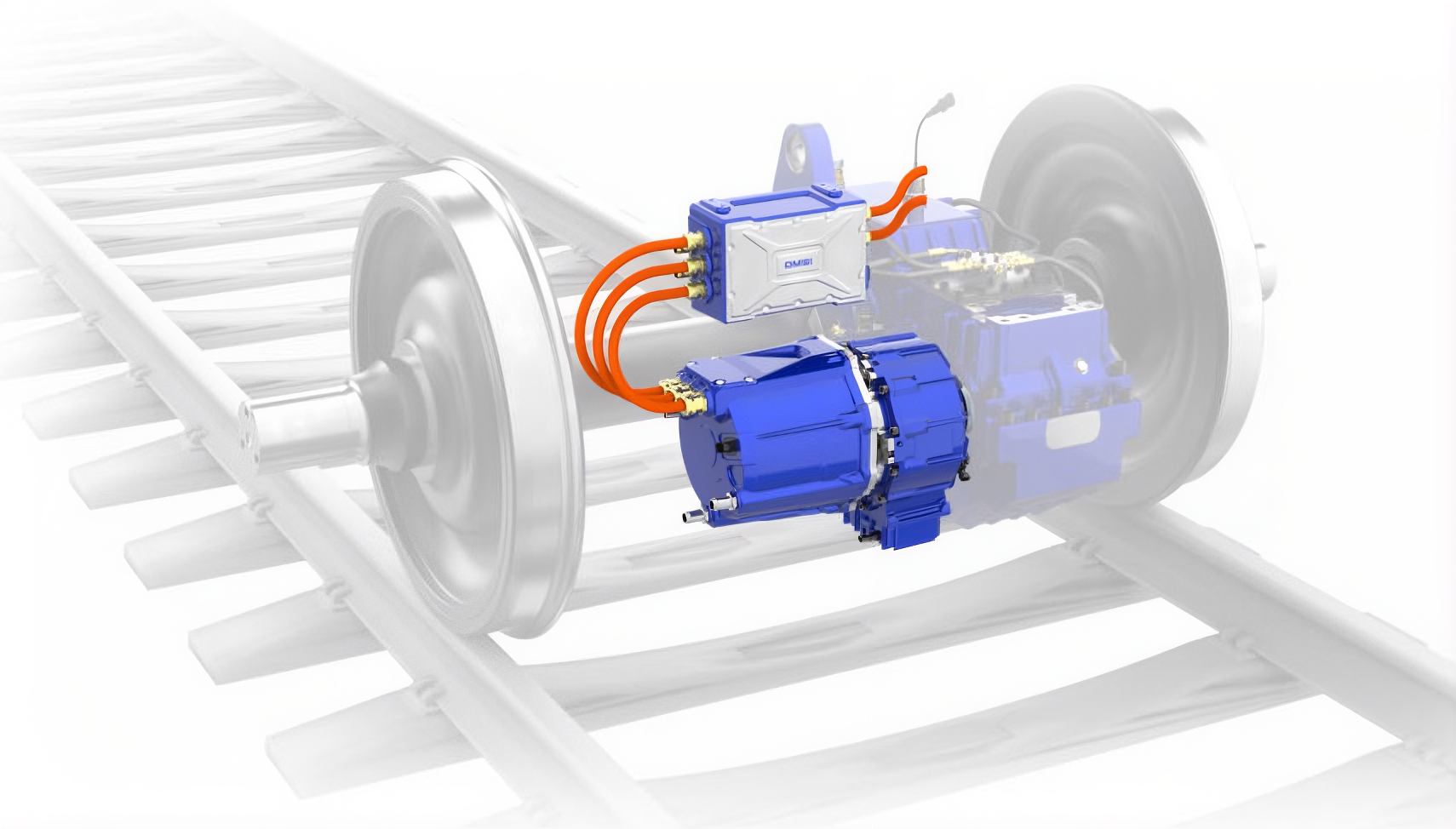
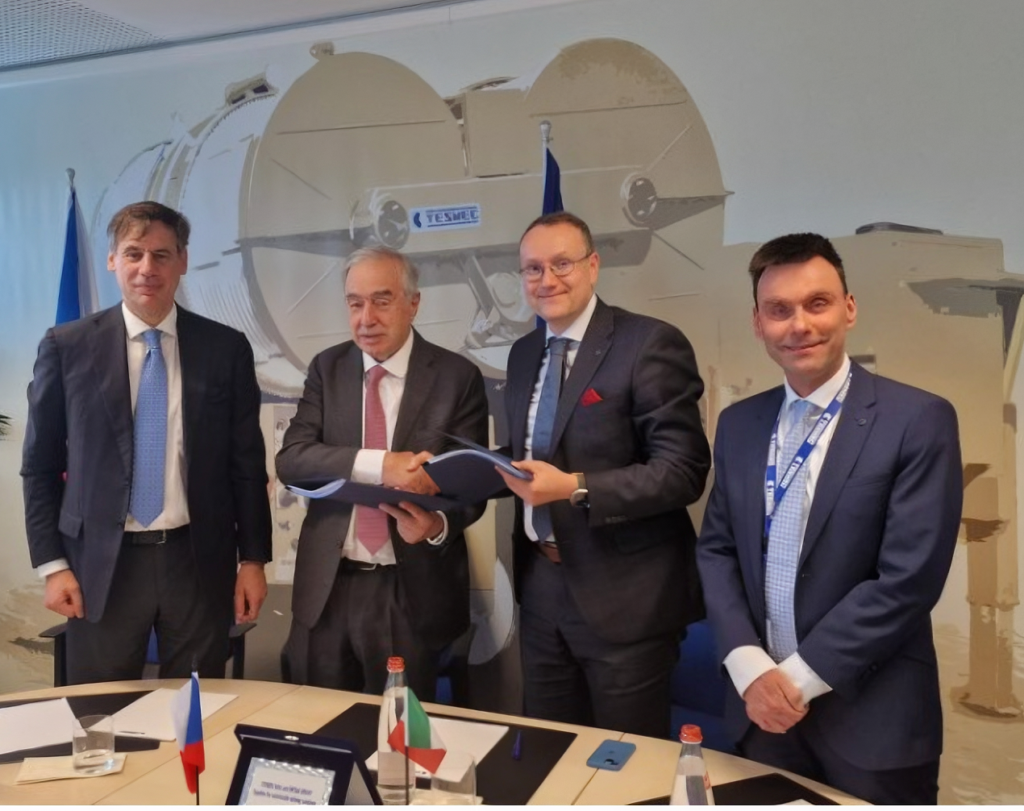
For instance, Brescia-based OMSI Trasmissioni SpA has entered the e-mobility sector, and namely the heavy-duty segment, with a line of hybrid-electric drives, based on hi-power density new-generation motors. According to sources, these drives can handle inputs speeds up to 14,000 rpm and come alongside with further, more compact drives with different speeds. These latter are replaceable while in motion, with the goal to extend the efficient range of use for this kind of models.
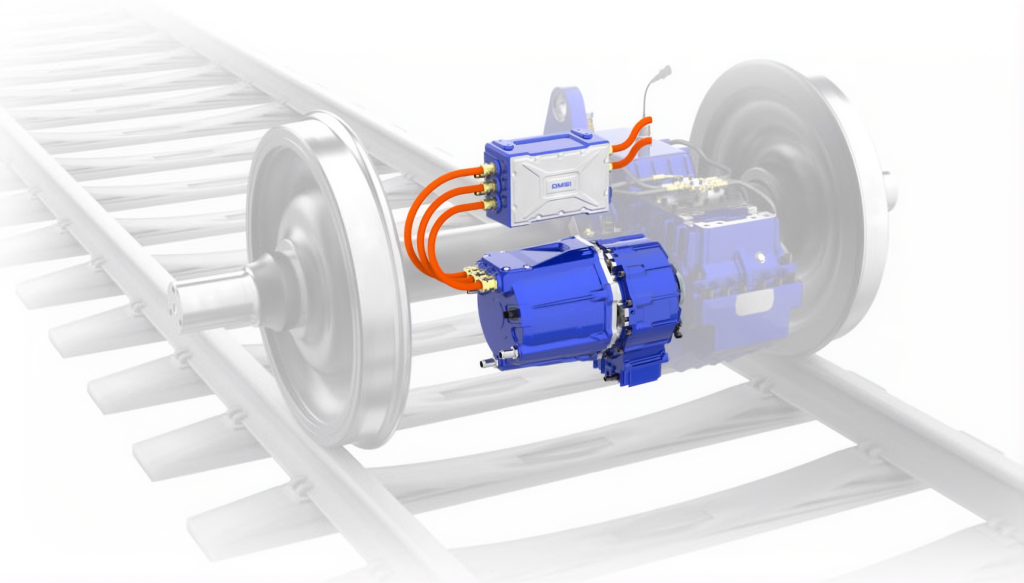
Applications include an axle with close-coupled electric motor, and a two-speed gearbox: it is no coincidence that they were destined to tests on an Italian railway maintenance vehicle. The gearbox builds upon a planetary epicyclic design incorporating a system of clutches and brakes and was described as a (successful) attempt to transfer a typical automotive technology to industrial machinery. Also, it was based on gearboxes that OMSI previously developed for locomotives and includes a third-party motor and inverter to drive the axle. Also, the company offered integrated PTO and power take-in solutions addressing a wide number of power packs for special machines, with features including electric drive, regeneration and supplementing internal combustion engines.
In May 2023, Tesmec Rail and Škoda Group entered into a strategic technological partnership aimed at driving the decarbonization of railway infrastructure maintenance. The collaboration integrates Škoda’s cutting-edge electric traction systems and power electronics – including advanced silicon carbide (SiC) inverters and regenerative braking technologies – into Tesmec’s specialized rolling stock and diagnostic vehicles. The primary industrial driver for this synergy is a series of major contracts with RFI (Rete Ferroviaria Italiana), which include the supply of four electrified diagnostic vehicles and a massive fleet of 44 bi-modal catenary maintenance trucks scheduled for delivery through 2028. By combining Tesmec’s expertise in railway maintenance machinery with Škoda’s green propulsion technology, the partnership offers highly efficient, emission-reducing solutions capable of operating on both electrified lines and under zero-emission battery power within work zones.
As stated, hybrid machines are still going to play a dominant role over the next few years, especially in order for e-motors to rely on an effective backup energy system, but a full electric alternative is already possible and success stories, in this very field, are increasing. One of the examples comes from the Italian company Elen Machines, headquartered in Rome, who began to develop its modular railway infrastructure maintenance vehicle E-LO in 2017. E-LO (an acronym for Electric Locomotive) stands out thanks to the 220 to 350-kilowatt propulsion that its hybrid diesel-electric engine provides, but integrates several additional interesting features.
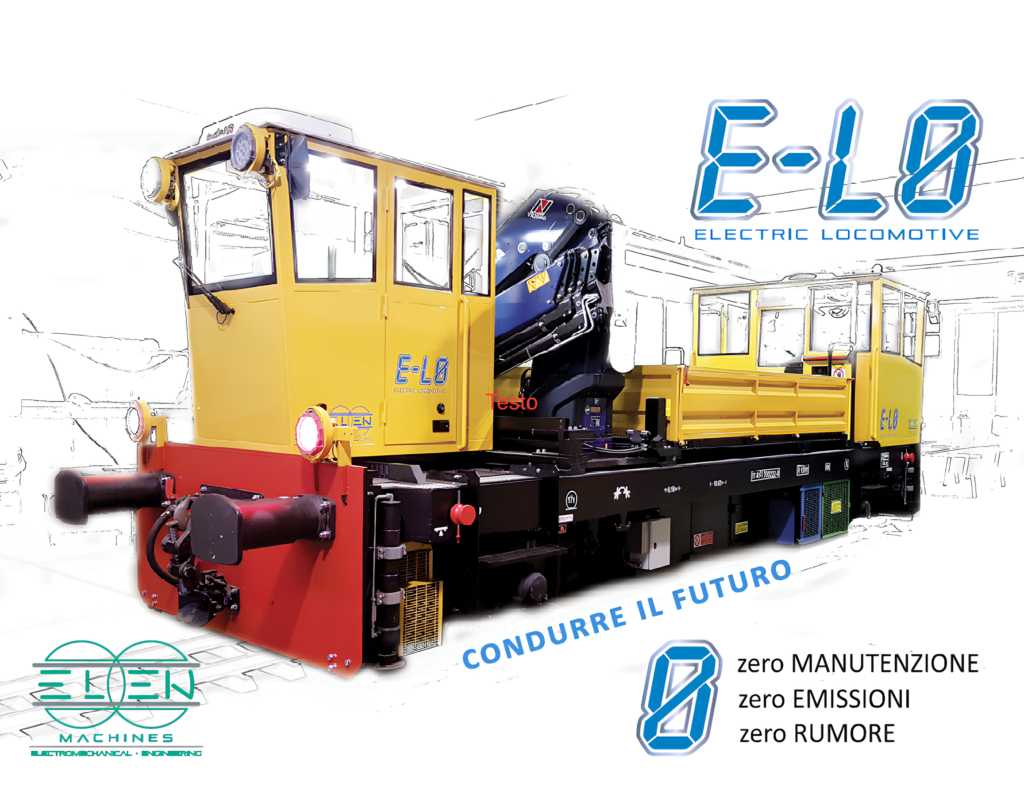
In first place, despite its 40 tonnes total mass, it is also designed for normal transport. Furthermore, and even more significantly, the fact that each of its subsystems comes mounted as a removable drawer, allows the normal five-years routinary check-up – which could take up to three months approximately – to be completed in five days only. Accessories, on E-LO, are completely interchangeable and replaceable: this means maintenance is quicker and easier and a single machine can accomplish a number of different duties. Transmission components were drastically reduced and the energy-generation drawer requires one connector only, as well as the dynamic-hydraulic system and the battery pack. The vehicle is also simple to disassembly and entirely digitised; a single cable can manage all signals by using CAN-BUS as the designed communication protocol. A few railway and tube operators have already signed a deal with the manufacturing company, who, so far, holds at least 40 contracts in its order book. The digitised approach means such parameters as temperature and energy consumption are constantly monitored, allowing a rigorous data-driven predictive maintenance and service strategy. Last, but not least, the platform is 100% remotely controlled: while the vehicle is deployed, a single controller handles the movement and operations of the vehicles and their relevant accessories, with the aim to provide the operator with optimal visibility.