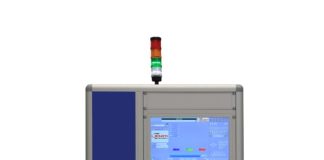
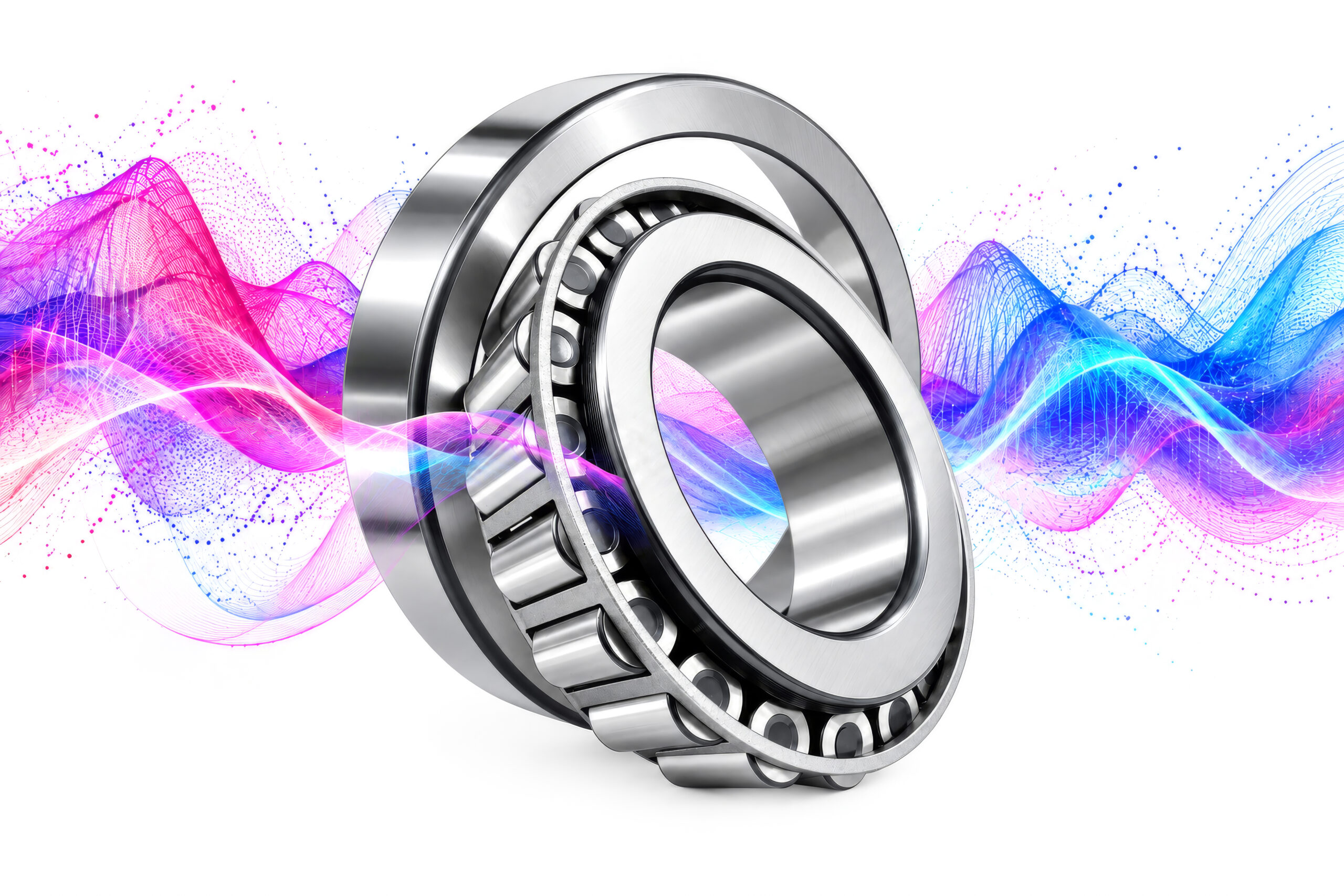
Discom, a part of global precision measurement expert, Hottinger Brüel & Kjær (HBK), has released TasAlyser TRB, a new acoustic testing system for tapered roller bearings (TRBs).
Designed for inline use within production – and based on Discom’s HBK OrbitSync technology – the system runs before the bearings are installed in a gearbox or E Drive. Tapered roller bearings are used to carry combined radial and axial loads in electric drives, multi-speed gearboxes and high-speed motors.
Defects in the raceway can cause audible noise in the vehicle cabin, increased friction and reduced range, which can also lead to spalling and bearing failure. If such defects are only found at end-of-line testing, after the bearing has been built into the drivetrain, it will need to be disassembled, increasing the risk of damage to the housing or shaft, as well as incurring rework costs.
Testing challenge
End-of-line bearing diagnostics has so far only been able to reliably identify the correlation be-tween a vibration signature and the affected bearing component in isolated cases. In particular, the accurate assignment of surface waviness to the corresponding bearing element remains insufficient.
For tapered roller bearings, a new HBK method enables detailed surface analysis of the inner ring, tapered rollers, and outer ring. By utilising synchronisation techniques based on OrbitSync Analysis, damage and waviness can be accurately assigned to the individual bearing components. This approach generates a surface map from vibration signals within seconds, providing a fast and highly effective visualisation of bearing surface conditions.
How TasAlyser TRB works
Instead of treating the vibration signal as a static time-series or a simple frequency spectrum, HBK OrbitSync utilises dynamic rotational-synchronous analysis. The system tracks the actual rotation of the bearing during testing and adjusts the sampling rate, in real time, to compensate for slippage. This ensures that the defect frequencies remain stable during the analysis, rather than spreading across the spectrum.
The compensated signal is then split into three separate channels: the inner ring, the outer ring and the roller. This level of isolation is unprecedented; it allows manufacturers to perform a targeted diagnostic check on every single sub-component of the bearing during a short, inline-compatible cycle time. By utilising specialised mathematical metrics, such as Crest Factor (measuring transient spikes) and Kurtosis (measuring signal peakiness) on the separated signal paths, the system detects specific manufacturing and handling defects with extreme precision, such as surface waviness resulting from grinding or honing, impact marks resulting from handling and out-of-roundness.
Benefits for production and availability
As defects are identified in specific components, defective batches can be stopped at goods receipt rather than within finished units. Automatic slip compensation reduces false passes and fails, thereby increasing test rig availability. TasAlyser TRB is now available for integration into incoming inspection or end-of-line test cells.