Cornelius Electronics, a UK-based manufacturer of wiring harnesses and interconnection systems for the electronics and electrical engineering markets, has announced a €5 million investment to expand its production capacity at the Edineț Industrial Park in northwestern Moldova. The project will strengthen the company’s position in the European supply chain for advanced electrical assemblies, widely used in electric motors, renewable energy systems, and automation technologies.
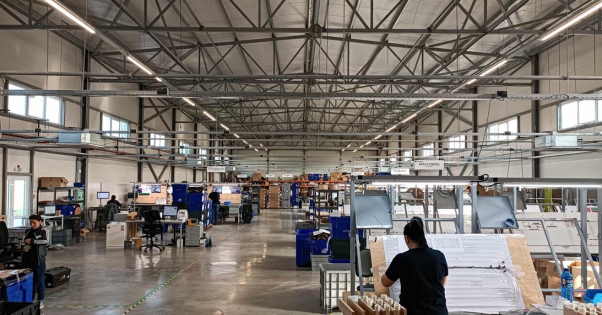
The investment covers the construction of three new production halls with a combined surface of over 3,000 m² dedicated to the manufacturing of high-reliability wiring harnesses and connection assemblies. These components supply a diversified range of industrial sectors—spanning healthcare, artificial intelligence, railway transport, and e‑mobility—and will support critical applications requiring precision cabling and electronic integration. All output is intended for export to European Union markets.
Diana Popovici, Managing Director of Cornelius Electronics SRL, noted that the expansion reflects the company’s long-term strategy of technology-driven growth:
“Continuous investment in equipment, people, and process optimization allows us to deliver consistent quality and innovation to our partners across Europe.”
Industrial and economic context
The expansion aligns with Moldova’s broader effort to attract high-value manufacturing and integrate local industry into regional electronics value chains. It is supported by a Memorandum of Understanding involving the Invest Moldova Agency, Innovate Moldova, and the Municipality of Edineț. Planned upgrades to park infrastructure and the extension of production facilities are expected to accelerate local cluster development in electrical assembly and wiring technologies.
According to Invest Moldova Agency Director Natalia Bejan, Cornelius Electronics demonstrates the effective integration of international manufacturing expertise within Moldova’s industrial ecosystem. The company currently employs 81 people—more than 80% of whom are women—highlighting the social and economic impact of export-oriented investments in regional manufacturing.
This investment also contributes to the upward trend in British–Moldovan economic relations, framed by the Strategic Partnership, Trade and Cooperation Agreement signed in 2020. Data from the National Bank of Moldova show that UK foreign direct investment increased from USD 78.8 million in 2009 to over USD 257 million in 2024, with key contributions from electronics, IT, and industrial services.
Sergiu Rabii, Director of the Innovate Moldova Programme, emphasized that growth in the Edineț Industrial Park is contributing to a stronger northern Moldovan industrial hub: “Each new production hall translates into skilled jobs, knowledge transfer, and greater competitiveness for the national manufacturing base.”
Strategic implications for the electronics and electric motor sector
Cornelius Electronics’ move supports the reshoring and regionalization trend within the European electronics and wiring harness market—a crucial component segment for motors, automation systems, and electric drivetrains. With rising demand for reliable, high-specification connectivity solutions, the Edineț expansion will enhance supply resilience and shorten lead times for European OEM clients.
Moldova’s electronics industry has become a critical supplier to European manufacturers, exporting over USD 3.37 billion in electrical components between 2019 and 2024, according to UN Comtrade. The new facility reinforces the country’s role as a competitive base for precision assembly and contract manufacturing serving the evolving European mobility and energy sectors.