Thanks to the MUST project (Multifunctional and Sustainable Structures for Automotive Components), funded with over €4 million by the Italian Ministry of Enterprises and Made in Italy, a new path is being forged toward integrating battery cells directly into vehicle frames. The initiative brings together ENEA, Aerosoft S.p.A.—the project leader—and ATM S.r.l. with the aim of developing innovative, lightweight, and sustainable structures for electric vehicle (EV) component.
“The rapid expansion of the electric vehicle market has introduced new structural and engineering requirements,” says Sergio Galvagno, ENEA project coordinator and researcher at the Laboratory of Intelligent Components and Systems for Sustainable Manufacturing. “One of the key technological challenges ahead is to 3D-print next-generation composite materials capable of forming complex yet lightweight structural components without compromising mechanical performance.”
Advanced Composite Materials and 3D Printing
The project explores novel fiber-reinforced polymer composites—mainly with carbon and glass fibers—already widely adopted in aerospace and high-performance automotive applications. These materials combine low weight with exceptional stiffness and strength, offering a route to substantially reduce the mass of EV body structures.
ENEA’s contribution will focus on 3D printing experimental components and assessing the recycling and reuse of fiber-reinforced composite scraps, aiming to close the production cycle and improve both the environmental and economic sustainability of EV manufacturing. “We will assess the environmental impacts associated with these processes to support a more circular and resource-efficient approach,” adds Galvagno.
Integrating Batteries into Structural Design
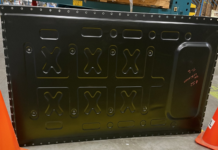
Unlike traditional battery pack housings, the MUST prototypes will incorporate honeycomb structures offering improved torsional rigidity while enabling lightweight integration of energy storage modules into the chassis. Such advancements open the way to multifunctional vehicle architectures, where structural integrity and energy storage coexist within the same load-bearing elements.
“Together with our partners, we are developing structural layouts for battery enclosures and investigating innovative press-thermoforming processes using thermoplastic composites—with and without fibers—to deliver step changes in both product and process technology,” explains Giorgio Fusco, R&D Technical Director at Aerosoft and scientific lead for the MUST project. “Given that the latest generation of batteries remains relatively heavy, optimizing the trade-off between structural strength and weight has become a central challenge for OEMs.”
Industry Synergy and Wider Impact
Based in Naples, Aerosoft S.p.A. has decades of experience designing and manufacturing composite components for the aerospace, automotive, marine, and railway sectors. Its expertise in thermoplastic materials and scalable composite manufacturing will play a pivotal role in advancing the MUST project’s objectives.
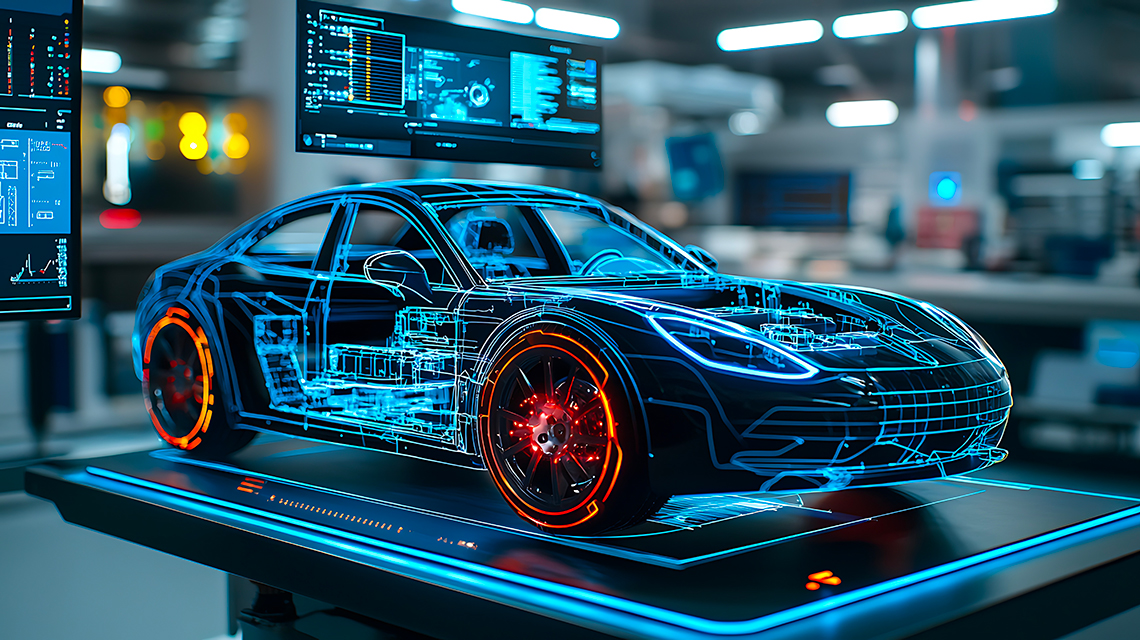
By merging 3D printing, sustainable materials engineering, and structural optimization, MUST represents an opportunity to redefine how EV bodies and energy systems are conceived—paving the way for lighter, stronger, and more sustainable electric vehicles.