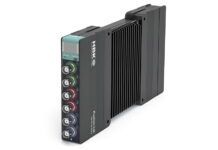
Lift motor innovation is entering a new phase as Ziehl-Abegg earns a Hermes Award 2026 nomination for a synchronous machine that eliminates rare-earth magnets while preserving compact dimensions and performance.
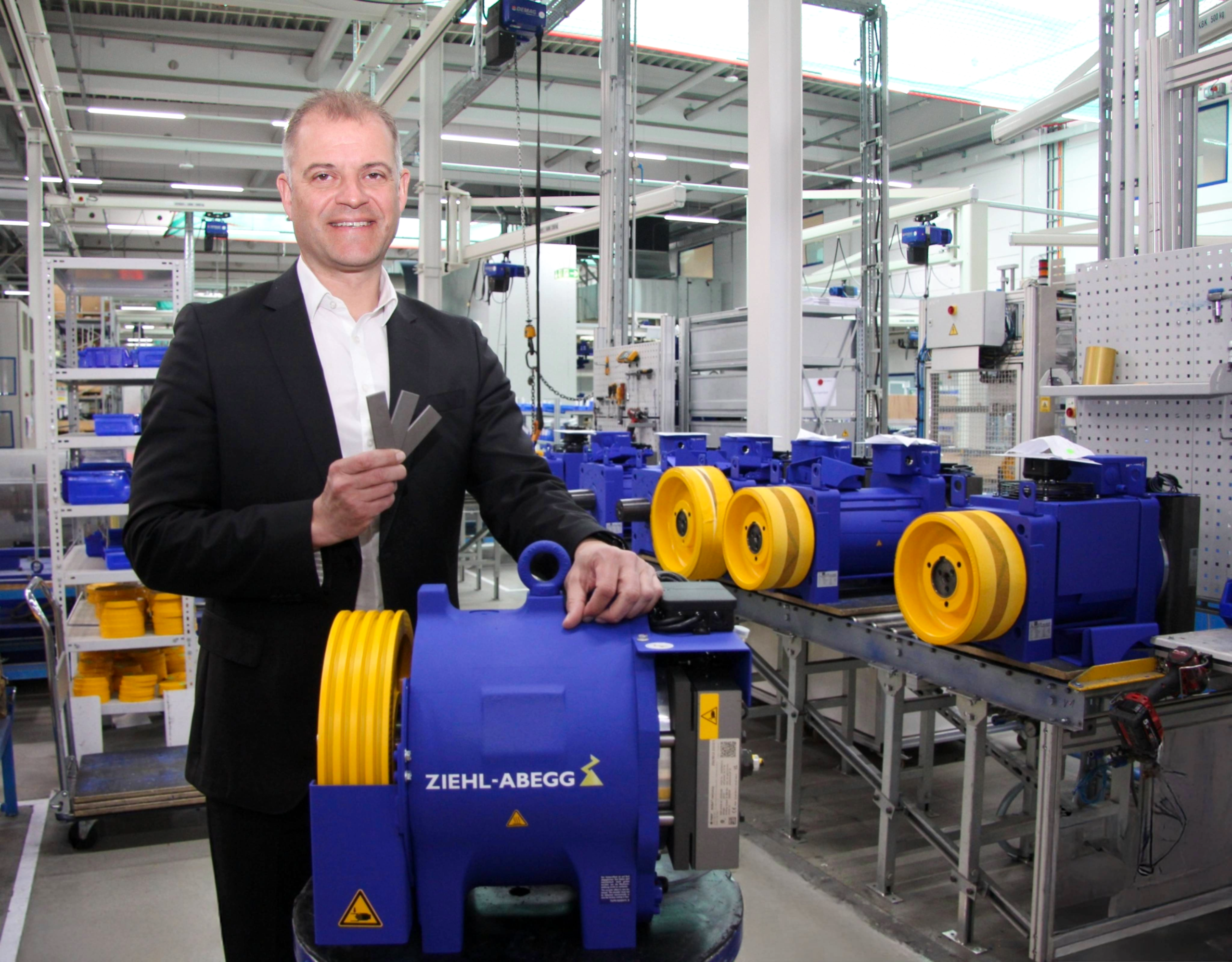
Recognition often says as much about an industry’s direction as it does about a single product. That is why Ziehl-Abegg’s nomination for the Hermes Award 2026 deserves attention well beyond the lift sector itself. For the first time in its history, the company has been shortlisted for one of Hannover Messe’s most prestigious technology prizes, thanks to a newly developed synchronous lift motor that operates without rare-earth magnets.
Rethinking the role of rare earths
In a market increasingly shaped by supply-chain uncertainty, material criticality and the push for more resilient industrial technologies, the significance of this development is clear. Ziehl-Abegg is not simply presenting a new lift machine; it is challenging one of the long-standing assumptions of electric drive design — namely, that compact high-performance elevator motors must rely on rare-earth materials to meet modern expectations.
That assumption has been deeply rooted in the industry. For years, rare-earth magnets such as neodymium and dysprosium have been regarded as essential in permanent-magnet synchronous machines, especially where high torque density and compact dimensions are non-negotiable. Lift applications are among the clearest examples: the motor must deliver strong performance, precise controllability and efficient operation, all within a tightly constrained installation space.
Ferrite magnets and design challenge
Ziehl-Abegg’s answer is a machine based on ferrite magnets, a material that is far more widely available and far less exposed to geopolitical risk. What makes the announcement particularly noteworthy is the company’s claim that the new motor achieves the same performance figures within the same dimensions as conventional rare-earth-based designs. In practical terms, that means no increase in installation space — a point that could prove decisive for lift manufacturers, integrators and operators alike.
This is where the story becomes especially relevant for motor engineers. Replacing rare-earth materials is not a superficial design adjustment. It affects the very foundation of machine development: electromagnetic layout, rotor architecture, torque generation, efficiency optimisation and thermal management. Ferrite magnets do not offer the same magnetic strength as rare-earth alternatives, so matching established performance benchmarks requires a far more sophisticated engineering balance. If Ziehl-Abegg has indeed closed that gap in a commercially viable lift machine, the achievement deserves serious attention.
A strategic answer to supply risk
The strategic dimension is just as important as the technical one. Across the electric motor industry, manufacturers are re-evaluating the risks associated with critical raw materials. Supply instability, price volatility and geopolitical concentration have turned magnet sourcing into a board-level concern, not merely a purchasing issue. Against that backdrop, a rare-earth-free synchronous motor is more than an innovation in product design; it is a statement about the future of industrial resilience.
That broader significance was reflected in the wording surrounding the nomination. Ziehl-Abegg Chief Executive Officer Joachim Ley described the development as the solution to not only a technical challenge, but also a strategic one. It is a telling remark. Increasingly, the value of a motor is no longer measured only in efficiency curves, power density or lifecycle cost, but also in the robustness of the material ecosystem behind it.
What this means for the lift and motor engineering sectors
For the lift sector, the implications could be considerable. Elevator drives are a demanding niche, and any new motor concept must prove itself against well-established expectations in reliability, compactness and integration. Yet if the industry can access a machine that preserves the familiar installation envelope while reducing dependence on critical materials, the appeal is immediate. It offers a route to continuity without forcing a redesign of the entire system architecture.
More broadly, Ziehl-Abegg’s nomination reflects a shift already visible across electric machine engineering. The conversation is moving beyond pure performance optimisation toward a more complex equation that includes sustainability, supply security and long-term manufacturability. In that sense, this lift motor may resonate well outside its immediate application. Engineers in industrial automation, building technologies and other drive-intensive sectors will be watching closely to see whether this rare-earth-free approach can open new pathways for permanent-magnet machine design.
From nomination to industrial reality
The context of the Hermes Award reinforces that relevance. Presented annually at Hannover Messe, the prize recognises technologies that combine innovation with market readiness, economic viability and broader industrial or societal benefit. This year’s shortlist suggests a strong emphasis on practical technologies capable of responding to current industrial pressures rather than innovation for its own sake.
Ziehl-Abegg will present the nominated motor at its stand in Hall 13 during Hannover Messe, while series production is planned for the second half of 2026. That timeline matters. It places the motor firmly in the transition zone between promising concept and industrial product, where engineering credibility is ultimately tested.