Cylindrical, prismatic, or pouch cells — wherever surfaces need to be pretreated in the production of battery systems for e-mobility, the industry often relies on solutions from Plasmatreat, amongst the world’s leading provider of atmospheric plasma technology. Plasma technology plays a key role in e-mobility, whether for surface activation, cleaning, or coating for subsequent processes such as bonding or sealing. Together with its partner, Strama-MPS, Plasmatreat collaborates closely with customers on projects, such as developing holistic, reliable solutions for fully automated, cost-efficient production of high-performance lithium-ion batteries (LIBs). The two specialists’ joint customers can be found in the automotive industry, among others.
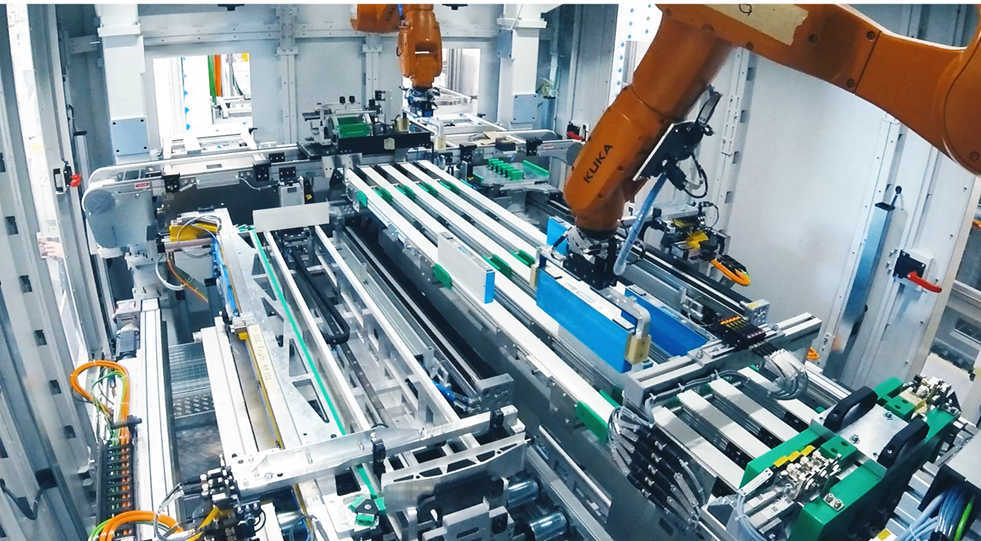
Strama-MPS Maschinenbau GmbH & Co. KG is headquartered in Straubing, Germany, and is known worldwide as a developer of special machines, systems, and complete solutions for producing, assembling, and testing complex technical components and products. For the e-mobility market, the company offers modular and scalable assembly and testing lines for battery production. Even in their basic configuration, these lines cover all the necessary process steps. They can also be flexibly configured to meet individual requirements. If necessary, Strama-MPS can seamlessly integrate technologies and process modules from other manufacturers into its inline solutions.
An ideal partner as a pioneer in plasma treatment
«With the invention of Openair-Plasma technology, Plasmatreat became a pioneer and market leader in the industrial use of plasma processes under atmospheric pressure for surface pretreatment. We first came into contact with this patented technology more than 20 years ago. Since then, it has become an integral part of many of our production lines, either because we suggest this technology for surface pretreatment or because our customers require it as part of the line,» explains Manfred Fischer, Senior Product Manager for Battery Assembly Lines at Strama-MPS. «With 30 years of practical experience, a comprehensive range of modular solutions, and an international presence, Plasmatreat is an ideal partner for us. The company is just as flexible as we are when it comes to individual customer requirements.»
To date, Plasmatreat, headquartered in Steinhagen, Germany, and Strama-MPS have successfully completed more than 50 projects worldwide, drawing on their combined expertise and practical experience. These projects include several production lines for batteries for e-mobility. The two companies have partnered in this market for over eight years. At that time, the two companies collaborated to integrate an innovative solution for activating cells before bonding them into a fully automated production process for prismatic cells for a global automotive group.
Joint pioneering achievement in a new plasma application
«Strama-MPS designed and constructed a production line that fully met the customer’s requirements, laying the groundwork for this new application. To ensure the highest quality bonding of the battery cells, a pre-treatment system with plasma technology was integrated into the process. Our sales and application technology experts were brought on board at this point,» says Norman Haas, Technical Sales Manager at Plasmatreat, recalling how the project was approached.
The first step was to determine and compile the ideal parameters for the Openair-Plasma process that would be used to treat the battery cells on the production line, including all cycle times. Next, the Steinhagen-based company’s application engineers and the car manufacturer’s project managers evaluated and defined these parameters. Meanwhile, Plasmatreat’s design engineers collaborated with Strama-MPS to develop the optimal solution for integrating the plasma system into the production line. Finally, the system was installed at the car manufacturer and tested in series production. After the test series was successfully completed, the customer accepted the system.
Fischer explains, «We installed the plasma pretreatment in this pilot system before applying the film to insulate the battery cells. This activates the surfaces of the battery cells, enabling optimum adhesion of the adhesives used to bond the individual cells into modules.»
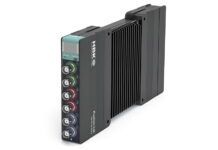
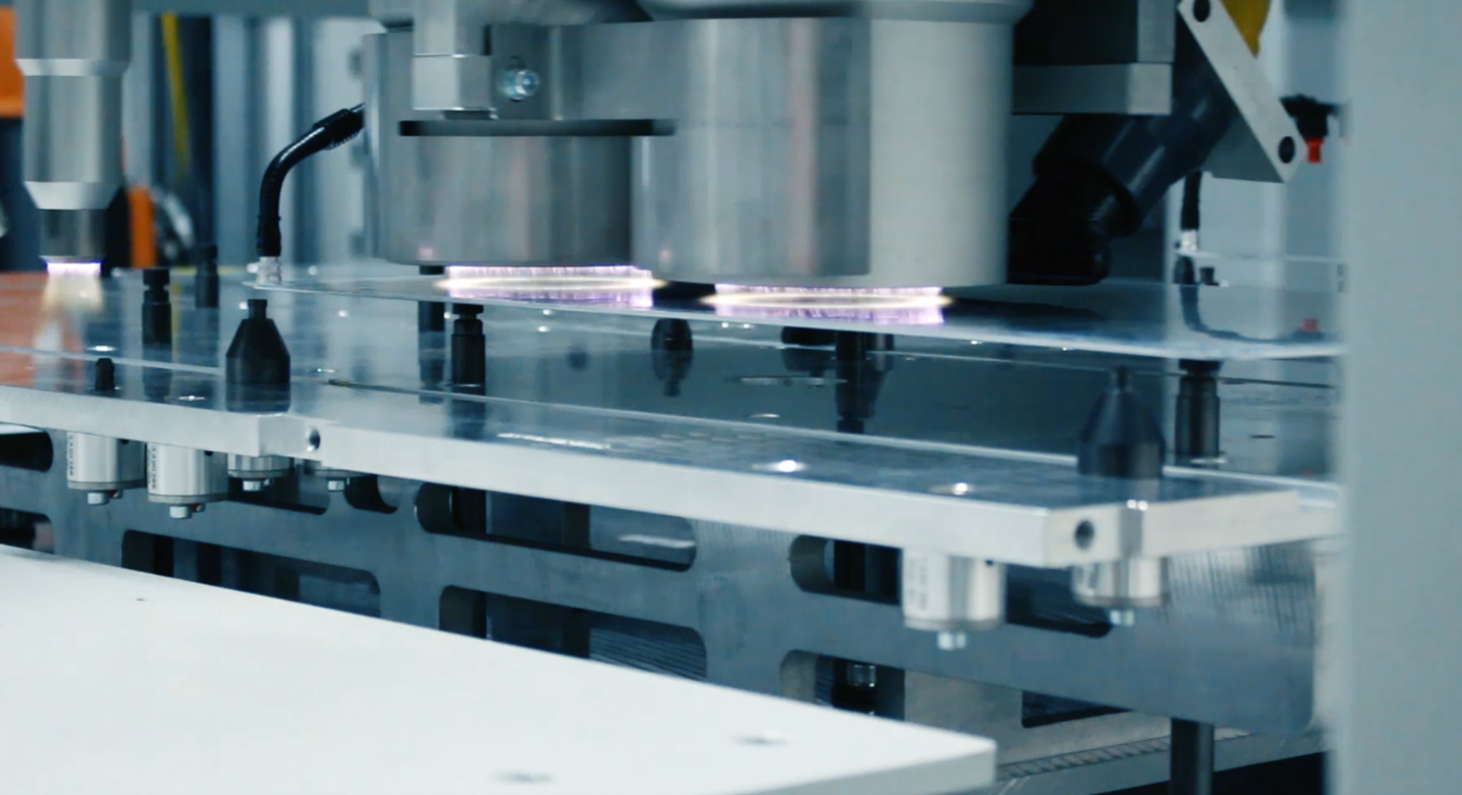
Like all Openair-Plasma systems from Plasmatreat for plasma pretreatment, the system installed at the car manufacturer consists of three main components: a plasma generator, a plasma control unit (PCU) with an integrated transformer for optimal plasma treatment, and a plasma nozzle where the plasma is generated.
«Plasma pretreatment is characterized by leaving no visible traces. Our plasma pre-treatment technicians have made it possible to control and certify the quality of every process step. This is essential in the automotive industry. They have done so by integrating various quality assurance modules into the PCU. These modules make the plasma treatment verifiable and reproducible, guaranteeing that the bonding of the battery cells is always of the same quality,» Haas explains.
A partnership at the service of joint customers
This project marked the beginning of close cooperation between Plasmatreat and Strama-MPS. Today, this collaboration meets all market requirements for producing cylindric, pouch, and prismatic cells, modules, and packs.
«Our joint customers benefit from the combined systems expertise of our two companies in various ways: We provide holistic, integrated solutions from a single source and are responsible for the entire process, including all after-sales services. Additionally, our systems are designed for maximum part flexibility. They are easy to operate and can be quickly and easily integrated into production processes thanks to their compact design. We can also guarantee their economic and individual further development with our assembly and software standards,» says Fischer, listing important customer benefits.
Areas of application and advantages of plasma treatment
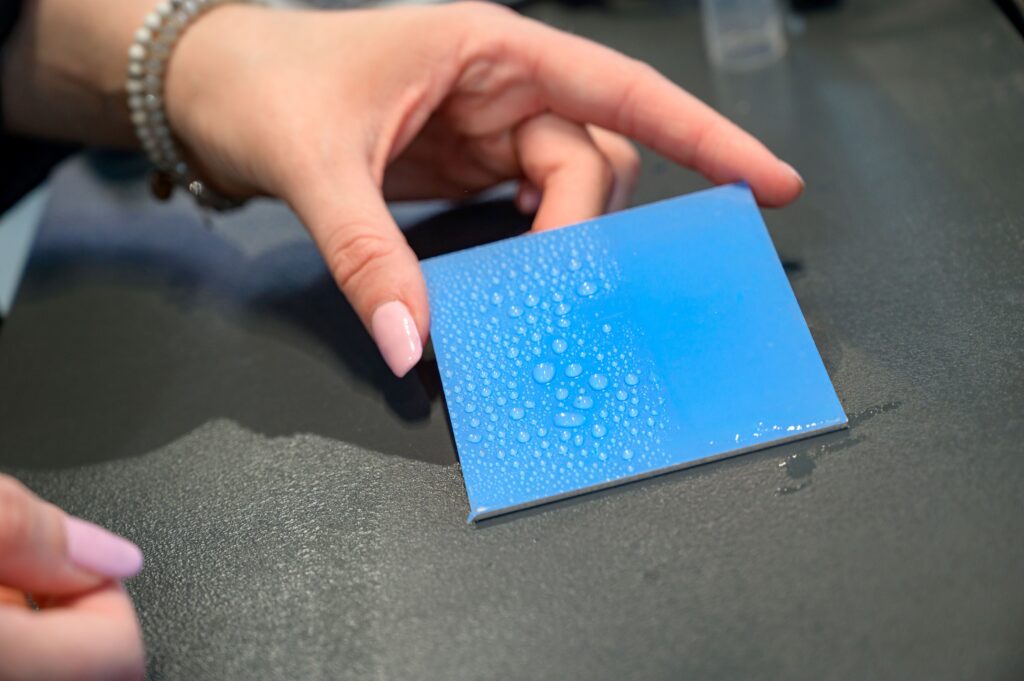
Plasma, the fourth state of matter, is chemically highly reactive and is formed when energy is added to a gas. Therefore, plasma can interact with the surfaces of a wide range of materials. «When surfaces come into contact with Openair-Plasma, important properties change. On metal or glass, for example, the plasma causes microfine cleaning. With plastics, the plasma activates their surfaces, significantly increasing their adhesion capacity. Consequently, adhesives, paints, varnishes, coatings or sealing material can adhere perfectly to these materials without the need for chemical pre-treatment. Another application of our plasma technology is the PlasmaPlus process. Here, plasma is used to apply wafer-thin coatings to surfaces. These coatings can be used for corrosion protection on metal or as environmentally friendly adhesion promoters on plastics. These possibilities are currently used in battery manufacturing,» says Haas, explaining the basic functional principle of the company’s technology.
Integrating Openair-Plasma into battery production improves surface quality, cell connection, and battery performance. This process extends the service life, reduces defects, and eliminates the need for wet-chemical pretreatments, saving material, energy, and drying time. In short, plasma increases the performance and sustainability of battery production.
Haas explains, «Plasma increases process stability and minimizes fluctuations in late production stages, where rejects are particularly costly. Many manufacturers struggle with high rejection rates. Our technology improves connection quality in cell bonding and insulation and increases production reliability. At the same time, it cleans and activates a wide range of materials without the need for wet chemistry, improving quality and offering ecological benefits.»
Cleaning, activation and coating
Battery manufacturers typically use Openair-Plasma technology from Plasmatreat to clean metal surfaces and activate plastics.
PlasmaPlus applications are used to selectively apply nano-coatings to surfaces. In battery production, the primary application is PlasmaPlus AntiCorr coatings, which are characterized by a powerful barrier effect that guarantees active corrosion protection. This prevents infiltration corrosion in battery housings. This process has been extensively tested and has passed standard climatic and salt spray tests, such as PV1209 and MeKo-S.
Openair-Plasma and PlasmaPlus can be combined to create such nano-coatings. First, surfaces are cleaned with Openair-Plasma, and then they are coated with PlasmaPlus. This method can create functional coatings up to 1,000 nm thick on various materials.
Best prospects for the future
Plasmatreat’s plasma technology has a wide range of applications in battery production for electric mobility, making it an even more valuable asset in the automotive industry. There are now more than 100 applications in which it increases the efficiency, safety, and quality of processes. In addition to partnering with Strama-MPS, Plasmatreat works directly with many car manufacturers and their suppliers in this market.