Developed at Politecnico di Torino, the IONX Project – Global Flux Motor combines a proprietary electric motor architecture with advanced cooling and integrated magnetic braking. The developers are targeting efficiency above 96% and applications ranging from electric motorsport and hypercars to eVTOL aircraft.
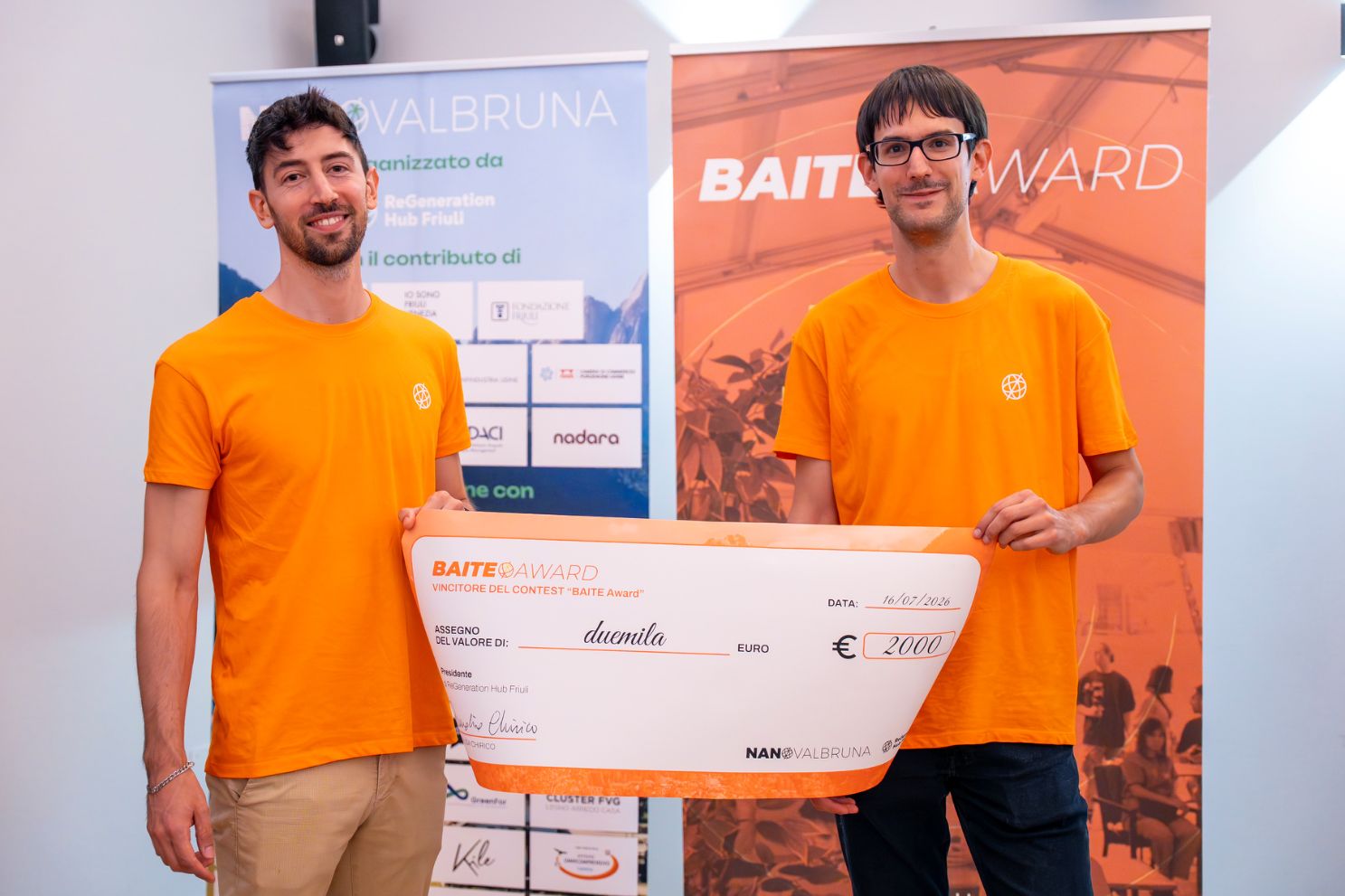
A high-performance electric motor concept developed at Politecnico di Torino has won first prize at the 2026 BAITE Award. The IONX Project – Global Flux Motor, developed by researchers Ettore Bianco and Fabio Mandrile, proposes a new electric powertrain architecture designed to increase torque density, power density and overall efficiency compared with conventional solutions.
At the centre of the project is the proprietary Global Flux Motor (GFM). Although detailed information on its electromagnetic topology has not yet been publicly disclosed, the developers identify compactness and high specific performance as key characteristics of the concept. According to information released by NanoValbruna, the technology targets efficiency above 96%, with the aim of combining high output with a reduced motor footprint.
Thermal management for higher power density
One of the main engineering challenges in high-performance electric machines is thermal management. Increasing torque and power density generally raises the thermal load on windings, magnetic materials and other active components, making heat extraction a key constraint on continuous performance.
The Global Flux Motor project addresses this aspect through advanced cooling solutions, intended to limit overheating and reduce energy losses. The development team sees improved thermal management as one of the enabling technologies for operating the machine at higher performance levels while retaining a compact architecture.
This approach is particularly relevant for applications such as motorsport and electric aviation, where mass and volume are highly constrained and the electric machine must sustain very high power levels without excessive thermal derating.
Integrated magnetic braking
A second distinctive element is an integrated magnetic braking system. According to the project description, the solution is designed not only to improve powertrain integration but also to contribute to reducing particulate emissions associated with conventional friction braking.
The combination of propulsion and magnetic braking functions could therefore become particularly interesting in vehicle architectures where compactness, thermal management and braking-related emissions have to be considered at system level.
The developers have not yet released detailed data on braking torque, operating principle or the relationship between the magnetic braking function and conventional regenerative braking, so these aspects will become clearer as the first prototype moves into validation.
From hypercars to eVTOLs
IONX is positioning the Global Flux Motor primarily for applications in which power density and efficiency are more critical than the requirements of conventional mass-market traction motors. The fields identified by the project include electric hypercars, motorsport and eVTOL aircraft.
The latter is an especially demanding target for electric machine designers. Propulsion systems for electric aircraft require a combination of low mass, high continuous power density, efficiency and effective heat removal, while automotive motorsport places similarly severe requirements on peak output, transient behaviour and packaging.
The project is now moving toward hardware validation. The €2,000 first prize awarded at BAITE 2026 will contribute to the development and testing of the first high-performance prototype. Bianco and Mandrile also said that work is underway to integrate the technology into a first demonstrator vehicle together with a potential industrial partner.
The BAITE Award was held during the seventh edition of NanoValbruna – International Youth Forum for Regeneration, organised by ReGeneration Hub Friuli. The 2026 competition involved twelve academic projects from nine Italian universities and research institutions, with the programme specifically intended to connect university research with industrial applications.
The next development stage will be particularly significant from an electric-machine engineering perspective: prototype testing should make it possible to quantify the GFM concept in terms of torque and power density, efficiency map, thermal behaviour and continuous versus peak operating capability — the parameters that will ultimately determine its competitiveness against established high-performance electric motor architectures.