

The permanent magnet linear actuator patented by Spin was born from the need to find a valid alternative to a classic electromagnet. The idea behind the invention is to maximize the Newton/Ampere ratio: compared to traditional electromagnets, in fact, it has been possible to obtain high forces with low current values. The actuator, in this way, reduces energy consumption: for the same current as a traditional electromagnet, the force is triple.
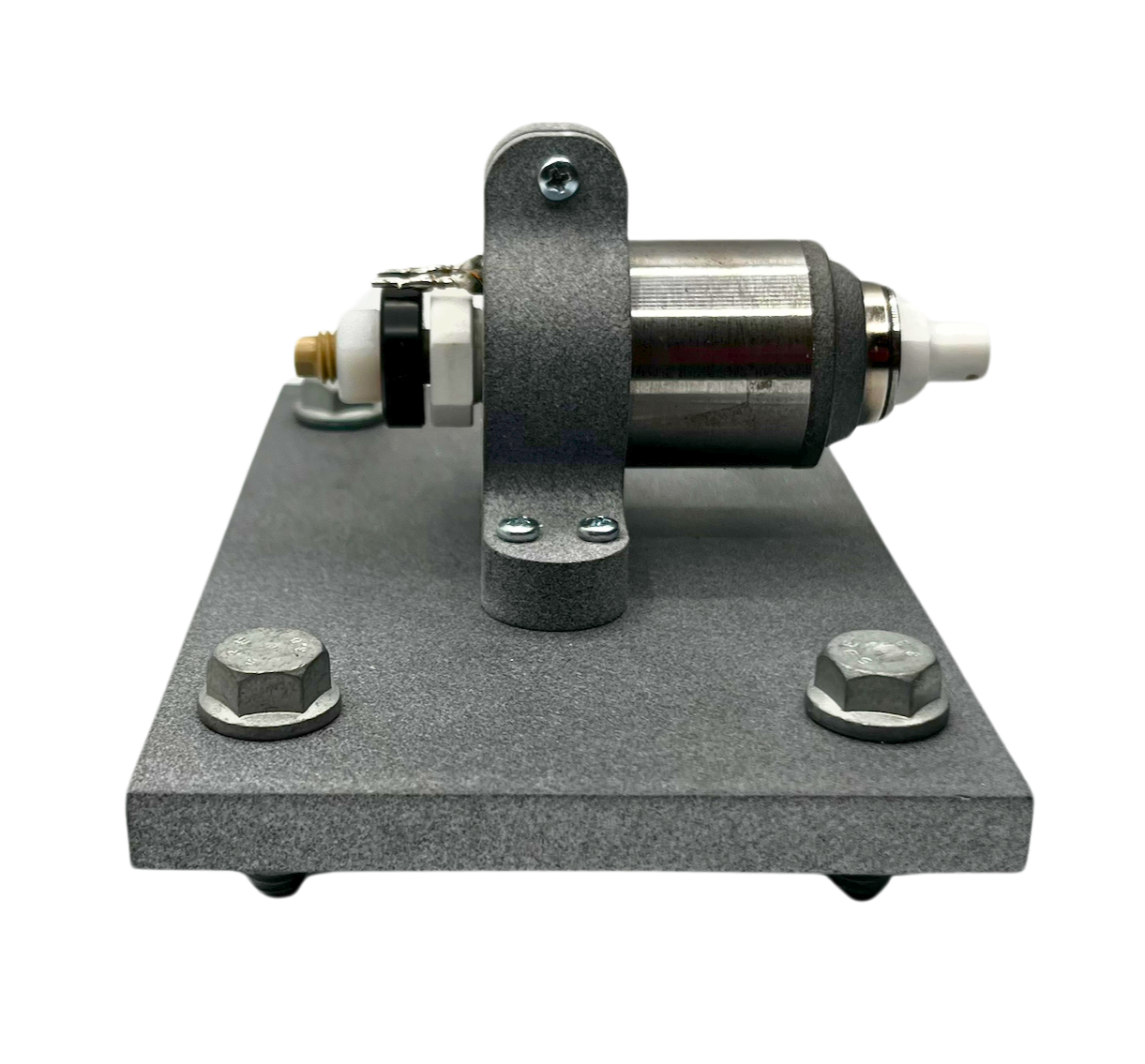
Another peculiar feature of the device is the absence of springs for holding the moving part in the initial position, which are present in traditional electromagnets. The mechanical seal through the elastic force is completely replaced by a zero-current electromagnetic seal, exploiting a magnetic preload force generated by permanent magnets. In this way, problems due to wear and tear of traditional mechanical elastic sealing components are avoided. The Spin linear actuator is also extremely compact and versatile: in addition to the possibility of setting the start and range of travel within certain intervals, the device is scalable in size and performance, to be able to adapt to a wide range of applications, requiring forces of different intensities. With slight modifications of the magnetic circuit, the device also functions as a bistable actuator: the two positions of stable equilibrium are maintained, as in the monostable case, by the magnetic preload force, also in this case avoiding the use of springs.
Applications
The main applications of the device range from the automotive, home appliance, healthcare and industrial sectors: it can be used as a solenoid valve or as a replacement for hydraulic and pneumatic systems. It is a good substitute for solenoids, electromagnets and linear actuation systems and can be used, for example, to open or close valves, dampers and doors, to move, raise or lower components on assembly lines, for magnetic locks on automatic doors and access control systems, for barriers in parking lots or level crossings where the device controls the raising and lowering of the component. Further applications could be trunk or door opening systems, or even to raise or lower active spoilers or other aerodynamic components, opening or closing automatic roofs. It can also be applied in healthcare devices, such as electric hospital beds that are adjustable in height and tilt.
Analysis and results
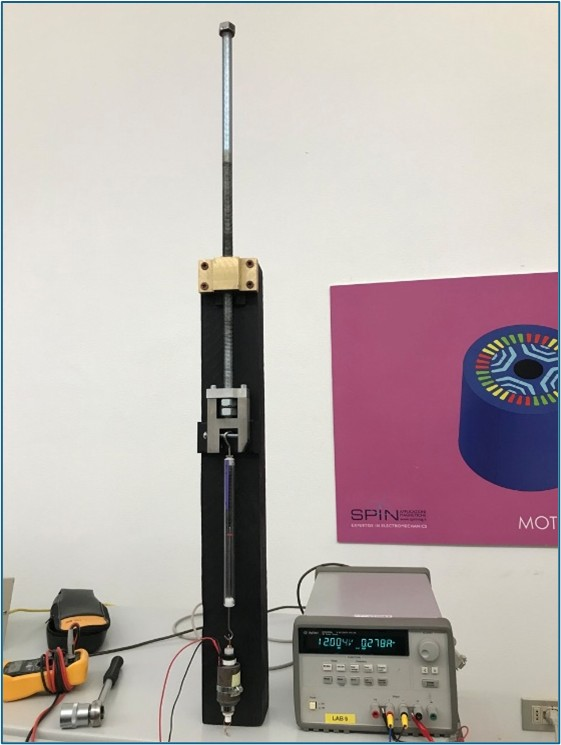
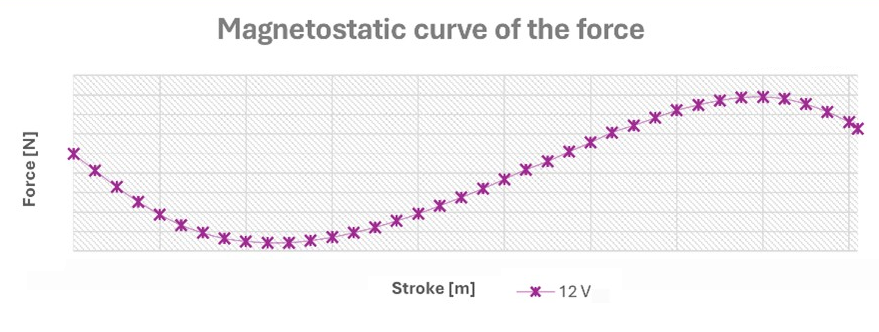
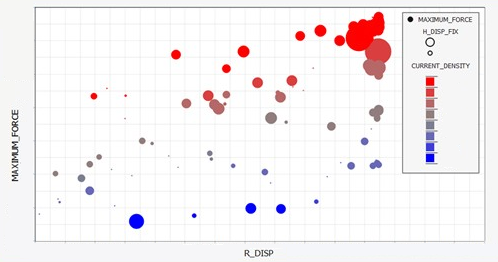
The device was designed and studied in the preliminary phase with Flux2D, Altair’s finite element software. Both magnetostatic analyses were carried out to determine the forces involved and the trend of the force curves with current off and on in the absence of movement, and transient analyses to study the dynamics of the device. The starting geometry was subsequently optimized with the help of Hyperstudy, Altair’s software that uses optimization algorithms to find solutions that meet the chosen objectives. Once the optimal configuration was found, we moved on to the creation of the construction design and the construction of the prototype. Finally, a series of experimental tests were conducted to verify the correct functioning of the device in the laboratory.
Conclusions
Spin’s patented linear actuator is a good replacement for monostable and bistable solenoids when high forces are needed with low supply currents. The use of permanent magnets ensures the presence of one or two points of stable balance without the aid of springs. Versatile and compact, it can be adapted to various application needs, thanks to the possibility of adjusting the stroke.
(by Elena Manari and Umberto Bottero)