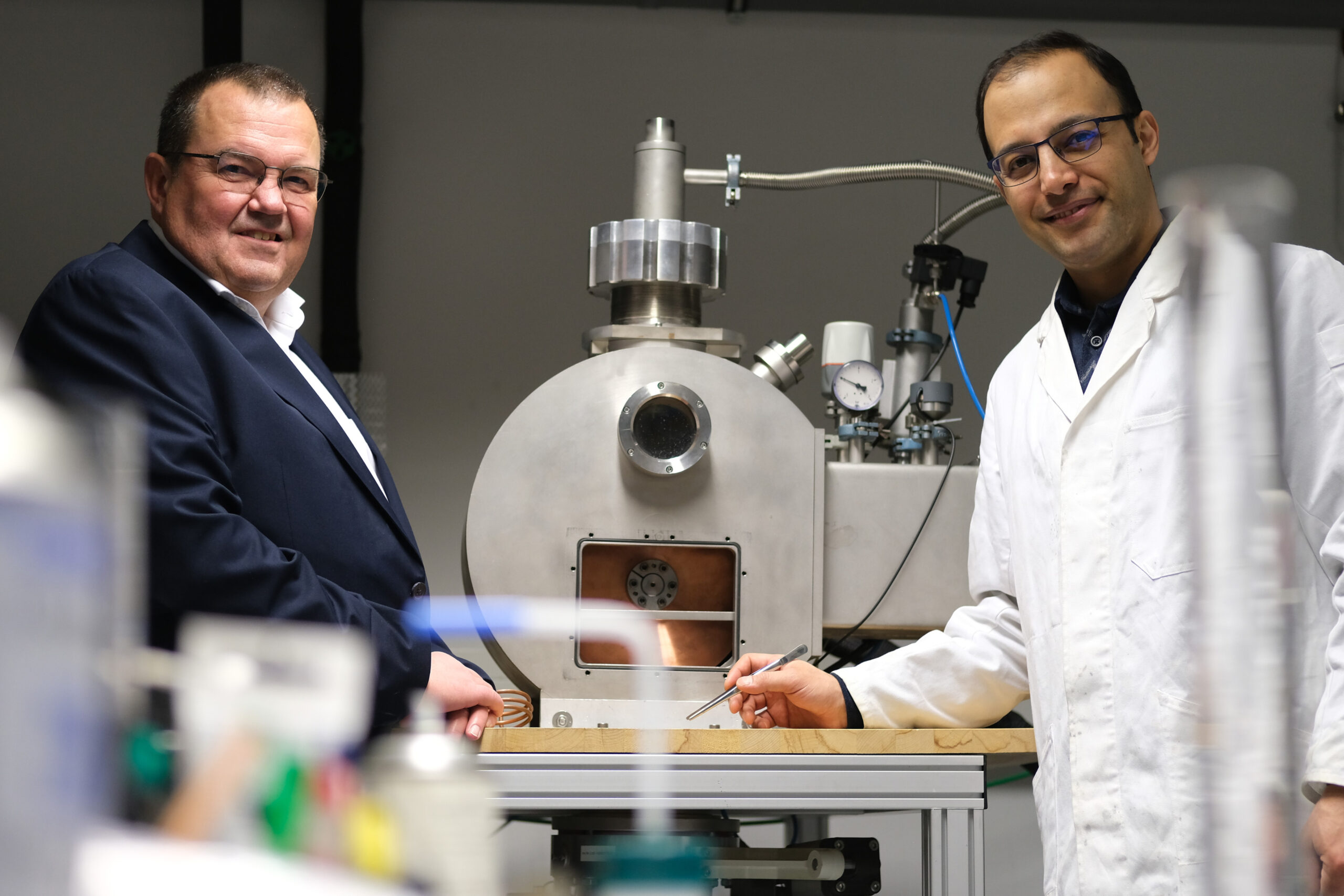
Metallic glasses are at the heart of a groundbreaking project at Saarland University, where researchers led by Professor Ralf Busch have developed amorphous, glass‑like iron alloys that can be 3D‑printed into motor components to reduce heat and boost performance.
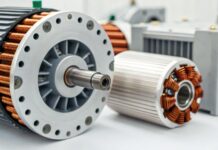
Conventional electric motors lose part of their input energy as heat due to iron losses—energy dissipated when magnetic domains repeatedly flip their orientation within crystalline metal structures. Busch’s group aims to eliminate this inefficiency by replacing traditional soft magnetic steels with amorphous metallic glasses, in which atoms are disordered rather than organized in a crystal lattice. This unique structure allows magnetic domains to realign smoothly, cutting hysteresis losses and keeping motors cooler.
The research, part of the EU-funded project AM2SoftMag (Additive Manufacturing of Amorphous Metals for Soft Magnetics), has received €3.5 million under the Horizon Europe Pathfinder programme. Working alongside Professor Matthias Nienhaus and partners from Spain, Italy, Poland and Germany, the team is developing alloys with 70–80% iron content that can be directly formed via Laser Powder Bed Fusion (L‑PBF) additive manufacturing.
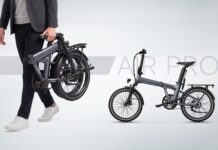
“Our goal is to bring the efficiency of large electric motors to smaller devices such as drones or e‑bikes, simply by changing the material,” says Busch. “Metallic glasses allow magnetization reversal with virtually no energy loss.”
The alloys are exceptionally strong—often outperforming steel—and contain no critical elements such as cobalt. The Saarland team, pioneers in metallic glass research, have a long-standing collaboration with NASA and have even tested materials aboard the International Space Station.
Recent experiments have yielded three printable glass-forming alloys that maintain their amorphous structure throughout processing. The challenge now, according to Nienhaus, lies in scaling up production for industrial application. If successful, the use of metallic glasses could transform electric motor design, increasing energy efficiency across millions of devices—from electric scooters to household machines—while reducing carbon emissions through lower power demand.