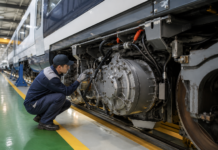
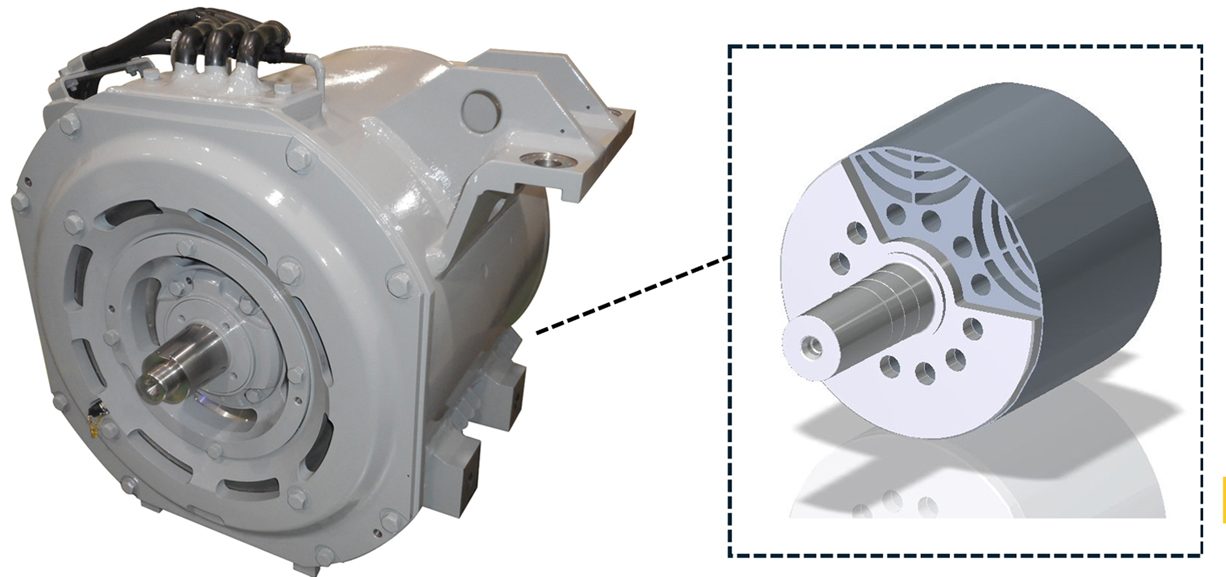
Mitsubishi Electric’s SynTRACS traction system introduces an advanced synchronous reluctance motor (SynRM) for railways, eliminating permanent magnets and rare earth materials from the rotor and employing inverter control.
The system achieves a high maximum motor output of 450 kW, suitable for diverse rail operational requirements, while leveraging optimized iron core geometry and SiC inverter features for robust variable speed and high torque applications.
Efficiency and sustainability
The rail SynRM achieves a maximum output of 450 kW, placing it among the highest-power implementations of this motor topology currently available for rolling stock. Field tests on commercial trains have shown an energy consumption reduction of approximately 18% compared with state-of-the-art high-efficiency induction motor systems, together with a 50% cut in motor power losses thanks to the combined optimization of magnetic circuit and inverter control strategy. In addition, the new design allows around 7% weight reduction and about 11% higher capacity than comparable induction traction motors, improving train acceleration performance and payload potential.
By completely eliminating permanent magnets and rare earth elements from the rotor, the SynRM design addresses both cost volatility and environmental impact associated with mining and processing of these materials. The all-iron rotor structure simplifies the recycling process and supports operators’ sustainability reporting, aligning traction system choices with broader ESG and circular-economy targets in the rail sector. At fleet level, the combination of lower energy demand and reduced material criticality contributes to decarbonization roadmaps without requiring disruptive changes to existing rail infrastructure
Industrial applications and outlook
The SynTRACS system received a 2025 R&D 100 Award, reflecting its technical significance and market readiness in the field of advanced traction technologies. This recognition reinforces the role of synchronous reluctance technology as a credible alternative to both induction and permanent magnet motors in railway traction, particularly where energy savings and material risk reduction are strategic priorities. Mitsubishi Electric plans to further develop this platform as a basis for next-generation motor–inverter packages, extending the concept to a broader range of train types and operating environments.