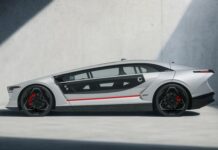
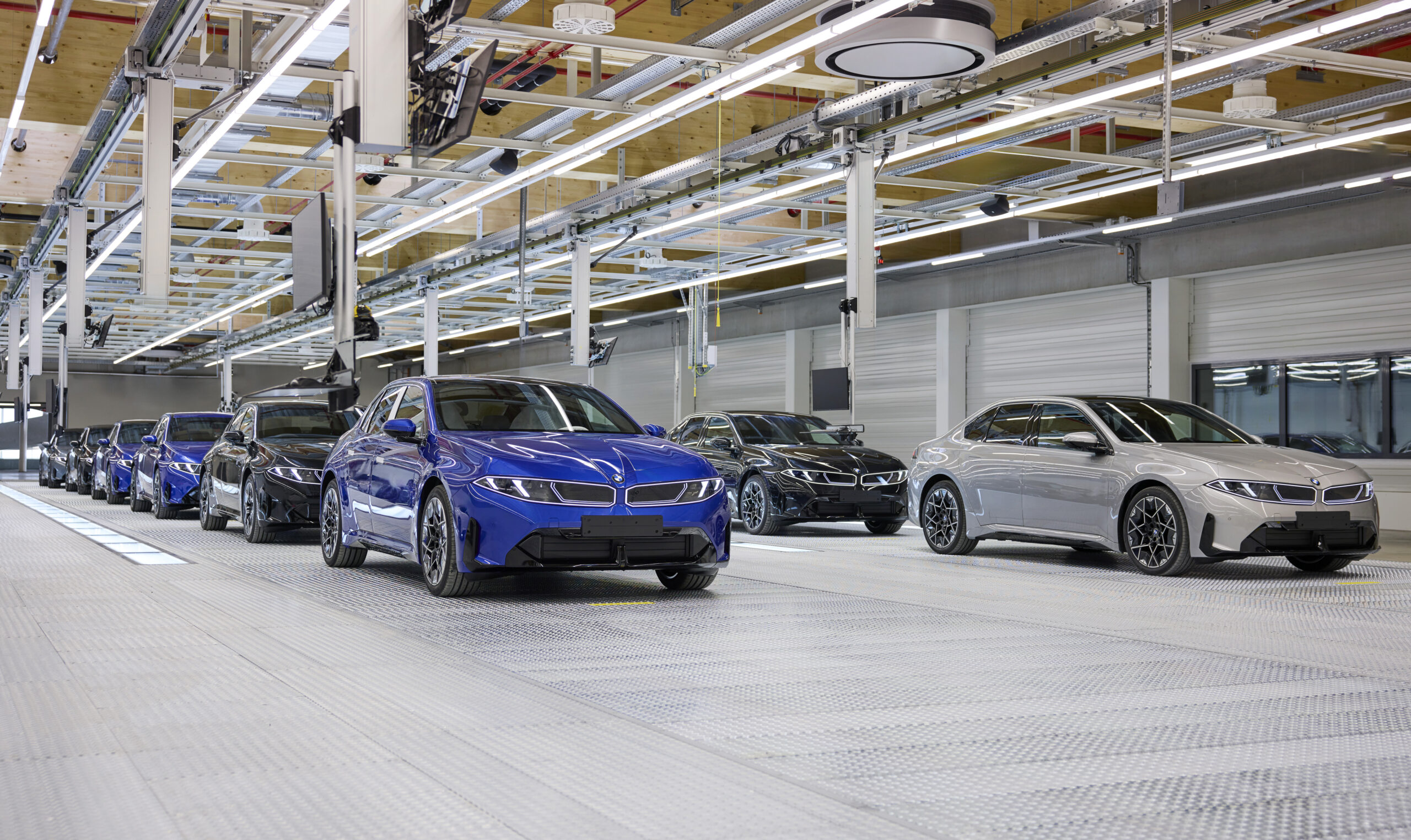
The German automotive company has started series production of the new BMW i3 at its Munich plant, bringing the second Neue Klasse model to industrial scale. At the centre of the electric sedan is the company’s sixth-generation eDrive system, combining an electrically excited synchronous motor, asynchronous motor technology and 800 V power electronics.
BMW Group has started series production of the new BMW i3 at its main plant in Munich. The sedan is the second Neue Klasse model to reach series production and introduces the company’s sixth-generation BMW eDrive technology (Gen6) into one of its core vehicle segments.
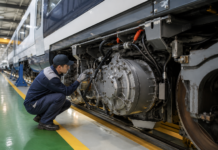
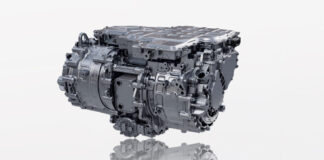
For electric motor engineering, one of the main points of interest lies beyond the final vehicle assembly line. The i3 relies on a highly integrated electric drivetrain produced at BMW Group Plant Steyr in Austria, where rotor, stator, inverter and transmission are manufactured and assembled as part of the same Gen6 production system. The aluminium housing is supplied by BMW Group Plant Landshut in Germany.
The first version to reach the market, the BMW i3 50 xDrive, uses two electric motors and delivers a combined system output of 345 kW (469 hp) and maximum torque of 645 Nm.
Two motor technologies in the same drivetrain
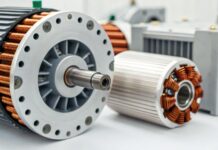
Rather than relying on a single motor topology, BMW has developed Gen6 around a combination of electric machine technologies.
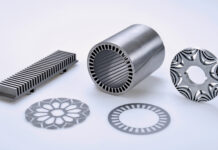
An electrically excited synchronous motor (EESM) is installed at the rear axle. Instead of permanent magnets, its rotor magnetic field is generated by windings supplied with direct current. The excitation can therefore be adjusted according to operating conditions, an approach BMW says supports high efficiency across relevant operating points while maintaining power output at high rotational speeds.
For xDrive versions such as the i3 50 xDrive, an asynchronous motor (ASM) is added at the front axle. In this machine, the rotor magnetic field is induced by the stator rather than generated by permanent magnets or electrical excitation. BMW cites compact dimensions and cost efficiency among the advantages of the technology.
The combination also allows the manufacturer to adapt the drivetrain architecture to different Neue Klasse derivatives. BMW’s modular Gen6 concept is designed to support vehicles with different numbers and combinations of electric motors while using common manufacturing principles.
800 V inverter with SiC semiconductors
The Gen6 upgrade extends well beyond the electric machines themselves. Rotor, stator and inverter were redesigned around an 800 V electrical architecture, together with revised oil and water cooling systems.
The inverter is fully integrated into the electric drive housing and uses silicon carbide (SiC) semiconductor technology. Developed in-house by BMW and manufactured at Steyr, the unit converts the battery’s DC output into the AC supply required by the electric motor.
BMW says the changes introduced with Gen6 reduce electric drivetrain energy losses by 40%, weight by 10% and costs by 20% compared with a previous-generation Gen5 xDrive configuration. The company attributes part of the improvement to the redesigned machines and power electronics, as well as to reduced friction and optimised transmission geometry and cooling. Overall, BMW says Gen6 contributes significantly to an approximately 20% improvement in vehicle efficiency compared with its previous generation of electric vehicles.
The drivetrain is coupled with the Neue Klasse battery architecture, which also operates at 800 V. In the i3 50 xDrive, BMW currently quotes provisional WLTP energy consumption of 13.4 to 16.1 kWh/100 km and a range of 758 to 912 km, depending on configuration and operating conditions.
Electric motor production moves into industrial scale
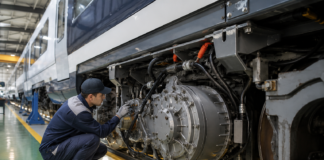
Plant Steyr represents an important part of BMW’s e-drive industrialisation strategy. The Austrian facility, historically dedicated to internal combustion powertrains, began series production of Gen6 electric drive units in 2025.
Two new assembly lines have been installed for electric drivetrain components, while inverter manufacturing takes place in a newly created clean-room environment. The modular manufacturing concept is intended to allow different Gen6 drivetrain derivatives to be produced using common processes, increasing volume scalability and reducing development and manufacturing costs.
At Munich, meanwhile, BMW has rebuilt around a third of its main production site while continuing vehicle manufacturing. A new body shop, assembly areas and integrated logistics infrastructure have been introduced, with automation and digital production systems supporting the new vehicle architecture.
The start of i3 production is expected to reduce manufacturing costs at the Munich site by a further 10%, according to BMW. From 2027, the plant is scheduled to manufacture only fully electric vehicles, with additional Neue Klasse models due to follow.
For BMW, the series launch brings together the Gen6 motor architecture, SiC-based 800 V power electronics and a modular e-drive manufacturing strategy at industrial volumes, providing an early indication of how the company intends to scale its next generation of electric powertrains.